
Planful
Planful is a cloud financial performance management platform for planning, budgeting, consolidation, reporting, and analytics.
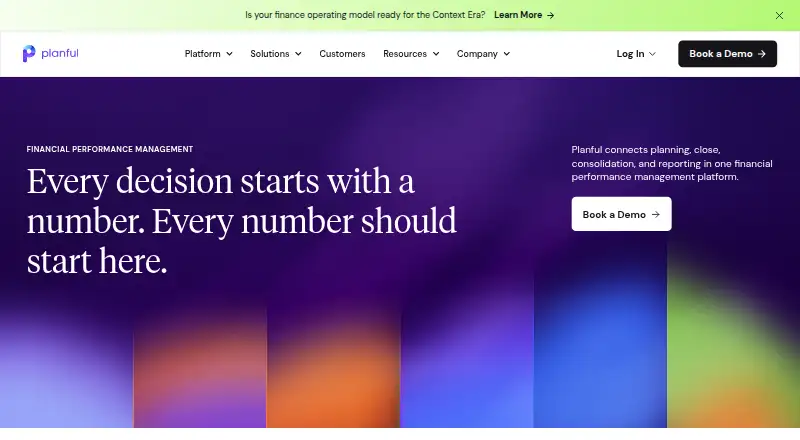
What Planful is
Planful is a cloud financial performance management platform for planning, budgeting, consolidation, reporting, and analytics. It brings financial, workforce, and operational plans together in one environment, with forecasting, scenario modeling, variance analysis, and workforce planning among its capabilities. Its finance-focused AI supports forecasting, surfaces insights, and automates work across finance workflows. Built-in validation checks intercompany entries, currency conversions, and consolidation totals before they reach reports. Planful lists connections to systems including SAP, Oracle, NetSuite, Salesforce, Workday, and Snowflake, and says data transfers can happen as often as needed. It states that customer data volume and the number of connected sources are not limited. The platform can connect to Power BI, export data to a warehouse, and keep Excel, PowerPoint, Word, and Google Sheets files updated through Spotlight. APIs support data import and export. Planful lists ISO 27001:2022 and ISO 27701:2019 certifications. Pricing is tailored to company size, user count, and selected modules.
Good
- Combines financial, workforce, and operational plans.
- Supports forecasting, scenario modeling, and variance analysis.
- Validation checks entries and consolidation totals before reporting.
- No stated limits on data volume or connected sources.
Watch out
- Pricing is available on request.
- Pricing varies by company size, user count, and selected modules.
Who it suits
Planful suits finance teams that need to bring financial, workforce, and operational planning into one environment. Its consolidation, reporting, and integration capabilities may also fit organizations managing connected data sources.
Verdict
Planful covers planning through reporting, with validation and integrations for connected finance workflows. Organizations should request pricing based on their size, user count, and chosen modules.
Plans and prices
From Planful's own pricing page, checked 4 Oct 2026.
| Plan | Price | What it gives you |
|---|---|---|
| Planful subscription | Priced on request | Pricing tailored to company size, user count, and selected modules |
The facts
Each one read from Planful's own pages, with the date it was checked.
What it does
- AI
- Its finance-focused AI supports forecasting, surfaces insights, and automates work across finance workflows.checked 4 Oct 2026
- API
- Planful provides APIs for importing and exporting data to and from its application.checked 4 Oct 2026
- Budgeting
- Yeschecked 22 Sep 2026
- Exports and destinations
- Planful can connect to Power BI, export to a data warehouse, and keep Excel, PowerPoint, Word, and Google Sheets files updated through Spotlight.checked 4 Oct 2026
- Financial consolidation
- Yeschecked 22 Sep 2026
- Forecasting
- Yeschecked 22 Sep 2026
- Integration limits
- Planful states it does not limit customer data volume or the number of connected data sources.checked 4 Oct 2026
- Integrations
- Planful lists integrations with systems including SAP, Oracle, NetSuite, Salesforce, Workday, and Snowflake, and supports data transfers as often as needed.checked 4 Oct 2026
- Scenario modeling
- Yeschecked 22 Sep 2026
- Security
- Planful's trust center lists ISO 27001:2022 and ISO 27701:2019 certifications.checked 4 Oct 2026
- Support and learning
- Planful says it provides training, learning tools, documentation, customer support, Planful Academy, and a searchable Knowledge Base.checked 4 Oct 2026
- Variance analysis
- Yeschecked 22 Sep 2026
- What it does
- Planful is a cloud financial performance management platform for planning, budgeting, consolidation, reporting, and analytics.checked 4 Oct 2026
- Who it serves
- Planful says it serves more than 1,500 customers in over 100 countries.checked 4 Oct 2026
The company
- Founded
- 2001checked 28 Sep 2026
- Headquarters
- San Francisco, California, United Stateschecked 28 Sep 2026
Where it runs
- Platform capabilities
- Built-in validation checks intercompany entries, currency conversions, and consolidation totals before they reach reports.checked 4 Oct 2026
Money
- Unified planning
- The platform brings financial, workforce, and operational plans together in one environment.checked 4 Oct 2026
- Workforce planning
- Workforce planning connects headcount, compensation, and cost data, and supports what-if hiring scenarios.checked 4 Oct 2026
The full review of Planful
Planful is a cloud financial performance management platform for finance teams coordinating planning, consolidation, reporting, and analytics. It is best suited to organizations that need to connect financial, workforce, and operational plans across systems. Its broad finance coverage is the case for choosing it; custom pricing makes cost harder to evaluate before settling on a configuration.
Overview
Budgeting, forecasting, scenario modeling, variance analysis, workforce planning, and financial consolidation sit in one platform. That breadth is useful when planning and reporting span teams or entities, but may be more than a team seeking only a focused forecasting tool needs. Forecast-versus-actuals analysis supports review of projections against outcomes, while finance-focused AI supports forecasting, surfaces insights, and automates work across finance workflows.
Key features
Connected plans and validation
Planful brings financial, workforce, and operational plans together in one environment, giving finance teams a shared basis for planning across functions. Built-in checks validate intercompany entries, currency conversions, and consolidation totals before they reach reports. Those controls are especially relevant to organizations consolidating across entities or currencies, where errors can otherwise flow into reporting.
Integrations and outputs
Integrations include SAP, Oracle, NetSuite, Salesforce, Workday, and Snowflake. Planful supports data transfers as often as needed and says it does not cap customer data volume or the number of connected sources. That flexibility suits organizations with multiple systems or frequent updates; it does not, by itself, establish how much setup a particular integration requires.
Planful can connect to Power BI, export data to a warehouse, and use Spotlight to keep Excel, PowerPoint, Word, and Google Sheets files updated. APIs support importing and exporting data. These options give teams several ways to use Planful data alongside existing reporting and office tools rather than confining outputs to the platform.
Security and enablement
Planful's trust center lists ISO 27001:2022 and ISO 27701:2019 certifications. The company also provides training, learning tools, documentation, customer support, Planful Academy, and a searchable Knowledge Base. These resources matter for teams adopting a broad platform, although they do not establish a particular support response time or service level.
Pricing
Planful is paid software with custom pricing tailored to company size, user count, and selected modules. Its Planful subscription has no published price, so organizations should request a quote based on the configuration they need. There is no stated free plan or trial to use as a lower-cost way to evaluate the platform.
The user count and module selection are central to the quote, so smaller teams or buyers comparing budgets should clarify which capabilities and users are included before weighing the total cost. Planful's breadth may suit organizations replacing separate planning and consolidation workflows; teams needing only one narrow function should consider whether that scope warrants a tailored subscription.
Platforms
Planful is available on the web and through APIs. The web platform supports the core finance workflows, while the API supports data import and export. No mobile or desktop app platform is identified.
Who it's for
Planful is aimed at finance organizations that need budgeting, forecasting, workforce and operational planning, consolidation, and reporting connected in one environment. Its integrations and uncapped data volume and source count are relevant to businesses working across multiple systems. Planful says it serves more than 1,500 customers in over 100 countries. A team with a simpler forecasting requirement, or one that needs a price before discussing users and modules, may find the scope or sales-led pricing less suitable.
Pros and cons
Pros
- Broad finance coverage: Budgeting, forecasting, scenario modeling, variance analysis, workforce planning, and consolidation are brought together, supporting teams with connected planning and reporting needs.
- Pre-report validation: Checks for intercompany entries, currency conversions, and consolidation totals can catch issues before they appear in reports.
- Flexible data connections and outputs: Frequent transfers, no stated caps on data volume or connected sources, APIs, Power BI, warehouse exports, and updated office files support varied finance workflows.
Cons
- Cost requires a quote: Pricing depends on company size, users, and modules, making it difficult to compare costs without a configuration discussion.
- No stated free entry point: There is no listed free plan or trial, so buyers cannot start with a free tier before committing to a sales process.
- Potentially more platform than needed: Teams interested only in forecasting may not benefit enough from the additional planning and consolidation scope.
Alternatives
For a broad finance and planning comparison, see Financial Planning & Analysis Software; teams focused on scenario work can browse Scenario Planning Software, while consolidation needs are covered by Financial Consolidation Software and reporting needs by Management Reporting Software. The Marketing Planning Software and Marketing Analytics Software lists address marketing-focused workflows.
Workday Adaptive Planning is worth considering if a 30-day trial or its listed Android, iOS, macOS, and Windows platforms better fit your evaluation or device needs. OneStream is another paid platform to compare if self-hosted deployment is a priority. Oracle Fusion Cloud EPM may suit buyers considering a platform with a 10-hosted-named-user minimum on its Standard Cloud Service. Vena, Cube, Board, Jedox, and Prophix One are also paid alternatives to compare.
Verdict
Choose Planful if your finance team needs planning across financial, workforce, and operational areas alongside consolidation, validation, and connected reporting. Its strongest case is the combination of broad finance workflows with flexible integrations and data movement. Look elsewhere if you need a narrow forecasting tool, a free trial, or a firm price before discussing users and modules.
Alternatives to Planful
- 1

IBM Planning Analytics
iOSWebAPIExtension8.6 - 2

Oracle Fusion Cloud EPM
Free planAndroidiOSWebAPI8.5From $250 a month - 3
Uniflow
Free planAndroidiOSWebmacOS8.5Free plan - 4
Workday Adaptive Planning
AndroidiOSWebAPI8.3 - 5

OneStream
AndroidiOSWebAPI7.7 - 6

Adlega
Free planWebAPI7.7From $41 a month