radare2
radare2 is a free, UNIX-like reverse-engineering framework and command-line toolset for analyzing binaries across many architectures.
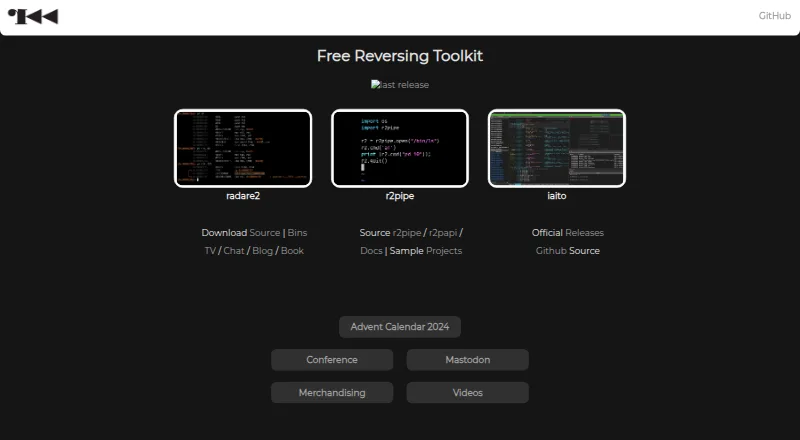
What radare2 is
radare2 is a free, UNIX-like reverse-engineering framework and command-line toolset for analyzing binaries across many architectures. It can emulate, debug, modify, and disassemble binaries, and it also supports firmware analysis and decompilation. The tools can edit local files, view kernel memory, and debug programs locally or through remote GDB and WinDbg servers. Scripting is available through an embedded JavaScript interpreter or r2pipe. Its r2pm package manager searches for, installs, updates, and uninstalls plugins and tools; listed integrations include r2ghidra, r2frida, r2yara, and r2pipe. The project identifies iaito as its official Qt graphical interface. Installation options include the Git repository, released binaries, Nix packaging, and source builds. Most of radare2 is licensed under LGPLv3, though dependencies and plugins may have different licenses. It supports operating systems including Windows, Linux, macOS, iOS, and Android, alongside many others.
Good
- Analyzes, emulates, debugs, modifies, and disassembles binaries.
- Supports many operating systems and architectures.
- Offers scripting through JavaScript or r2pipe.
- Includes plugin management through r2pm.
- Has an official Qt graphical interface.
Watch out
- Most of radare2 uses LGPLv3, but dependencies and plugins may differ.
- Security fixes are not backported to old releases.
- The project currently has no bug bounty program.
Who it suits
radare2 suits users who work with binary analysis, debugging, firmware, or reverse engineering across varied architectures. Its command-line workflow and scripting options may appeal to users comfortable with technical tools.
Verdict
radare2 combines binary analysis and debugging tools with scripting, plugin support, and a graphical interface. Users should note that licensing can vary for dependencies and plugins, and old releases do not receive backported security fixes.
Plans and prices
From radare2's own pricing page, checked 29 Sep 2026.
| Plan | Price | What it gives you |
|---|---|---|
| radare2 | Free | Free reversing toolkit · LGPLv3 for most of radare2; dependencies and plugins may use other licenses |
The facts
Each one read from radare2's own pages, with the date it was checked.
What it does
- Analysis
- It can analyze, emulate, debug, modify, and disassemble binaries across many architectures.checked 29 Sep 2026
- Extensibility
- The r2pm package manager can search, install, update, and uninstall plugins and tools.checked 29 Sep 2026
- File handling
- It can edit local files, view kernel memory, and debug programs locally or through remote GDB and WinDbg servers.checked 29 Sep 2026
- GUI
- The project identifies iaito as its official Qt graphical interface.checked 29 Sep 2026
- Installation
- The project recommends installing from its Git repository and also documents released binaries, Nix packaging, and source builds.checked 29 Sep 2026
- Integrations
- Listed plugins include r2ghidra, r2frida, r2yara, and r2pipe for scripting from other programming languages.checked 29 Sep 2026
- License
- Most of radare2 is licensed under LGPLv3, while dependencies and plugins may have different licenses.checked 29 Sep 2026
- Purpose
- radare2 is a UNIX-like reverse engineering framework and command-line toolset.checked 29 Sep 2026
- Scripting
- The command-line tool supports scripting with an embedded JavaScript interpreter or through r2pipe.checked 29 Sep 2026
- Security
- The security policy says fixes for reported security bugs are top priority and required within 24 hours of disclosure.checked 29 Sep 2026
- Security limits
- The project says it does not backport security fixes to old releases and currently has no bug bounty program.checked 29 Sep 2026
- Support
- The project points users to its official book, chats, and community channels for questions and feedback.checked 29 Sep 2026
Where it runs
- Platforms
- Supported operating systems include Windows, Linux, Darwin, Apple's Mac and mobile operating systems, and Android.checked 29 Sep 2026
The full review of radare2
Overview
radare2 is a free reverse-engineering framework for examining and working with binaries across many architectures. It suits technically confident users who want a configurable toolkit; its breadth is a strength, but its command-line focus makes it less suitable for anyone seeking a guided, single-purpose application.
Analysis, emulation, debugging, modification, and scripting sit within one framework, with iaito as its official Qt graphical interface. That range can support varied binary work, though users should expect to shape their own workflows rather than follow a narrowly defined path.
For a broader shortlist, see Reverse Engineering Tools.
Key features
- Architecture-spanning analysis: radare2 can analyze, emulate, debug, modify, and disassemble binaries across a broad set of architectures, including ARM, x86-64, RISC-V, WebAssembly, and Dalvik. This is useful when work spans different targets; users focused on a single platform may not need such range.
- Local and remote inspection: It can edit local files and view kernel memory, and debug programs locally or through remote GDB and WinDbg servers. That makes it relevant to both file analysis and debugging across a connection.
- Automation: The command-line tools support an embedded JavaScript interpreter, while r2pipe lets users script from other programming languages. These options reward users who want repeatable or customized workflows.
- Plugins: The r2pm package manager can search, install, update, and remove plugins and tools. Listed integrations include r2ghidra, r2frida, r2yara, and r2pipe; extensibility broadens the toolkit, while making plugin choice and compatibility part of the user's work.
- Graphical interface: iaito is the project's official Qt interface. It offers a graphical route into the ecosystem, but does not change radare2's command-line-centered character.
- Installation choices: The project recommends installation from its Git repository and also documents released binaries, Nix packaging, and source builds. That suits users comfortable choosing and maintaining an installation route.
Pricing
radare2 is free: the plan costs nothing and provides a free reversing toolkit. Most of radare2 is licensed under LGPLv3; dependencies and plugins may carry different licenses, so check those terms when combining components. There are no paid tiers or seat limits in this plan.
Platforms
radare2 supports Windows, Linux, Darwin/macOS, Android, iOS and other Apple operating systems, BSD, QNX, Solaris, AIX, GNU/Hurd, Haiku, SerenityOS, and more. The project also supports numerous processor and virtual-machine architectures, from i386 and ARM to EVM and CHIP-8. This reach is a clear advantage for work across operating systems and targets, though a long platform list does not make the workflow simpler.
Who it's for
Choose radare2 if you need a free, extensible framework for binary analysis and debugging across different architectures, and are comfortable working from command-line tools or building a workflow around plugins and scripts. It is less compelling for users who want a tightly guided interface or a narrowly scoped tool with fewer decisions to make.
The project directs users to its official book, chats, and community channels for questions and feedback. Its security policy prioritizes fixes for reported vulnerabilities, with fixes required within 24 hours of disclosure; it does not backport fixes to old releases and currently has no bug bounty program. Users relying on older releases should account for that lack of backported fixes.
Pros and cons
- Pros: Free access to analysis, emulation, debugging, and modification across many architectures makes it useful for varied binary work without a paid tier.
- Pros: JavaScript scripting, r2pipe, and a package manager for plugins give technically capable users ways to automate and extend their workflows.
- Cons: Its command-line-centered design and broad scope put more responsibility on users than a focused, guided application would.
- Cons: Dependencies and plugins can have different licenses, and old releases do not receive backported security fixes; both matter when selecting components and maintaining deployments.
Alternatives
- Frida is another free option with Android, iOS, Linux, macOS, Windows, and API platforms; consider it if you want a different free tool for those environments.
- Rizin is a free and open-source binary analysis framework for Android, iOS, Linux, macOS, and Windows. Pick it if you want a related framework with that stated platform coverage.
- Binary Ninja offers a free evaluation and education plan with five decompilation architectures but no API or plugin access, alongside a Personal plan at $199, paid once. It may suit readers who want to compare a limited free entry point with a paid option.
- Qiling Framework is free software under GPLv2 for API, Linux, macOS, self-hosted, and Windows platforms; consider it if those environments and licensing terms fit your needs.
- rev.ng makes its decompilation pipeline free software and says its UI will be offered commercially in cloud and standalone versions. Choose it if that split between an open pipeline and commercial UI suits your plans.
- IDA Pro has a free plan for x86-32 and x86-64 disassembly with two cloud-based decompilers, plus a 1099.00 USD IDA Pro Essential plan. It is worth considering if that stated architecture scope and plan structure match your work.
- JEB offers a free Community Edition with x86 and x86-64 decompilation for researchers, students, hobbyists, and nonprofit reverse engineering, as well as a free trial. Consider it if you fit that audience and target scope.
- angr is a free, BSD-licensed option for Windows, macOS, and Linux that requires Python 3.10 or later. Pick it if those requirements suit your environment.
Verdict
Choose radare2 if you want a free, extensible reverse-engineering toolkit that spans analysis, debugging, scripting, and many architectures. Its main draw is that breadth without a paid tier; look elsewhere if you need a more guided workflow or cannot accommodate varying plugin licenses and the absence of security backports for old releases.
Getting started
- Choose an installation route: Git repository, released binaries, Nix packaging, or a source build.
- Install radare2 for a supported platform.
- Use the command-line tools or the official Qt interface, iaito.
- Add plugins or tools with r2pm if needed.
- Use the embedded JavaScript interpreter or r2pipe for scripting.
Questions
How much does radare2 cost?
The listed free plan costs nothing.
Which platforms does radare2 support?
The listed platforms include Android, iOS, Linux, macOS, self-hosted environments, and Windows. The project lists support for additional systems as well.
Is radare2 open source?
Most of radare2 is licensed under LGPLv3. Dependencies and plugins may use other licenses.
Does it have a graphical interface?
Yes. The project identifies iaito as its official Qt graphical interface.
What can it analyze?
It can analyze, emulate, debug, modify, and disassemble binaries across many architectures, and supports firmware analysis and decompilation.
How does the project handle reported security bugs?
Its policy makes fixes for reported security bugs a top priority and requires them within 24 hours of disclosure. It does not backport security fixes to old releases and has no bug bounty program.
Alternatives to radare2
- 1

Binary Ninja
Free planWebAPILinuxmacOS7.8$199 one-time - 2
Frida
Free planOpen sourceAndroidiOSAPILinux7.7Free plan - 3

rev.ng
Free planOpen sourceWebAPILinuxmacOS7.7Free plan - 4

JEB
Free planAPILinuxmacOSSelf-hosted7.6From $1,200 a year - 5
Ghidra
Free planOpen sourceAPIExtensionLinuxmacOS7.3Free plan - 6

IDA Pro
Free planLinuxmacOSWindows7.0From $1,099 a year