Terrazzo
Terrazzo is a set of open-source tools for creating and managing design systems, with token workflows centered on a command-line interface.
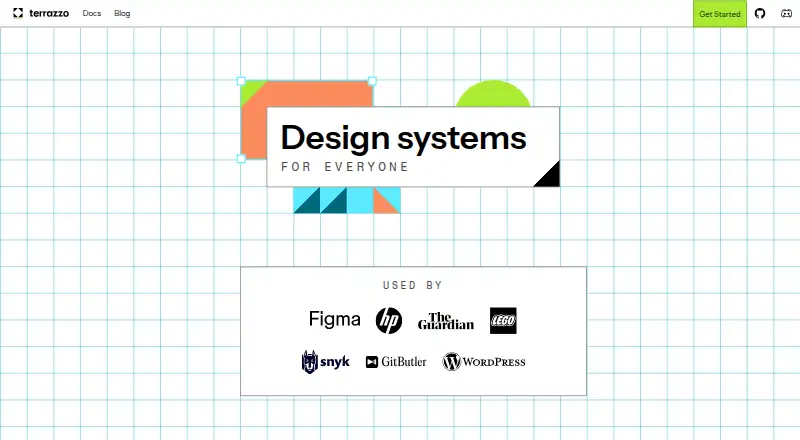
What Terrazzo is
Terrazzo is a set of open-source tools for creating and managing design systems, with token workflows centered on a command-line interface. The CLI reads design-token JSON following DTCG and generates code for outputs including CSS, Sass, and JavaScript or TypeScript; it can run manually or within continuous integration. Lint rules can check token formatting, naming consistency, duplicate values, color gamut, and accessibility criteria such as minimum contrast and font size. Documented integrations cover CSS, JavaScript, JSON or native output, Sass, Tailwind, and Vanilla Extract. Its Tailwind plugin creates a Tailwind v4 theme from DTCG tokens. The CLI can export Figma Variables and Styles to resolver JSON, with a Figma account and authentication token required for import. Configuration accepts JSON, JSONC, and YAML. The Swift plugin creates Swift asset catalogs but is experimental. Terrazzo began as Cobalt in 2021, and its MIT-licensed tools are free to use. Design Lab is listed as coming soon.
Good
- Free, MIT-licensed open-source tools.
- Generates code from DTCG token JSON.
- Linting covers naming, duplicates, and accessibility criteria.
- Configuration accepts JSON, JSONC, and YAML.
- Can run in continuous integration.
Watch out
- Swift asset-catalog support is experimental.
- Figma import requires an account and authentication token.
- Design Lab is listed as coming soon.
Who it suits
Terrazzo suits design-system teams that manage design tokens and want generated code, linting, and documented integrations. It may fit teams working with DTCG tokens, Figma, or one of the supported starting systems.
Verdict
Terrazzo offers a token-focused workflow with generation, linting, and integrations for several design and development tools. Check whether its experimental Swift support and required Figma authentication fit your workflow.
Plans and prices
From Terrazzo's own pricing page, checked 2 Oct 2026.
| Plan | Price | What it gives you |
|---|---|---|
| Terrazzo | Free | Free to use forever · MIT-licensed open-source tools |
The facts
Each one read from Terrazzo's own pages, with the date it was checked.
What it does
- CLI workflow
- The CLI can run manually or as part of a continuous integration process.checked 2 Oct 2026
- Design Lab
- The homepage lists Design Lab as coming soon.checked 2 Oct 2026
- Figma import
- The CLI can export Figma Variables and Styles to resolver JSON; the import command requires a Figma account and authentication token.checked 2 Oct 2026
- Input formats
- The CLI configuration supports token files in JSON, JSONC, and YAML formats.checked 2 Oct 2026
- Integrations
- Documented integrations include CSS, JavaScript, JSON or native output, Sass, Tailwind, and Vanilla Extract.checked 2 Oct 2026
- Purpose
- Terrazzo is a collection of open-source tools for creating and managing design systems.checked 2 Oct 2026
- Security
- The project’s GitHub Security page is available, but the opened page does not state a security certification or compliance program.checked 2 Oct 2026
- Supported starting systems
- The CLI can initialize projects from Adobe Spectrum, Apple Human Interface Guidelines, GitHub Primer, IBM Carbon, Figma Simple Design System, Salesforce Lightning, Shopify Polaris, and Radix.checked 2 Oct 2026
- Swift support
- The Swift plugin generates Swift asset catalogs and is described as experimental.checked 2 Oct 2026
- Tailwind
- The Tailwind plugin generates a Tailwind v4 theme from DTCG tokens.checked 2 Oct 2026
- Token generation
- The CLI takes DTCG design-token JSON and generates code for platforms including CSS, Sass, and JavaScript or TypeScript.checked 2 Oct 2026
- Token linting
- Lint rules can check token formats, naming consistency, duplicate values, color gamut, and accessibility criteria such as minimum contrast and font size.checked 2 Oct 2026
The company
- Founded
- 2021checked 28 Sep 2026
- Makers
- The project says it was built by Drew, Nick, and other contributors, and began as Cobalt in 2021.checked 2 Oct 2026
The full review of Terrazzo
Terrazzo is a free, open-source toolkit for building and managing design systems through design tokens. It is best suited to teams comfortable with token files and command-line workflows. Its strongest case is combining code generation with token linting; it is a weaker fit if you need a finished Swift workflow or a visual workspace now.
Overview
Terrazzo centers design-system work on tokens, with management, design-tool sync, code sync, and versioning in a self-hosted setup. That approach suits teams who want token workflows alongside their code rather than organized around a hosted service. The tools are MIT-licensed and free to use forever. The project began as Cobalt in 2021 and is built by Drew, Nick, and other contributors.
Design Lab is coming soon, so it is not a current option for teams seeking a visual design environment. Terrazzo has a GitHub Security page, but no security certification or compliance program is stated.
Key features
Generate and lint tokens
The CLI accepts DTCG design-token JSON and generates CSS, Sass, JavaScript, or TypeScript. It can run manually or in continuous integration, making it useful for teams that want token generation to fit into an existing development process.
Lint rules check token formats, naming consistency, duplicate values, color gamut, and accessibility criteria such as minimum contrast and font size. Those checks give teams a way to catch common token problems before they travel further into a system; the command-line focus will be less appealing to people who prefer a graphical authoring workflow.
Formats, integrations, and imports
Configuration can use JSON, JSONC, or YAML token files. Documented integrations cover CSS, JavaScript, JSON or native output, Sass, Tailwind, and Vanilla Extract. The Tailwind plugin generates a Tailwind v4 theme from DTCG tokens, a concrete fit for teams already using that framework.
The CLI can export Figma Variables and Styles to resolver JSON, but importing them requires a Figma account and authentication token. It can also initialize projects from systems including Adobe Spectrum, Apple Human Interface Guidelines, GitHub Primer, IBM Carbon, Figma Simple Design System, Salesforce Lightning, Shopify Polaris, and Radix, giving teams a starting point based on an established design system.
Swift output is available through a plugin that generates Swift asset catalogs, but it is experimental. Teams that need dependable Swift support should treat that as a limitation rather than a core reason to choose Terrazzo.
Pricing
Terrazzo costs nothing, with the free plan described as free to use forever and the tools MIT-licensed. There are no paid tiers to weigh against that offer. The trade-off is not a tier cap but the self-hosted, CLI-centered workflow: teams wanting a hosted visual environment should consider another tool.
Platforms
Terrazzo is available on iOS, macOS, and the web. Its token-generation workflow is centered on the CLI, so those platform labels do not change the practical requirement to work with files and command-line tooling.
Who it's for
Terrazzo is a strong fit for design-system teams that manage tokens in files, want to generate code for multiple targets, and value lint rules for consistency and accessibility. Its CI support is useful when token checks belong in a development pipeline. It is less suited to teams that need a finished Swift path, want a current visual workspace, or cannot accommodate Figma authentication for imports.
Pros and cons
- Pro: Token generation and linting live in one CLI workflow, with checks reaching naming, duplicates, color gamut, and accessibility.
- Pro: JSON, JSONC, and YAML configuration plus integrations for tools such as Tailwind and Vanilla Extract make it relevant to varied token-based projects.
- Pro: The MIT-licensed tools are free to use forever, avoiding a paid-plan decision for teams that can self-host.
- Con: Figma import requires an account and authentication token, adding a dependency for teams bringing design data in from Figma.
- Con: Swift asset-catalog generation is experimental, so it is not a sound choice when Swift support must be mature.
- Con: Design Lab is coming soon, leaving teams without a current visual workspace from Terrazzo.
Alternatives
Design System Software is a category overview for readers comparing tools across the broader design-system space.
Choose Particles UI if you want local token management and export through an MIT-licensed CLI that works without an account; it also has a free plan and a free trial across Linux, macOS, web, and Windows.
Zaklad is another free-plan option across Android, iOS, and web for readers comparing design-system software beyond a CLI-centered workflow.
Superposition is a free desktop app for macOS, Windows, and Linux; its separate design-system generator is a paid extension with price not stated.
Bezel may suit readers looking for a web-based option with a free plan capped at 75 AI Credits, 1 project, 1 theme, and 1,000 design tokens, though that plan is not yet open for signup.
Carbon Design System is a free, open-source web design system for readers who want to use or contribute to an established system rather than select a token toolkit.
Design Tokens is worth considering for a Figma-oriented workflow: its free plan includes variable sync, CSS/SASS export, W3C JSON import/export, up to 3 themes per workspace, 2 workspaces, and 2 users.
Luro offers a web-based free Starter plan capped at 1 editor, 1 source file, 10 viewers, and 20 pages.
Spec Layer is another web option, with a free plan capped at 1 Figma file, 10 publishing updates per month, and 20 AI writing uses in the first 30 days, then 10 per month.
Verdict
Choose Terrazzo if your team wants free, self-hosted token management, code generation, and linting in a CLI workflow that can run in CI. Its combination of output integrations and quality checks is the main reason to pick it. Look elsewhere if you need a current visual workspace, a mature Swift workflow, or a Figma import path without account authentication.
Alternatives to Terrazzo
- 1

Zaklad
Free planAndroidiOSWebAPI7.9From €9.50 a month - 2

Bezel
Free planWebAPI7.3From $7 a month - 3
Particles UI
Free planWebLinuxmacOSWindows7.0From $19 a month - 4

Supernova
Free planWebAPImacOS6.8From $35 a month - 5
Bit
Free planAndroidiOSWebAPI6.7Free plan - 6

zeroheight
Free planWeb6.7From $49 a month