SpendQube
SpendQube combines spend analytics and third-party risk management in a procurement intelligence system.
What SpendQube is
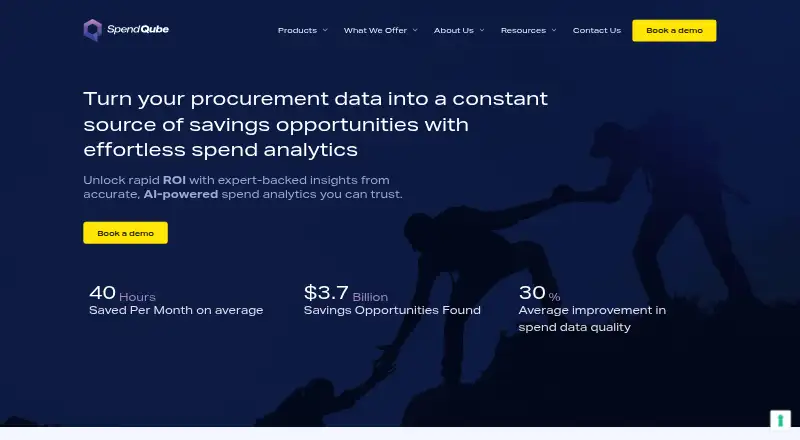
SpendQube combines spend analytics and third-party risk management in a procurement intelligence system. It consolidates data from ERP, supplier management and contract management systems into a unified view across systems, business units and reporting structures. The company says its AI models and procurement expertise clean and classify spend data, with 94% classification accuracy from the first analysis. Users can configure dashboards and reports with graphs and charts for executive overviews or detailed category manager views. Its supplier risk module supports onboarding, documentation, approvals, compliance monitoring and risk scoring. A contract management system stores contracts in a searchable repository and supports AI extraction and verification. SpendQube connects to systems that support API connections and can also use data exports or downloads. Data refresh can be monthly, quarterly or tailored to the customer. The maker says setup typically averages 6–8 hours of customer involvement. Procurement expert support is available, including a managed service for prioritizing opportunities and tracking progress. Pricing is on request.
Good
- Consolidates spend data from multiple systems.
- Configurable dashboards serve executive and category views.
- Supplier module includes compliance monitoring and risk scoring.
- Accepts API connections and data exports.
- Refresh schedules can be tailored.
Watch out
- Pricing is provided on request.
- Setup typically involves 6–8 hours of customer participation.
Who it suits
SpendQube is presented for procurement teams, including CPOs and category managers, seeking spend visibility, savings opportunities and supplier oversight. It may suit teams that want consolidated data alongside supplier and contract management tools.
Verdict
SpendQube brings spend analysis, supplier risk and contract information into a procurement-focused platform. Teams should confirm pricing and how its data connections and refresh schedule fit their environment.
Plans and prices
From SpendQube's own pricing page, checked 9 Oct 2026.
| Plan | Price | What it gives you |
|---|---|---|
| Custom pricing | Priced on request | Contact the team for pricing |
The facts
Each one read from SpendQube's own pages, with the date it was checked.
What it does
- AI classification
- The company says its AI models and procurement expertise cleanse and classify spend data, with 94% classification accuracy from the first analysis.checked 8 Oct 2026
- Contract management
- The contract management system stores contracts in a searchable repository and supports AI extraction and verification.checked 9 Oct 2026
- Dashboards
- Users can customize dashboards and reports using configurable charts and drill-downs.checked 9 Oct 2026
- Data classification
- SpendQube says its AI models and procurement expertise achieve 94% classification accuracy from the first analysis.checked 9 Oct 2026
- Data consolidation
- It consolidates data from ERP, supplier management, and contract management systems into a unified view.checked 8 Oct 2026
- Data refresh
- Data refreshes on a schedule selected to fit the customer, such as monthly or quarterly.checked 9 Oct 2026
- Integrations
- SpendQube says it can connect to systems that support API connections and can also use data exports or downloads.checked 9 Oct 2026
- Intended users
- SpendQube describes its platform and expertise as serving procurement professionals and teams.checked 9 Oct 2026
- Onboarding
- The company manages onboarding, which it says typically requires six to eight hours of customer time.checked 9 Oct 2026
- Product
- SpendQube combines spend analytics and third-party risk management in a procurement intelligence system.checked 9 Oct 2026
- Purpose
- SpendQube combines spend analytics and procurement expertise to help teams analyse spending and find savings opportunities.checked 8 Oct 2026
- Risk management
- The supplier risk module supports onboarding, documentation, approvals, risk scoring, and compliance monitoring.checked 9 Oct 2026
- Risk module pricing limits
- The risk management page says users can invite assessors, suppliers, and internal stakeholders without user limits or tiered pricing.checked 8 Oct 2026
- Security
- SpendQube states that it is certified to ISO 9001 and ISO 27001 and uses enterprise-grade encryption and regular penetration testing.checked 9 Oct 2026
- Spend visibility
- The platform consolidates data from multiple systems, business units, and reporting structures into a unified view of spend.checked 9 Oct 2026
- Supplier risk
- A supplier risk module supports onboarding, documentation, approvals, compliance, and risk scoring.checked 8 Oct 2026
- Support
- The company offers procurement experts who provide tailored guidance alongside the software.checked 9 Oct 2026
The company
- Company
- The site identifies the company as CONNECTQUBE LTD and lists an address in Ealing, London, United Kingdom.checked 9 Oct 2026
- Company history
- The about page says the company's predecessor consultancy Procurato was founded in 2014.checked 9 Oct 2026
- Founded
- 2014checked 28 Sep 2026
- Headquarters
- London, United Kingdomchecked 28 Sep 2026
The full review of SpendQube
SpendQube is a procurement intelligence platform that brings spend analysis together with supplier risk and contract information. It suits procurement leaders and category teams working across several business systems, particularly those that need savings analysis and supplier governance in one place. The main decision is whether its custom commercial terms and customer-specific data refresh cadence match your operating model.
Overview
SpendQube consolidates information from ERP, supplier-management and contract-management systems, along with data from different business units and reporting structures. The result is a unified view of organisational spend rather than separate reports maintained by each system. Its purpose is practical: help procurement teams see where money is going, identify savings opportunities and keep supplier oversight connected to that analysis.
The product comes from Procurato, a procurement consultancy founded in 2014, and is offered by ConnectQube Ltd in London. Data can be supplied through API connections or through exports and downloads, which gives organisations more than one integration route but makes the quality of existing source data important. Refreshes may be monthly, quarterly or set to another agreed cadence. That flexibility can suit governance reporting, while teams needing near-current figures should establish whether the proposed schedule is frequent enough.
The maker says setup usually requires 6–8 hours of customer involvement. That is a manageable commitment for a procurement function, although the eventual effort will still depend on preparing source data and agreeing classifications.
Key features
Spend classification and dashboards
AI models combined with procurement expertise cleanse and classify spend, with a reported 94% classification accuracy from the first analysis. This gives category managers a strong starting point for category reviews and opportunity hunting, but it does not remove the need to validate the remaining classifications. Configurable dashboards and reports can be shaped for executive summaries or detailed category-manager work, making the same consolidated data useful at different levels of decision-making.
Supplier risk management
The risk module covers supplier onboarding, documentation, approvals, compliance monitoring and risk scoring. It can therefore support a repeatable supplier-governance process instead of leaving evidence and approvals in disconnected files. Users can invite assessors, suppliers and internal stakeholders without user limits or tiered pricing in the risk module, a meaningful advantage for broad participation across procurement and the business.
Contract information
Contracts are held in a searchable repository, with AI extraction and verification to help teams locate and check key information. Keeping contract records beside spend and supplier data can make it easier to connect purchasing patterns with contractual obligations, although the value depends on bringing complete, usable contract records into the system.
Procurement support and security
SpendQube includes procurement-expert support and a managed service that can prioritise opportunities, track progress and strengthen spend governance. That is useful for teams that want help turning analysis into an action plan, rather than only receiving dashboards. SpendQube states that it is certified to ISO 9001 and ISO 27001, uses enterprise-grade cloud encryption and carries out regular penetration testing, addressing common governance requirements for procurement data.
Pricing
SpendQube uses custom pricing. The Custom pricing plan requires contacting the team, so buyers should request a quote that spells out included modules, implementation, support and refresh cadence before comparing total cost with other procurement platforms. There are no published seat or usage prices for the core product.
The risk-management module allows unlimited invitations for assessors, suppliers and internal stakeholders without tiered user pricing. That removes a potential cost barrier when many people must participate in onboarding or compliance reviews, but it does not establish the price of the wider platform.
Platforms
SpendQube is offered through a web application and an API. API connectivity can link it with systems that expose an API, while exports and downloads provide an alternative for systems without a suitable connection. Refreshes can be monthly, quarterly or another customer-specific cadence, so the platform is better suited to an agreed reporting rhythm than to buyers assuming continuous updates.
Who it's for
SpendQube is aimed at procurement teams, CPOs and category managers that need a cross-system view of spend, supplier analysis and savings opportunities. It is a strong fit for organisations consolidating ERP, supplier and contract information or coordinating supplier-risk work with multiple internal and external participants. It is less compelling for a small buyer seeking a self-serve, publicly priced tool, or for teams that require a fixed high-frequency refresh without negotiating a suitable schedule.
Pros and cons
Pros
- Unified procurement view: Spend, supplier and contract data are brought together across systems, business units and reporting structures.
- Useful first-pass classification: The reported 94% first-analysis accuracy can accelerate category work while leaving a defined review task.
- Broad risk participation: The risk module permits unlimited invited assessors, suppliers and internal stakeholders without tiered user pricing.
- Flexible data intake: APIs plus exports and downloads accommodate varied source environments.
- Expert-led follow-through: Managed procurement support can help prioritise savings opportunities and track progress.
Cons
- Price requires a sales discussion: Custom pricing makes budgeting and direct comparison difficult before a quotation.
- Refresh speed is variable: Monthly or quarterly schedules may not suit teams that need frequently updated spend figures.
- Classification still needs oversight: A 94% initial accuracy rate leaves exceptions for procurement teams to review.
- Integration work remains contextual: API or file-based connectivity is flexible, but results depend on source-data quality and preparation.
Alternatives
MacroSpend is the better choice for buyers wanting a freemium web product with a free plan capped at 100 AI credits per month, one AI agent, 25 vendors and three executive briefs.
Structera Spend Analytics suits teams that want a free sample-classification option and a free trial before committing to a paid web platform.
MeRLIN Spend Analytics is another paid API and web option for organisations prepared to book a demo.
Spendata is preferable when a browser-based 30-day trial with no credit card and full access to Spendata Classic is important, across a wider range of desktop platforms.
EZ Procurement Spend Analysis is a paid web alternative focused on procurement spend analysis.
ProcureSprint PR to PO is a paid web option from Mindsprint, a Singapore-headquartered company with a global workforce.
SOURCINGSHARK is a paid web alternative.
SpendHQ Spend Intelligence is another paid API and web platform with demo-based pricing.
Verdict
Choose SpendQube if your procurement function needs one governed view of spend, suppliers and contracts, plus expert help turning analysis into savings and oversight. Its classification, risk workflows and integration options are well aligned with complex procurement environments. Look elsewhere if you need transparent self-serve pricing, a packaged free tier or guaranteed high-frequency data updates without a customer-specific agreement.
Alternatives to SpendQube
- 1

CostBits
Web6.9From €171 a month - 2
MacroSpend
Free planWeb6.6From $39 a month - 3
Structera Spend Analytics
Free planWeb6.6£25 one-time - 4

SpendCraft
WebAPI6.3From $899 a month - 5
Spic&Scan
Web6.2€2,750 one-time - 6

ivoflow Spend Analytics
Self-hosted6.1From €59 a month