Sentry Interactive
Sentry Interactive adds mobile credentials to compatible physical access control systems, allowing organizations to support phone-based entry while keeping e…
What Sentry Interactive is
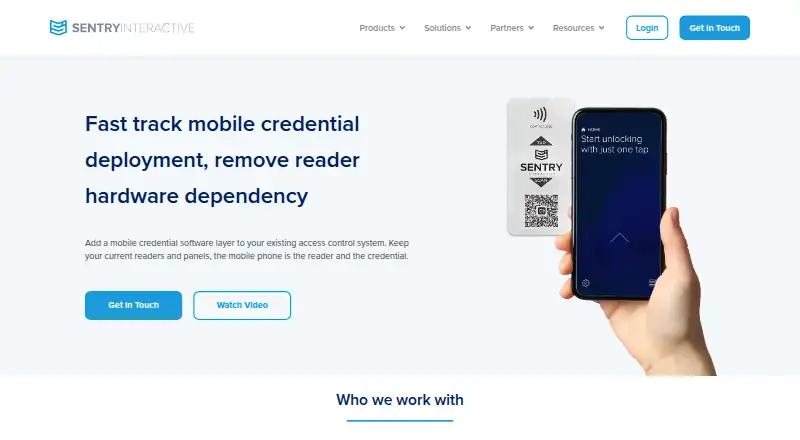
Sentry Interactive adds mobile credentials to compatible physical access control systems, allowing organizations to support phone-based entry while keeping existing reader hardware. A smartphone can act as the NFC reader for tap-to-unlock, and users can also scan a QR code. iOS and Android widgets support remote door access, and users can share time-sensitive digital keys. Administrators can apply time, geofence, and IP restrictions, and manage tenant, employee, and visitor credentials from a desktop, tablet, or smartphone. Sentry says its credentials work with more than 20 physical access control systems and can be embedded in third-party building and management apps. Its SDK can add mobile access credentials to other applications, including an organization’s own app. Smart Access Tiles are passive NFC units placed beside doors; they need no power or cabling and link to the cloud via QR code. Sentry describes its security approach as using asymmetric cryptography and Zero Trust, with audit logging and privacy regulation compliance. Pricing is available on request.
Good
- Supports NFC tap-to-unlock and QR scanning.
- Works with more than 20 access control systems.
- Credentials can be managed across common device types.
- Smart Access Tiles need no power or cabling.
- Pricing is available on request.
Watch out
- Mobile credentials require compatible access systems and readers.
- Pricing is available only on request.
Who it suits
Sentry Interactive is aimed at access-control manufacturers, software developers, security integrators, and IT and cybersecurity MSPs. It may suit organizations seeking phone-based access for tenants, employees, or visitors while retaining compatible existing hardware.
Verdict
Sentry Interactive provides a mobile credential layer for compatible physical access control systems, with QR and NFC entry options, administrative controls, and SDK support. Organizations should confirm that their access systems and readers are compatible and request pricing.
The facts
Each one read from Sentry Interactive's own pages, with the date it was checked.
What it does
- Access controls
- Time, geofence, and IP restrictions are available for mobile credentials.checked 3 Oct 2026
- Access methods
- Credentials support NFC tap-to-unlock and QR code scanning.checked 3 Oct 2026
- Access restrictions
- Time, geofence, and IP restrictions are available for access credentials.checked 4 Oct 2026
- Administration
- Credentials for tenants, employees, and visitors can be managed from a desktop, tablet, or smartphone.checked 3 Oct 2026
- Audience
- The company describes its customers and partners as access control manufacturers, software developers, security integrators, and IT and cybersecurity MSPs.checked 3 Oct 2026
- Cloud data
- The company says military-grade encryption protects user access data in the cloud and that audit logging and privacy regulation compliance further protect it.checked 4 Oct 2026
- Credential enrollment
- The open credential enrollment service supports mass enrollment of asymmetric mobile and physical credentials, including PKOC, when embedded in a compatible access control system.checked 4 Oct 2026
- Deployment
- The maker says mobile credentials can be set up and rolled out remotely, and advertises deployment within days.checked 3 Oct 2026
- Hardware
- Sentry Smart Access Tiles require no batteries or power and link to the cloud via QR code.checked 3 Oct 2026
- Integrations
- The integration portfolio includes access systems such as IMRON UnityIS, LenelS2 OnGuard, Genetec Synergis, AMAG Symmetry, Gallagher, Paxton, Brivo, and ZKTeco.checked 4 Oct 2026
- Limits
- Mobile credential compatibility is subject to supported access control systems; the maker says credentials work with compatible systems and readers.checked 3 Oct 2026
- Management
- Users can manage credentials for tenants, employees, and visitors from a desktop, tablet, or smartphone.checked 4 Oct 2026
- Mobile features
- The product supports remote door access through iOS or Android widgets and time-sensitive digital key sharing.checked 4 Oct 2026
- Product
- Sentry Interactive provides a mobile credential software layer that adds NFC mobile access to existing physical access control systems.checked 4 Oct 2026
- Readerless access
- The user's smartphone acts as the NFC reader, so existing door readers and access control hardware can remain in place.checked 4 Oct 2026
- SDK
- Its mobile access SDK can embed mobile credentials in third-party building, facilities, coworking, hospitality, club, and visitor-management apps.checked 4 Oct 2026
- Security
- The company says its credentials use asymmetric cryptography and Zero Trust, and that the product adheres to NIST Cybersecurity Framework 2.0.checked 4 Oct 2026
- Smart Access Tile
- The passive NFC Smart Access Tile needs no power or cabling and is placed next to a door.checked 4 Oct 2026
- Support
- The integrations page says customers can connect with a team member within 24 hours and request a system integration audit.checked 4 Oct 2026
- Target customers
- The company identifies access-control OEMs, software developers, security integrators, and IT and cybersecurity MSPs as partners it works with.checked 4 Oct 2026
- Unlock methods
- Access supports NFC tap-to-unlock and QR code scanning.checked 4 Oct 2026
The company
- Company
- Sentry says it was formed in 2021 and describes itself as a software developer for physical access control systems.checked 3 Oct 2026
- Company history
- The About page says Sentry Interactive was formed in 2021 and acquired Doordeck in 2022.checked 4 Oct 2026
The full review of Sentry Interactive
Overview
Sentry Interactive brings phone-based credentials to compatible physical access systems. It is best suited to access-control providers and organizations that want to add mobile entry to an existing setup or their own app. Keeping compatible door hardware in service is a meaningful advantage, but the fit depends on the installed access system and readers.
Key features
Mobile entry and credential controls. Users can enter with an NFC tap or QR scan, remotely access doors through iOS or Android widgets, and share time-sensitive digital keys. Administrators can apply time, geofence, and IP restrictions and manage tenant, employee, and visitor credentials from a desktop, tablet, or smartphone. This is useful for organizations that need to manage different kinds of access, though those controls do not remove the need for a compatible system.
Options for existing doors. A smartphone can act as the NFC reader, allowing compatible existing door readers and access-control hardware to remain in place. Sentry's passive Smart Access Tiles provide another approach: placed beside a door, they need no power, batteries, or cabling and link to the cloud through a QR code. Both options can reduce the need to replace door hardware, but compatibility remains the deciding constraint.
Integration and enrollment. Sentry says its credentials work with more than 20 physical access-control systems and can be embedded in third-party building and management apps. Its SDK lets a developer add credentials to an organization's own app. An open enrollment service supports mass enrollment of asymmetric mobile and physical credentials, including PKOC, when embedded in a compatible access-control system. These capabilities make Sentry more compelling for integrators and software teams than for someone seeking a standalone door-access app.
Security and deployment. Sentry says it uses asymmetric cryptography and Zero Trust, adheres to the NIST Cybersecurity Framework 2.0, and protects cloud access data with encryption. It also supports audit logging and privacy regulation compliance. Remote credential setup and rollout, which Sentry advertises as taking days, may suit organizations seeking a managed transition, while its contact team offers a system audit for integration and says it will connect within 24 hours.
Pricing
Sentry is paid software with custom pricing. Organizations should request a quote and confirm the cost for their systems, deployment, and integration needs before choosing it. There are no stated plan tiers or per-seat or usage limits to compare, so buyers should clarify those terms directly.
Platforms
Sentry supports Android, iOS, web, and API access. This mix suits organizations managing credentials across mobile devices and administrative interfaces, as well as developers integrating access into other software.
Who it's for
Sentry is aimed at access-control manufacturers, software developers, security integrators, and IT and cybersecurity managed service providers. It can also suit organizations managing access for tenants, employees, and visitors, provided their existing systems and readers are supported. A buyer looking only for a consumer-facing app or a solution independent of installed access hardware should look elsewhere.
Pros and cons
- Pros: Phone-based NFC and QR entry can be added while compatible existing hardware stays in place, giving integrators an alternative to replacing readers.
- Pros: Time-sensitive key sharing and time, geofence, and IP restrictions give administrators practical ways to shape credential access.
- Pros: SDK and third-party app integration support organizations that want to place credentials inside their own software.
- Cons: Compatibility with supported access-control systems and readers is essential, limiting its usefulness for sites with unsupported hardware.
- Cons: Custom pricing means buyers need a quote to assess cost and compare deployments.
Alternatives
For buyers weighing Seam, its freemium model, free plan, free trial, and a Unit Access plan at $5 a month offer a more visible low-cost starting point; choose it when those pricing options matter more than Sentry's stated focus on compatible physical access systems and embedded credentials.
re:membr Access Control is another paid option for Android, iOS, and web users to compare.
Choose Beckon Access when its free plan or club-management add-on at €99 a month, billed monthly, fits better; that add-on includes memberships, contracts, user accounting, SEPA direct debit, and online payments.
Gantner Fitness Check-In and Access Control is a paid alternative for Android, API, iOS, and web.
Swiftlane is worth comparing if a free plan or trial and a defined intercom-device video plan are important: Motion Detection Video Clips costs $30 a month per device and includes up to 300 clips a day, 15 seconds per clip, and 30-day cloud retention.
Brivo Security Suite is another paid Android, iOS, and web option, with Standard and Professional subscriptions available through a Brivo reseller.
GymAxess is a paid choice for gym access with door licensing at €10 a month or location licensing at €50 a month.
Gymetic is a paid gym-focused alternative with custom pricing.
See the broader Gym Access Control Software category when comparing gym-oriented options.
Verdict
Sentry Interactive is a strong fit for access-control organizations and integrators that want mobile credentials, administrative restrictions, and app integration without replacing compatible door hardware. Its chief reason to choose it is that combination of reader reuse and developer support; its chief reason to look elsewhere is that compatibility is a prerequisite and pricing requires a custom quote.
Alternatives to Sentry Interactive
- 1
FitManager Control
Free planAndroidiOSWebAPI8.0From $390 a year - 2

Seam
Free planAndroidiOSWebAPI8.0From $5 a month - 3
Swiftlane
Free planAndroidiOSWebAPI8.0From $30 a month - 4

PATO
AndroidiOSWeb7.7 - 5
Beckon Access
AndroidiOSWebAPI7.5From €0.40 a month - 6

KisiFit
AndroidiOSWebAPI6.8From $99 a month