
Plisio
Plisio is a cryptocurrency payment gateway for websites, with tools for accepting payments, creating invoices, managing a multicurrency wallet, and sending m…
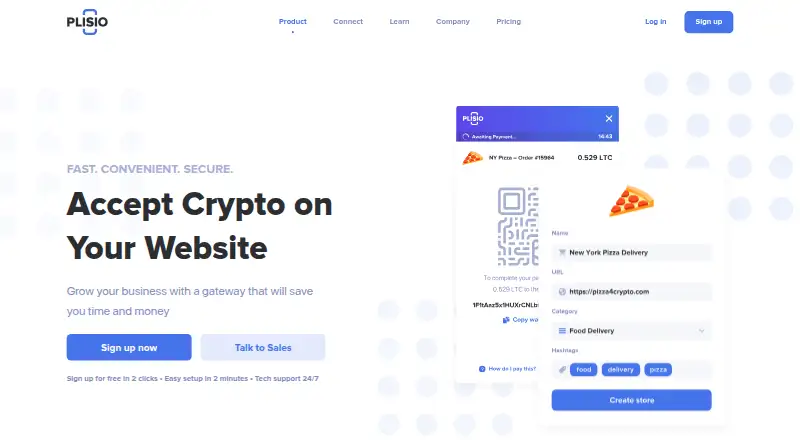
What Plisio is
Plisio is a cryptocurrency payment gateway for websites, with tools for accepting payments, creating invoices, managing a multicurrency wallet, and sending mass payouts. It supports Bitcoin, Ethereum, Litecoin, Zcash, Dogecoin, Dash, Monero, USDT, Bitcoin Cash, USD Coin, TrueUSD, Shiba Inu, BitTorrent, Tron, Binance Coin, Binance USD, and Ethereum Classic. Merchants can use plugins to accept crypto and convert it into 160+ world currencies. Invoices can be created and sent by email, SMS, or messengers, with QR codes for payment. Mass payouts can group up to 1,000 transactions and use data imported from an XLS file. Integrations include WooCommerce, Magento, PrestaShop, OpenCart, BigCommerce, and WHMCS. The White Label option keeps customers on the merchant's website and allows custom invoice design without Plisio branding. Plisio lists TLS v1.2 with at least 128-bit AES encryption, two-factor authentication, and trusted IP addresses. Wallet is free; Gateway API is $0.50, paid once, and White Label is $1.50, paid once. A 0.5 % transaction fee is listed.
Good
- Free Wallet plan
- Supports a broad list of cryptocurrencies
- Invoices include payment QR codes
- Mass payouts can group up to 1,000 transactions
- White Label removes Plisio branding
Watch out
- Transaction fee is 0.5 %
- Gateway API costs $0.50, paid once
- White Label costs $1.50, paid once
Who it suits
Plisio suits merchants and organizations that want to accept cryptocurrency on a website, including ecommerce businesses, freelancers, marketplaces, nonprofits, creators, and gaming or crowdfunding projects. Its API, plugins, Android app, and payout tools serve different payment workflows.
Verdict
Plisio brings crypto checkout, invoicing, wallets, and mass payouts together, with website plugins and developer libraries. Check the listed transaction fee and one-time API and White Label prices against the payment setup you need.
Plans and prices
From Plisio's own pricing page, checked 30 Sep 2026.
| Plan | Price | What it gives you |
|---|---|---|
| Wallet | Free | Manage multicurrency wallet · Download the mobile app · Create invoices |
| Gateway API | $0.50, paid once | Everything in Wallet · Connect payment via API to your website · Use Mass Payouts |
| White Label | $1.50, paid once | Everything in API · Custom invoice design · No redirection or Plisio branding |
The facts
Each one read from Plisio's own pages, with the date it was checked.
Where it runs
- Android app
- A Plisio blog post says its Android app supports accepting payments, paying and creating invoices, and tracking transactions and crypto rates.checked 30 Sep 2026
What it does
- Cold storage
- Plisio says 90% of funds are held in cold wallets.checked 30 Sep 2026
- Currencies
- The homepage says its plugins let merchants accept and convert crypto into 160+ world currencies.checked 30 Sep 2026
- Developer libraries
- Plisio lists server libraries for C#, Java, Laravel, Node.js, PHP, Python, and Ruby, plus client libraries for Android, React, Telegram Bot, and Vue.checked 30 Sep 2026
- Integrations
- Its integrations page lists plugins including WooCommerce, Magento, PrestaShop, OpenCart, BigCommerce, and WHMCS.checked 30 Sep 2026
- Intended users
- The homepage names finance, ecommerce, high-risk businesses, online retail, freelancers, marketplaces, nonprofits, adult businesses, creators, gaming, and crowdfunding as target use cases.checked 30 Sep 2026
- Invoices
- Plisio invoices can be built, sent by email, SMS, or messengers, and include QR codes for payment.checked 30 Sep 2026
- Mass payouts
- Plisio says merchants can pool up to 1,000 transactions and import payout data from an XLS file.checked 30 Sep 2026
- Privacy
- Plisio says it does not require proof of identity and deletes transaction information after it is no longer required to make a payment.checked 30 Sep 2026
- Product
- Plisio is a cryptocurrency payment gateway for accepting crypto on a website, with wallet, invoice, mass payout, and white label products.checked 30 Sep 2026
- Security
- The security page states Plisio uses TLS v1.2 with at least 128-bit AES encryption, two-factor authentication, and trusted IP addresses.checked 30 Sep 2026
- Support
- Plisio advertises 24/7 technical support and live chat support.checked 30 Sep 2026
- Supported coins
- The homepage lists Bitcoin, Ethereum, Litecoin, Zcash, Dogecoin, Dash, Monero, USDT, Bitcoin Cash, USD Coin, TrueUSD, Shiba Inu, BitTorrent, Tron, Binance Coin, Binance USD, and Ethereum Classic.checked 30 Sep 2026
- White label
- White Label lets clients stay on the merchant website during payment and supports customized invoice design without Plisio branding.checked 30 Sep 2026
The full review of Plisio
Overview
Plisio is a crypto payment gateway for merchants that want to accept cryptocurrency through a website, create invoices, manage a wallet, or send mass payouts. It suits online businesses and other organizations that need crypto checkout alongside integrations or developer tools.
Its breadth is the draw: payment links, QR codes, plugins, an API, invoices, and payouts cover several ways to collect and move crypto. The trade-off is a 0.5% transaction fee, plus one-time charges for API access and White Label features.
Key features
Plisio supports Bitcoin, Ethereum, Litecoin, Zcash, Dogecoin, Dash, Monero, USDT, Bitcoin Cash, USD Coin, TrueUSD, Shiba Inu, BitTorrent, Tron, Binance Coin, Binance USD, and Ethereum Classic. Its plugins let merchants accept crypto and convert it into more than 160 world currencies, making it a broad checkout option for businesses serving customers across markets. Settlement is in crypto, however, so merchants seeking settlement in fiat should look elsewhere.
Checkout can run through an API, payment links, QR codes, ecommerce plugins, an Android SDK, or a Telegram Bot. Plisio lists integrations for platforms including WooCommerce, Magento, PrestaShop, OpenCart, BigCommerce, and WHMCS. That range makes it useful to merchants who want to connect crypto payments to an existing store, while the server libraries for C#, Java, Laravel, Node.js, PHP, Python, and Ruby offer options for custom builds. Client libraries include Android, React, Telegram Bot, and Vue.
Invoices can be created and sent by email, SMS, or messengers, with QR codes for payment. Mass payouts can bundle up to 1,000 transactions and import payout data from an XLS file, which is geared toward businesses with recurring or high-volume outgoing payments rather than occasional transfers.
White Label keeps customers on the merchant’s website during payment and allows custom invoice design without Plisio branding. Security measures include TLS v1.2 with at least 128-bit AES encryption, two-factor authentication, and trusted IP addresses; Plisio says 90% of funds are held in cold wallets. It says it does not require proof of identity and deletes transaction information once it is no longer needed to make a payment. Support includes 24/7 technical support and live chat.
Pricing
The Wallet plan is free. It includes a multicurrency wallet, the mobile app, and invoice creation, making it the no-cost entry point for businesses that do not need website payment API access or mass payouts. The trade-off is that those gateway capabilities sit in a paid tier.
Gateway API costs $0.50, paid once and includes everything in Wallet, plus API payment connection to a website and Mass Payouts. It is the relevant step up for merchants integrating checkout or paying out in batches. White Label costs $1.50, paid once and includes everything in API, plus custom invoice design and checkout without redirection or Plisio branding; it is aimed at merchants who want a more continuous, branded payment experience.
All plans sit alongside a 0.5% transaction fee. The low one-time access prices do not remove that per-transaction cost, so merchants should account for volume when comparing the gateway with alternatives. The Android app supports accepting payments, paying and creating invoices, and tracking transactions and crypto rates.
Platforms
Plisio supports Android, web, and API use. Its ecommerce platform coverage includes WooCommerce, BigCommerce, Blesta, Botble, Clientexec, CS-Cart, Easy Digital Downloads, Ecwid, Magento, OpenCart, osCommerce, PrestaShop, Shopware, VirtueMart, WHMCS, X-Cart, XenForo, Zen Cart, and Zender. This is a substantial fit for merchants using established store software, though custom integrations may call for the API and developer libraries.
Who it's for
Plisio targets finance and ecommerce, online retail, high-risk businesses, freelancers, marketplaces, nonprofits, adult businesses, creators, gaming, and crowdfunding. Its combination of checkout, invoices, and bulk payouts is most compelling for businesses that need more than a simple crypto payment button. For a merchant that only wants basic payment acceptance, the extra tools may be unnecessary.
Pros and cons
- Pros: Multiple checkout methods and a wide plugin list let merchants choose between existing integrations and custom development.
- Pros: Invoices and payouts cover both collecting and sending crypto, including payout batches of up to 1,000 transactions.
- Pros: White Label checkout avoids redirection and Plisio branding for merchants who want a branded payment flow.
- Cons: The 0.5% transaction fee remains relevant even with the inexpensive one-time API and White Label charges.
- Cons: Settlement is in crypto, so it is not the right fit for merchants who need fiat settlement.
Alternatives
Triple-A is another freemium API and web option; choose it if negotiated customer fees based on volume, settlement arrangements, and supported currencies better suit your onboarding needs.
BTCPay Server is a free, self-hosted option with no subscriptions or transaction fees. It is worth considering for teams prepared to use a self-hosted setup and seeking to avoid transaction fees.
CoinRemitter offers a free plan with a 0.23% transaction fee, 100 API requests per minute, 500 addresses per wallet, and limited-hours support. Choose it if those caps and support terms fit your needs better than Plisio’s 0.5% fee and feature tiers.
Apirone is an alternative for buyers comparing a paid API and web service.
B2BINPAY is a paid API and web alternative with a free trial.
MiraclePay is a paid API and web alternative for buyers evaluating another payment processor.
CoinGate is a paid API and web option with a $1, paid once Standard plan, weekly settlements, and no monthly fees. Its stated coverage is 10+ cryptocurrencies and 180+ countries; it may suit merchants prioritizing those terms over Plisio’s wider listed coin range and crypto settlement.
KuCoin Pay is another paid option for web, iOS, and Android.
See the Crypto Payment Processors category for more options.
Verdict
Plisio is a strong fit for merchants who want crypto checkout, invoicing, and mass payouts in one service, especially those using one of its many ecommerce integrations or developer libraries. Its no-cost Wallet plan and modest one-time upgrade charges lower the barrier to entry, but the 0.5% transaction fee and crypto settlement are central considerations. Choose it for breadth and flexible integration; look elsewhere if you require fiat settlement or need a lower transaction fee.
Getting started
- Open the Plisio website
- Choose the free Wallet plan or a paid plan
- Connect your website through the payment API, payment links, QR codes, or an ecommerce plugin
- Create invoices for email, SMS, or messenger delivery
- Use the Android app or listed developer libraries when appropriate
Questions
Is there a free plan?
Yes. The Wallet plan is listed as free and includes a multicurrency wallet, mobile-app download, and invoice creation.
What do the paid plans cost?
Gateway API is $0.50, paid once. White Label is $1.50, paid once.
Which platforms integrate with Plisio?
Listed platforms include WooCommerce, BigCommerce, Magento, OpenCart, PrestaShop, WHMCS, Android, and others.
Does Plisio provide an API?
Yes. It offers a payment API, API checkout, server libraries, and client libraries.
What checkout methods are available?
The listed methods are API, payment links, QR codes, ecommerce plugins, Android SDK, and Telegram Bot.
What security measures are listed?
Plisio lists TLS v1.2 with at least 128-bit AES encryption, two-factor authentication, and trusted IP addresses.
Alternatives to Plisio
- 1

BitPay
Free planOpen sourceAndroidiOSWebAPI8.6From $1.53 a month - 2

NOWPayments
Free planAndroidiOSWebAPI7.5Free plan - 3

BTCPay Server
Free planOpen sourceWebAPILinuxSelf-hosted7.2Free plan - 4

CoinPayments
Free planWebAPI6.8Free plan - 5
KuCoin Pay
Free planAndroidiOSWebAPI6.7Free plan - 6
CoinRemitter
Free planWebAPI6.5From $99.99 a month