openDCIM
openDCIM is a free, web-based application for tracking data center inventory and managing physical infrastructure.
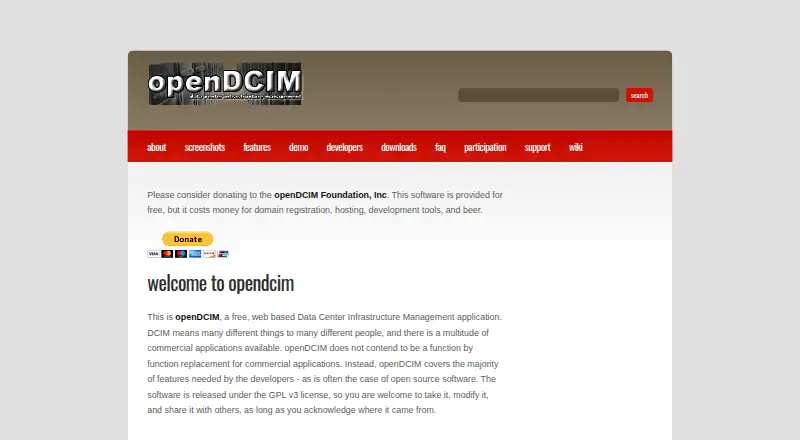
What openDCIM is
openDCIM is a free, web-based application for tracking data center inventory and managing physical infrastructure. It supports asset tracking across multiple rooms and planning for space, power, and cooling. Custom image maps can show cabinet zones with overlays for power, space, temperature, and weight capacity. The application maps power connections from devices through strips and panels to source feeds, as well as network connections to devices designated as switches. It reports fault-tolerance status and can simulate the effect of an outage at a panel or source feed. Integrations include intelligent power strips and UPS devices from APC, Geist Manufacturing, Liebert, and Server Technologies; OIDs can be changed for other manufacturers. MySQL supports reporting and exporting data to other applications. Multiple user-rights levels are available, with authentication through Apache or LDAP. The listed hosting requirements include Linux, Apache with SSL, MySQL, PHP, and a web client. The software is GPL v3 licensed and intended for on-premises deployment.
Good
- Tracks physical assets across multiple rooms
- Maps cabinet zones with capacity overlays
- Simulates panel or source-feed outages
- Supports multiple user-rights levels
Watch out
- Requires Linux, Apache, MySQL, and PHP
- On-premises deployment requires local hosting
- Newest listed release is version 23.04 from October 15, 2023
Who it suits
openDCIM suits data center teams tracking equipment and planning space, power, and cooling across rooms. It may also help teams mapping infrastructure connections and evaluating certain power-feed outages.
Verdict
openDCIM combines inventory tracking with capacity planning, connection mapping, and power integrations. It is a free option for teams able to meet its on-premises hosting requirements.
Plans and prices
From openDCIM's own pricing page, checked 2 Oct 2026.
| Plan | Price | What it gives you |
|---|---|---|
| Free | Free | Free web based application · GPL v3 |
The facts
Each one read from openDCIM's own pages, with the date it was checked.
What it does
- Access control
- The software supports multiple levels of user rights, and the site says authentication is required, either through Apache or LDAP.checked 2 Oct 2026
- API status
- The features page lists a RESTful API as in development; the FAQ says an API was implemented with version 4.x or later.checked 2 Oct 2026
- Connections
- The features page lists mapping power connections from devices through power strips and panels to source feeds, and mapping network connections to devices classified as switches.checked 2 Oct 2026
- Data and reporting
- The application is built on MySQL, which the site says supports report building and exporting data to other applications.checked 2 Oct 2026
- Fault tolerance
- It reports fault tolerance status and simulates the impact of a panel or source feed outage.checked 2 Oct 2026
- Hosting requirements
- The current system requirements specify Linux, Apache 2.x or higher with SSL enabled, MySQL 5.x or higher, PHP 8.0 or higher, and a web based client.checked 2 Oct 2026
- Inventory and capacity
- Its stated goals include physical asset tracking across multiple rooms and management of space, power, and cooling.checked 2 Oct 2026
- License
- The software is released under the GPL v3 license.checked 2 Oct 2026
- Power integrations
- It integrates with intelligent power strips and UPS devices from APC, Geist Manufacturing, Liebert, and Server Technologies, and OIDs can be updated for other manufacturers.checked 2 Oct 2026
- Project organization
- The openDCIM Foundation, Inc. is described as a not-for-profit corporation formed to manage the project and cover hosting and publicity expenses.checked 2 Oct 2026
- Purpose
- openDCIM is a free, web based data center infrastructure management application for tracking data center inventory.checked 2 Oct 2026
- Release listing
- The downloads page lists version 23.04 dated October 15, 2023 as its newest released version.checked 2 Oct 2026
- Support
- The project directs questions to GitHub Discussions and IRC, and says paid support contracts are typically based on hourly rates that vary by requested work.checked 2 Oct 2026
Where it runs
- Mapping
- Features include custom image maps with clickable cabinet zones and overlay layers for power, space, temperature, and weight capacity.checked 2 Oct 2026
The full review of openDCIM
Overview
openDCIM is a self-hosted application for tracking data-center equipment and managing the infrastructure around it. It is a strong fit for teams that can operate a Linux web stack and want inventory records tied to capacity and connection maps. Its broad operational scope costs nothing in licensing, but running it requires in-house hosting.
Key features
openDCIM tracks physical assets across multiple rooms and covers space, power, and cooling. That makes it more useful than a standalone equipment register when operators need to understand how inventory relates to facility capacity.
Custom image maps make cabinet zones clickable, with overlays for power, space, temperature, and weight capacity. Operators can map power paths from devices through strips and panels to source feeds, as well as network connections to devices classified as switches. These views provide useful context for capacity and dependency planning, though the network mapping is specifically described for switches.
Power integrations cover intelligent strips and UPS devices from APC, Geist Manufacturing, Liebert, and Server Technologies. OIDs can be updated for other manufacturers, offering some flexibility beyond those named integrations. Fault-tolerance reporting and simulations of panel or source-feed outages add a practical way to assess the effect of power-path failures.
MySQL underpins the application, with report building and data export to other applications among its stated capabilities. Multiple user-rights levels help separate access, while authentication is required through Apache or LDAP. These are useful controls for shared operational records, but teams must provide and manage the hosting environment themselves.
The project’s API status is not entirely consistent: the features page calls its RESTful API in development, while the FAQ says an API was implemented with version 4.x or later. Teams that depend on API workflows should verify that the interface they need is available in their deployment. The downloads page identifies version 23.04, dated October 15, 2023, as the newest release.
Pricing
openDCIM is free: its Free plan costs nothing and includes the web-based application under the GPL v3 license. There are no paid tiers described. The absence of a license charge is attractive for teams with the technical capacity to run it, but it does not remove the work of maintaining an on-premises deployment.
Current requirements call for Linux, Apache 2.x or higher with SSL enabled, MySQL 5.x or higher, PHP 8.0 or higher, and a web-based client. Those requirements make openDCIM a poor fit for teams seeking a hosted service or without the staff and infrastructure to support this stack. Questions go to GitHub Discussions and IRC; paid support contracts are typically hourly, with rates varying by the work requested.
Platforms
openDCIM is available for Linux, self-hosted deployment, and web access. Its on-premises model suits operators who want to run the system in their own environment; it is not a hosted alternative for teams that want to avoid managing servers and dependencies.
Who it's for
Choose openDCIM if your team needs inventory, space and capacity planning, cooling and power monitoring, and infrastructure mapping in one free system—and can meet its hosting requirements. It is particularly relevant where power-path visibility and outage simulation matter alongside asset records. Look elsewhere if you need a turnkey hosted deployment or require a dependable API workflow without first confirming the relevant API capability.
Pros and cons
- Pros: Free GPL v3 software covers inventory across multiple rooms, capacity planning, power integrations, and cabinet mapping, avoiding a software license bill for teams able to host it.
- Pros: Power-path mapping and fault simulations can help operators understand dependencies and the consequences of a panel or source-feed outage.
- Cons: Linux, Apache, MySQL, and PHP requirements place installation and operational responsibility on the user.
- Cons: The API’s stated status is ambiguous, which makes it a less certain choice for teams building workflows around API access.
Alternatives
For a wider comparison, browse Data Center Infrastructure Management Software.
- Global Site Management is worth considering for smaller data centers or pilot programs seeking its no-cost GSMpowerlite plan; it also has a free trial and supports Android, iOS, web, and Windows.
- ColdAisle is another free, self-hosted web option, with Windows also among its supported platforms and an MIT license.
- Danbyte may suit teams looking for a self-hosted, open-source option with all features included, no seat license, and no enterprise tier or license expiry.
- RackTables is a free web-based option under GNU GPL version 2.
- Hyperview is an alternative for teams willing to pay per asset per year; it offers a 30-day trial with all features and no credit card required.
- Brightlayer DCIM is a paid alternative purchased through an Eaton reseller, with demonstrations or consultations available.
- Cormant-CS may fit teams seeking a paid subscription for approximately 25–30 racks; its cited annual plan covers 500 assets and includes support with 32 hours of live consultant assistance.
- EcoStruxure IT is a paid option with an Expert plan covering 250 nodes on a three-year term.
Verdict
openDCIM is a compelling no-license-cost choice for data-center operators who can manage a Linux-based on-premises stack and want capacity and power-path insight alongside inventory. Its chief advantage is the breadth of those connected operational tools; its chief drawback is the hosting burden, compounded for API-dependent teams by uncertainty about API availability. Choose it when self-hosting is acceptable and its infrastructure mapping meets your needs; favor another product if you need managed hosting or a clearly established API.
Alternatives to openDCIM
- 1
Hyperview
AndroidiOSWebAPI7.8From $3 a year - 2

Danbyte
Free planOpen sourceWebAPILinuxSelf-hosted7.4Free plan - 3
Global Site Management
Free planAndroidiOSWebWindows7.0Free plan - 4

Cormant-CS
AndroidWebAPISelf-hosted6.9From $7,200 a year - 5

Sunbird dcTrack
AndroidiOSWebAPI6.9From $19.50 a month - 6
RackTables
Free planWeb6.2Free plan