
Lytics
Lytics is a customer data platform focused on connecting customer data to content management systems so organizations can personalize experiences across chan…
What Lytics is
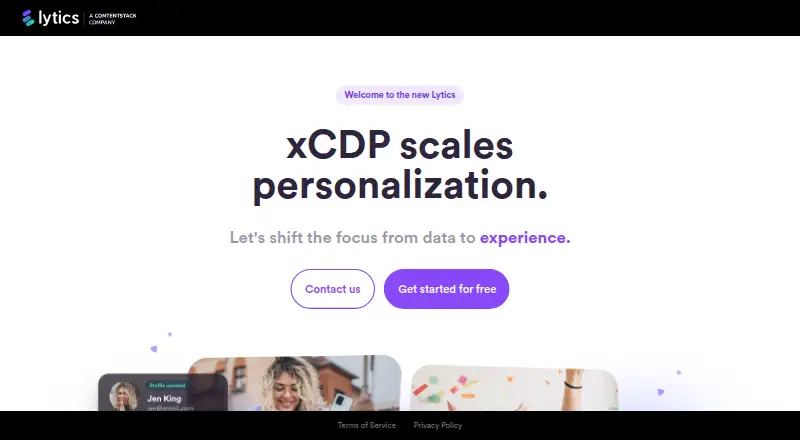
Lytics is a customer data platform focused on connecting customer data to content management systems so organizations can personalize experiences across channels. Its products include Conductor for data infrastructure, Cloud Connect for reverse ETL, and Decision Engine for activation and decisioning. The Personalization Engine can tailor website content, product recommendations and user experiences using visitor behavior and preferences in real time. Lytics also supports dynamic audience segments based on behavior, data science and customer preferences. Its integrations directory covers areas such as advertising, analytics, CRM, data warehousing, email, mobile and web personalization. The company says its generative AI tools use OpenAI and Google Vertex AI for data mapping and enrichment, audience creation and journey orchestration. Deployment choices include multi-tenant, single-tenant private and customer-tenant private-cloud options on Google Cloud. A free Personalization Engine plan includes website personalization and native WordPress and Drupal integrations. Lytics lists Android, iOS, web and API availability; event ingress and trigger egress quotas depend on pricing.
Good
- Personalizes content using behavior and preferences in real time
- Supports dynamic audience segmentation
- Free plan includes website personalization
- Native WordPress and Drupal integrations
- Multiple Google Cloud deployment options
Watch out
- Event ingress quotas depend on pricing
- Trigger egress quotas depend on pricing
Who it suits
Lytics suits organizations seeking to connect customer data with content systems and personalize experiences, from growing startups to enterprises. The free Personalization Engine may suit teams focused on website personalization with WordPress or Drupal.
Verdict
Lytics combines customer data infrastructure, activation and personalization, with a free plan centered on website personalization. Check the pricing-dependent event and trigger quotas against expected usage.
Plans and prices
From Lytics's own pricing page, checked 30 Sep 2026.
| Plan | Price | What it gives you |
|---|---|---|
| Lytics Personalization Engine | Free | 100% free · website personalization · native WordPress and Drupal integrations |
The facts
Each one read from Lytics's own pages, with the date it was checked.
What it does
- AI
- Lytics says its generative AI tools use OpenAI and Google Vertex AI for data mapping and enrichment, audience creation, and journey orchestration.checked 30 Sep 2026
- Audience
- Lytics presents the Personalization Engine as suitable for growing startups and enterprises.checked 30 Sep 2026
- Core products
- Lytics describes three products: Conductor for data infrastructure, Cloud Connect for reverse ETL, and Decision Engine for activation and decisioning.checked 30 Sep 2026
- Deployment
- Lytics describes multi-tenant, single-tenant private, and customer-tenant private-cloud deployment options on Google Cloud.checked 30 Sep 2026
- Integrations
- The integrations directory lists connections across categories including advertising, analytics, CRM, data warehousing, email, mobile, and web personalization.checked 30 Sep 2026
- Personalization
- The Personalization Engine tailors website content, product recommendations, and user experiences using visitor behavior and preferences in real time.checked 30 Sep 2026
- Privacy
- Lytics says customers control which personal information sources and destinations they use, and that it does not sell PII or add third-party data except through customer-directed integrations.checked 30 Sep 2026
- Product
- Lytics describes its xCDP as a platform for bringing customer data to content management systems to deliver personalized experiences across channels.checked 30 Sep 2026
- Security
- Lytics reports an independent SOC 2 Type II examination and regular independent penetration tests and vulnerability scans.checked 30 Sep 2026
- Segmentation
- Lytics supports dynamic audience segmentation based on behavioral cues, data science, and customer preferences.checked 30 Sep 2026
- Support
- Lytics offers Standard and Premium technical support; Premium adds faster initial response targets and access to a training video library.checked 30 Sep 2026
- Usage limits
- The platform limits page says event ingress and trigger egress quotas depend on pricing.checked 30 Sep 2026
The company
- Founded
- 2013checked 28 Sep 2026
- Headquarters
- United Stateschecked 28 Sep 2026
The full review of Lytics
Overview
Lytics is an xCDP for connecting customer data with content systems and coordinating personalized experiences across channels. It suits teams that want behavioral data to drive website experiences and audience activation, from growing startups to enterprises. The free Personalization Engine lowers the barrier to entry, while event and trigger quotas tied to pricing make expected usage an important buying check.
Its product family spans Conductor for data infrastructure, Cloud Connect for reverse ETL, and Decision Engine for activation and decisioning. Real-time profiles, identity resolution, audience activation, and inbound and outbound data ingestion give it a broader remit than a website-personalization tool alone. A wider category view is available in Customer Data Platforms.
Key features
Personalization and segmentation
The Personalization Engine uses visitor behavior and preferences in real time to tailor website content, product recommendations, and other user experiences. That is the strongest reason to choose Lytics when a site needs to respond to individual visitors rather than present one fixed experience. Dynamic audience segmentation uses behavioral cues, data science, and customer preferences, giving marketing teams a way to turn those signals into usable audiences.
Data infrastructure and activation
Conductor addresses the data-infrastructure layer, Cloud Connect moves data through reverse ETL, and Decision Engine handles activation and decisioning. Together with profile resolution and audience activation, these products can support organizations that need customer data to move from collection into operational destinations instead of remaining in a warehouse.
Connections, AI, and controls
Lytics connects with services across advertising, analytics, CRM, data warehousing, email, mobile, and web personalization. Its generative AI tools use OpenAI and Google Vertex AI for data mapping and enrichment, audience creation, and journey orchestration. Customers control which personal-information sources and destinations are used; Lytics says it does not sell personally identifiable information or add third-party data except through customer-directed integrations. An independent SOC 2 Type II examination, regular independent penetration tests, and vulnerability scans provide meaningful security assurances.
Deployment can be multi-tenant, single-tenant private, or customer-tenant private cloud on Google Cloud. Standard and Premium technical support are offered; Premium adds faster initial response targets and a training-video library.
Pricing
Lytics uses a freemium model and offers a free trial. The published Lytics Personalization Engine plan costs free, is 100% free, and includes website personalization with native WordPress and Drupal integrations. It is a practical starting point for teams focused on web personalization, especially those validating the value of real-time profiles, identity resolution, and audience activation before committing to broader customer-data infrastructure.
The trade-off is scale visibility: event-ingress and trigger-egress quotas depend on pricing. Teams with high traffic, frequent triggers, or broader activation requirements should confirm those allowances before treating the free plan as a long-term production tier. Pricing for expanded usage is custom rather than stated, so budget planning requires a direct commercial discussion.
Platforms
Lytics supports Android, iOS, web, and API access. That combination covers mobile and browser experiences while allowing programmatic integration into a wider data stack.
Who it's for
Lytics is a strong fit for growing startups and enterprises that want real-time personalization tied to customer profiles and dynamic audiences. It is particularly suitable for organizations using WordPress or Drupal and for teams that need infrastructure, reverse ETL, and activation in one product family. It is less suitable when predictable, high-volume quotas and published enterprise pricing are prerequisites.
Pros and cons
- Pros: Free Personalization Engine plan; real-time personalization and profiles; identity resolution and audience activation; broad integration categories; flexible Google Cloud deployment models; documented privacy and security controls.
- Cons: Event-ingress and trigger-egress limits vary by pricing; higher-capacity pricing is custom; the free plan centers on website personalization rather than the full product family; Premium support benefits require the higher support tier.
Alternatives
- RudderStack Customer Data Platform is the better choice when a free-forever plan with 250,000 events per month, 16 SDK sources, and 200+ cloud destinations is more useful than Lytics' website-focused free tier.
- Manago AI (formerly SALESmanago) suits buyers seeking a paid platform with a free trial and contact- and SMS-based plan structures.
- Twilio Segment is preferable when a free plan with 1,000 visitors per month, 500,000 Reverse ETL records per month, two sources, and 700+ integrations matches the intended scale.
- BlueConic is an alternative with a free access subscription, subject to profile, volume, and usage limits.
- Apache Unomi is the choice for an Apache-licensed open-source option without a free trial.
- Tracardi fits teams wanting an open-source version with limited events per second, single tenancy, limited automation, and no event validation.
- Hightouch is better for reverse-ETL-focused work when two active syncs and hourly frequency are sufficient on its free plan.
- Leadspace is an alternative for teams evaluating a free starter plan with one seat and 25 credits per day.
Verdict
Choose Lytics if real-time website personalization, behavioral segmentation, and a path into customer-data infrastructure matter more than a simple fixed-price package. Its free Personalization Engine is an unusually accessible entry point, but teams should look elsewhere if quota certainty or published pricing is essential before scaling.
Alternatives to Lytics
- 1

RudderStack Customer Data Platform
Free planOpen sourceAndroidiOSWebAPI8.5From $265 a month - 2

Hightouch
Free planAndroidiOSWebAPI8.2From $350 a month - 3

Twilio Segment
Free planAndroidiOSWebAPI8.2From $120 a month - 4
Manago AI (formerly SALESmanago)
Free planAndroidiOSWebAPI8.1From €30 a month - 5

Leadspace
Free planWebAPIExtension7.7From $49 a month - 6
SAP Analytics Cloud
AndroidiOSWebAPI7.6From $36 a month