Facter
Facter is a free command-line tool that collects system details, including hardware, network configuration and operating system type and version.
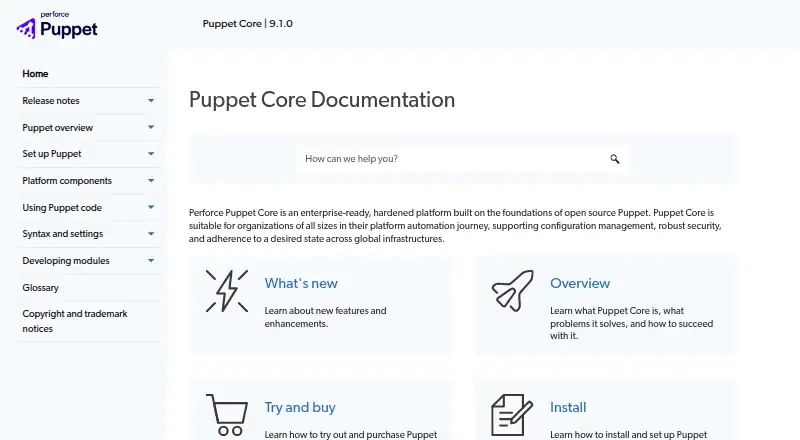
What Facter is
Facter is a free command-line tool that collects system details, including hardware, network configuration and operating system type and version. Puppet uses it to gather information before requesting a catalog or compiling one with puppet apply. Its built-in core facts include legacy and structured data, though the facts available can vary by system. Users can create custom facts in Ruby, with multiple resolutions available for determining values, or use external facts that return fixed data or output from an executable. Facts may be hashes or arrays, and Boolean, numeric and structured values retain their types. Configuration can block groups of facts or cache results with time-to-live settings, which is useful when collection is slow. Facts can be used in Puppet manifests, and the --puppet option loads Puppet-specific facts from the CLI. PuppetDB’s API can be used to explore infrastructure facts or build search and reporting tools. Facter supports Linux, macOS and Windows and can be self-hosted. Legacy facts do not appear in default command-line output unless --show-legacy is specified.
Good
- Collects hardware, network, and operating-system information.
- Supports custom Ruby and external facts.
- Preserves Boolean, numeric, and structured fact types.
- Can cache facts with time-to-live settings.
Watch out
- Custom-fact examples require Ruby familiarity.
- Legacy facts are hidden by default.
- Facter does not create facter.conf automatically.
Who it suits
Facter suits system administrators and Puppet users who need system details available to manifests or infrastructure tools. Creating custom facts requires some familiarity with Ruby.
Verdict
Facter provides system facts for Puppet workflows and supports custom collection and caching. Users should account for its manual configuration-file setup and the command-line option needed to display legacy facts.
Plans and prices
From Facter's own pricing page, checked 14 Oct 2026.
| Plan | Price | What it gives you |
|---|---|---|
| Puppet Core Developer | Free | up to 25 nodes · latest releases for development |
| Puppet Core Commercial | Priced on request | 25+ nodes · vendor-supported builds · support and SLAs |
| Puppet Enterprise | Priced on request | subscription per node · web GUI · RBAC · hybrid infrastructure management |
| Puppet Enterprise Advanced | Priced on request | subscription per node · compliance and vulnerability remediation · AI features · priority support |
The facts
Each one read from Facter's own pages, with the date it was checked.
What it does
- Acquisition news
- Perforce announced completion of its Puppet acquisition on May 18, 2022, with financial terms undisclosed.checked 14 Oct 2026
- API extensibility
- Resolvers gather data from commands, files or other system sources, while the framework formats and exposes those values through Facter’s Ruby APIs.checked 14 Oct 2026
- Built-in facts
- Facter ships with built-in core facts, including legacy and structured facts, though not all facts apply to every system.checked 4 Oct 2026
- Collected data
- The command-line tool gathers hardware details, network settings, operating-system type and version, hostname, IP address and other system information.checked 14 Oct 2026
- Command line
- Facter can be installed as a Ruby gem with the command gem install facter.checked 14 Oct 2026
- Configuration
- Facter can be configured to block fact groups or cache facts with time-to-live settings; this can help when fact collection is slow.checked 4 Oct 2026
- Configuration file limit
- Facter does not create facter.conf automatically, so users must create it manually or manage it with a module.checked 4 Oct 2026
- Custom facts
- Users can add custom facts with Ruby snippets on the primary Puppet server, distributed to clients through module plug-ins.checked 14 Oct 2026
- Documentation depth
- Official documentation covers CLI use, core facts, custom and external facts, structured facts and facter.conf configuration.checked 14 Oct 2026
- External facts
- External facts may come from arbitrary executables, scripts or static structured-data files, allowing facts to be written in languages such as Perl, C or plain text.checked 14 Oct 2026
- Fact configuration
- The facter.conf file can cache or block fact groups and individual facts and controls global and command-line behavior.checked 14 Oct 2026
- Fact groups
- Facter 4 supports user-defined fact groups and dot notation for custom and external fact hierarchies.checked 14 Oct 2026
- Granular caching
- Facter 4 supports blocking and caching at any level of a fact hierarchy, including individual nested values.checked 14 Oct 2026
- Independent pricing perception
- G2’s review summary places Puppet Enterprise’s perceived cost at the highest category, shown as four dollar signs, and reports an average implementation time of four months.checked 14 Oct 2026
- Latest release
- Facter 4.22.0 was released in September 2026 and constrains its JSON dependency to versions from 2.0 up to but excluding 4.checked 14 Oct 2026
- Legacy fact behavior
- Legacy facts are excluded from default command-line output and can be included with the --show-legacy option.checked 4 Oct 2026
- License
- Facter is open source and the repository identifies the Apache-2.0 license.checked 14 Oct 2026
- Limit: Capterra complexity
- Capterra reviewers repeatedly cite a steep learning curve and the complexity of Ruby-based development as drawbacks.checked 14 Oct 2026
- Limit: Gartner unresolved issues
- A Gartner reviewer reports bumps and unresolved issues that are not always obvious and may require product changes.checked 14 Oct 2026
The company
- Company headquarters and size
- LinkedIn lists Perforce Puppet headquarters in Minneapolis, Minnesota and company size of 501–1,000 employees.checked 14 Oct 2026
- Company identity
- Puppet was created in 2005 by Luke Kanies and has been owned by Perforce since 2022.checked 14 Oct 2026
Money
- Enterprise trial allowance
- Puppet Enterprise can be run on 10 nodes at no charge with no stated time limit.checked 14 Oct 2026
- Free node allowance
- Puppet Core has a free developer or user license for testing or development on a maximum of 25 nodes.checked 14 Oct 2026
- Limit: G2 learning curve and cost
- G2 reviewers repeatedly describe Ruby or Puppet coding and initial setup as difficult, and some call Puppet Enterprise expensive versus alternatives.checked 14 Oct 2026
The full review of Facter
Overview
Facter is a command-line system-information collector designed to feed infrastructure management, especially Puppet. It is best suited to administrators who need machine facts in automation rather than a quick, graphical readout.
Key features
Facter gathers hardware, network, and operating-system details. Its built-in core facts include legacy and structured forms, although the facts available depend on the system being queried. Legacy facts do not appear in normal CLI output; use --show-legacy when older fields are needed. That default keeps routine output focused, but users relying on legacy fields must remember the extra option.
For tailored collection, custom facts can be written in Ruby, and multiple resolutions can determine a fact's value. External facts provide another route, returning static data or results from an executable script or program. This flexibility serves teams adapting collection to their infrastructure, while the Ruby examples make custom extensions a better fit for people comfortable with Ruby than for users seeking a turnkey utility.
Facts may be structured as hashes or arrays, and Puppet retains Boolean, numeric, and structured values rather than converting them to strings. Administrators can block fact groups or set time-to-live caching, useful when collection is slow. The configuration work is a real cost: Facter does not create facter.conf, so users must create it themselves or manage it with a module.
Puppet collects system information with Facter before requesting a catalog or compiling one with puppet apply; facts are also accessible in manifests. Puppet-specific facts can be loaded from the CLI with --puppet. PuppetDB's API can support tools for searching and reporting on infrastructure facts. On Windows, Facter 4.21 added disk and partition facts retrieved through Windows Management Instrumentation.
Pricing
Facter is free. The Puppet Core Developer plan costs nothing and covers fewer than 25 nodes, making it the clear fit for smaller deployments that need the core offering. For 25 or more nodes, Puppet Core Commercial uses custom pricing. Puppet Enterprise and Puppet Enterprise Advanced also use custom pricing and require contacting sales. Those are Puppet plan tiers, not a reason to assume the Facter command-line tool itself has a paid license.
Platforms
Facter supports Linux, macOS, Windows, and self-hosted environments. Its command-line interface suits scripted or managed workflows; it is not positioned as a graphical system-information viewer.
Who it's for
Choose Facter when system facts need to become inputs to Puppet workflows, or when infrastructure teams need custom and external facts, structured values, or collection controls. It is less suitable for someone who only wants a one-off hardware summary and does not want to configure a command-line tool. Custom Ruby facts also favor teams able to maintain Ruby code.
Pros and cons
Pros
- Built for Puppet workflows: facts can inform catalog requests, puppet apply, and manifests.
- Flexible collection: Ruby custom facts, external scripts, and multiple resolutions accommodate infrastructure-specific needs.
- Useful controls and data fidelity: group blocking and TTL caching tune collection, while Puppet preserves structured, Boolean, and numeric values.
- Free core plan: the Puppet Core Developer tier covers fewer than 25 nodes at no charge.
Cons
- Manual configuration: users must create facter.conf or manage it with a module.
- Ruby is a hurdle for custom facts: extending collection is less convenient without Ruby familiarity.
- Legacy output requires an option: older facts are hidden by default and need --show-legacy.
- Core Developer has a node cap: deployments with 25 or more nodes move to custom-priced Core Commercial.
Alternatives
System Information Software is the broader category to browse when comparing tools beyond Facter's infrastructure-focused approach.
Choose Fastfetch for a free, MIT-licensed command-line tool with 75+ system-information modules and support for Android, Linux, macOS, and Windows. ASTRA32 is a Windows-only option with a free tier for non-commercial use. For Linux and self-hosted environments, hw-probe is free and centers on anonymous hardware-detail collection to help people collaboratively debug hardware problems.
HWMonitor is worth considering for Windows PC hardware-sensor monitoring, or Android support; its free Windows edition covers x86/x64, while HWMonitor PRO Standard is $19.95, paid once. Windows users can also compare SIW, which offers a free Viewer and a free 14-day trial version. For macOS, EtreCheckPro has a free download with unlimited use, basic reports and diagnostics, and command-line use; its Power User package costs $19.99, paid once. Linux users wanting a free, GNU/Linux-focused Perl utility can consider inxi. WinAudit is another free Windows option, with no setup.
Verdict
Facter is the right choice for administrators who need configurable system facts inside Puppet workflows, particularly when structured data and collection controls matter. Its strongest reason to choose is that close fit with Puppet; its clearest reason to look elsewhere is the manual configuration and command-line overhead for straightforward, standalone system checks.
Getting started
- Visit the Facter documentation website.
- Use the command-line tool on Linux, macOS, or Windows, or self-host it.
- Create facter.conf manually or manage it with a module if configuration is needed.
- Use built-in facts, add custom facts with Ruby, or provide external facts.
- Use --puppet to load Puppet-specific facts or --show-legacy to include legacy facts.
Questions
Is Facter free?
Yes. Facter is free, and the Puppet Core Developer plan is listed as free for fewer than 25 nodes.
Which platforms does Facter support?
Facter supports Linux, macOS, Windows, and self-hosted use.
Does Facter work with Puppet?
Yes. Puppet uses Facter to collect system information before requesting a catalog or compiling one with puppet apply. Facts are also available in Puppet manifests.
Can users add their own facts?
Yes. Users can create custom facts using Ruby or provide external facts from static data or executable scripts and programs.
Does Facter include legacy facts by default?
Legacy facts are excluded from default command-line output. Use --show-legacy to include them.
Does Facter create its configuration file automatically?
No. Users must create facter.conf manually or manage it with a module.
Alternatives to Facter
- 1

Fastfetch
Free planOpen sourceAndroidLinuxmacOSSelf-hosted7.5Free plan - 2
AIDA64
AndroidiOSWindows7.0€59.95 one-time - 3
Btrfsmaintenance
Free planOpen sourceLinuxSelf-hosted6.9Free plan - 4
SIW
Free planWindows6.6From $39.99 a year - 5

Speccy
Free planWindows6.6$19.95 one-time - 6

EtreCheckPro
Free planmacOS6.5$19.99 one-time