ABCD
ABCD is a free application for organizing collections in libraries, archives, and museums.
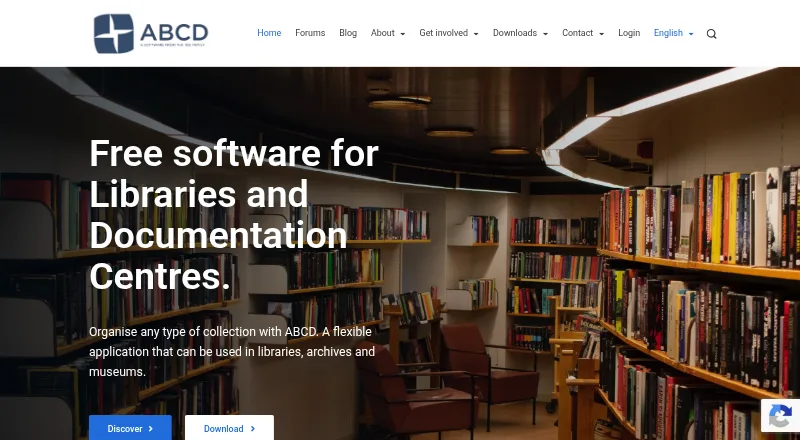
What ABCD is
ABCD is a free application for organizing collections in libraries, archives, and museums. Its cataloguing module works with MARC, ISAD-G, Dublin Core, or custom database models, and it can create a searchable public catalogue site. Circulation tools manage lending, with customisation options, while the procurement module handles purchase suggestions, quotations, and purchasing decisions. Central supports tailored database structures, input screens, record validation, pick-lists, and display, export, and print formats. It can retrieve records from catalogues that support Z39.50 and map MARC fields into custom fields; the feature list also includes remote Z39.50 searches and OAI metadata harvesting. ABCD is supported on Windows and Linux, is listed for web use, and is deployed on-premise. The project offers an email list for general and ABCD questions, with possible replies in Spanish, English, or French. Its 3.3.0 Backup Manager requires the PHP zip extension on the server. The project invites contributions through testing, documentation, translation, finance, and GitHub feature or bug requests.
Good
- Free software for libraries and documentation centres.
- Supports MARC, ISAD-G, Dublin Core, and custom models.
- Creates a searchable public catalogue site.
- Includes circulation and procurement modules.
- Supports Z39.50 retrieval and OAI metadata harvesting.
Watch out
- Backup Manager requires the PHP zip extension.
- Deployment is listed as on-premise.
Who it suits
It suits libraries, archives, and museums that need configurable collection cataloguing, circulation, or procurement tools. It is listed for on-premise deployment on Windows and Linux, with web use also listed.
Verdict
ABCD offers configurable collection management across cataloguing, lending, procurement, and database tools. Check the server requirement for the Backup Manager when considering its backup features.
Plans and prices
From ABCD's own pricing page, checked 28 Sep 2001.
| Plan | Price | What it gives you |
|---|---|---|
| ABCD | Free | Free software for libraries and documentation centres |
The facts
Each one read from ABCD's own pages, with the date it was checked.
What it does
- Acquisitions
- The procurement module manages purchase suggestions, quotations and purchasing decisions.checked 28 Sep 2001
- Backup limit
- The 3.3.0 Backup Manager requires the PHP zip extension on the server.checked 28 Sep 2001
- Catalog imports
- The Central module can copy records from catalogues that support Z39.50 and map MARC fields into custom database fields.checked 28 Sep 2001
- Cataloguing
- The cataloguing module supports MARC, ISAD-G, Dublin Core or custom database models.checked 28 Sep 2001
- Circulation
- The circulation module supports lending items to users and is described as highly customisable.checked 28 Sep 2001
- Community
- The project invites contributions through testing, documentation, translation, finance, and GitHub feature or bug requests.checked 28 Sep 2001
- Database tools
- The Central module supports customizable database structures, input screens, record validation, pick-lists and tailored display, export and print formats.checked 28 Sep 2001
- OPAC
- ABCD can create a searchable public site for an institution's catalogue.checked 28 Sep 2001
- Protocols
- ABCD's feature list includes management of Z39.50 searches and retrieval from remote databases and OAI metadata harvesting.checked 28 Sep 2001
- Purpose
- ABCD is a flexible application for organising collections in libraries, archives and museums.checked 28 Sep 2001
- Security
- The ABCD 3.3.0 release says image and document display now checks login permissions and uses path checks to prevent access outside allowed directories.checked 28 Sep 2001
- Support
- The project describes an ISIS email list for general and ABCD questions, with possible replies in Spanish, English or French.checked 28 Sep 2001
Where it runs
- Platform support
- The ABCD repository states that the software is supported on Windows and Linux.checked 28 Sep 2001
The full review of ABCD
Overview
ABCD is a free application for organising collections in libraries, archives and museums. It brings cataloguing, lending, acquisitions and public catalogue access into a flexible system that can be deployed on-premise. Its cataloguing module supports MARC, ISAD-G, Dublin Core and custom database models, so institutions can work with established standards or shape a model around their collection.
ABCD is listed for Linux, Windows and the web, while its repository says the software is supported on Windows and Linux. It is aimed at institutional collections rather than a single type of library: the stated purpose covers libraries, archives and museums, and the available modules address both collection management and day-to-day lending.
Key features
Cataloguing and database design
The Central module lets an institution configure database structures, input screens, record validation and pick-lists. Display, export and print formats can also be tailored. This gives teams options for adapting the catalogue to their own fields and workflows, rather than relying only on a fixed record layout.
Central can copy records from catalogues that support Z39.50 and map MARC fields into custom database fields. ABCD’s feature list also includes management of Z39.50 searches and retrieval from remote databases, along with OAI metadata harvesting. Together, these tools address both local catalogue design and exchange or collection of records from external sources.
Public access and circulation
ABCD can create a searchable public site for an institution’s catalogue through its OPAC. Its circulation module supports lending items to users and is described as highly customisable. Circulation tools and a borrower portal are listed, providing a user-facing component alongside staff lending workflows.
Acquisitions and administration
The procurement module covers purchase suggestions, quotations and purchasing decisions. For administration, ABCD lists custom reporting. The 3.3.0 release notes describe permission checks for image and document display, plus path checks intended to prevent access outside allowed directories. Its Backup Manager requires the PHP zip extension on the server, a specific deployment dependency to account for when planning backups.
Support and community
The project describes an ISIS email list for general and ABCD questions; replies may be in Spanish, English or French. It also invites community contributions through testing, documentation, translation and finance, as well as feature or bug requests on GitHub.
Pricing
ABCD is free software for libraries and documentation centres. The listed ABCD plan costs nothing, and a free plan is available.
Platforms
ABCD is listed for Linux, web and Windows, with on-premise deployment. The repository identifies Windows and Linux as supported operating systems. Organisations considering the web listing should account for the on-premise deployment model rather than assume a hosted service.
Who it's for
ABCD is suited to libraries, archives and museums that need to organise collections and want control over catalogue structures and related workflows. Its support for several cataloguing standards, custom database models, acquisitions and lending gives it a broad institutional remit. The public catalogue and borrower portal may also matter to organisations that want patrons to search holdings or interact with circulation services.
It is a more plausible fit for teams prepared to configure an on-premise system than for individuals seeking a ready-made personal collection app. The configurable database tools and server requirement for the Backup Manager make local technical capacity relevant to evaluating it.
Pros and cons
- Pros: Free software; intended for libraries, archives and museums; supports MARC, ISAD-G, Dublin Core and custom models.
- Pros: Combines cataloguing, OPAC, circulation and acquisitions, with tailored database structures and record formats.
- Pros: Includes Z39.50 record copying and retrieval, OAI harvesting, custom reporting and a borrower portal.
- Cons: Deployment is on-premise, so it is not presented as a hosted service.
- Cons: The Backup Manager requires the PHP zip extension on the server.
- Cons: Its configurable structures and workflows may require institutional setup rather than a fixed out-of-the-box catalogue.
Alternatives
For a school-focused shortlist, compare ABCD with School Library Management Software. Other options in this category include Librarika, SLiMS and Koha, as well as Atriuum, Accessit Library, Oliver, Lyra and Surpass.
Verdict
ABCD stands out in the facts available for its breadth across cataloguing, public access, lending and acquisitions, and for allowing institutions to define database structures and record formats. Its free price makes it accessible to libraries and documentation centres, while its on-premise deployment and server-side backup dependency are practical considerations. Institutions that can manage configuration and local deployment may find its combination of standards support and customisation relevant; those seeking hosted software should look elsewhere.
Getting started
- Visit https://abcd-community.org/ to access the project.
- Use the free ABCD software for an on-premise deployment.
- Set up the software on a supported Windows or Linux platform.
- Configure cataloguing with MARC, ISAD-G, Dublin Core, or a custom database model.
- For the 3.3.0 Backup Manager, ensure the server has the PHP zip extension.
Limits worth knowing
ABCD is free. For the 3.3.0 Backup Manager, the server must have the PHP zip extension.
Questions
Is ABCD free?
Yes. Its plan is listed as free for libraries and documentation centres.
Which platforms does ABCD support?
The project lists Linux, web, and Windows. Its repository states that the software is supported on Windows and Linux.
Can ABCD publish a public catalogue?
Yes. It can create a searchable public site for an institution's catalogue.
What cataloguing standards does ABCD support?
Its cataloguing module supports MARC, ISAD-G, Dublin Core, and custom database models.
Is ABCD open source?
The project invites contributions through testing, documentation, translation, finance, and GitHub feature or bug requests.
What support does the project offer?
The project describes an ISIS email list for general and ABCD questions, with possible replies in Spanish, English, or French.
Alternatives to ABCD
- 1
Librarika
Free planAndroidiOSWebAPI7.4From $11.58 a month - 2
ReadByte
Web6.9From £8.25 a month - 3
ResourceMate
WebLinuxmacOSWindows6.8From $18.33 a month - 4
LibraryWorld
AndroidiOSWeb6.7From $45.83 a month - 5
Pinakes
Free planAndroidWebAPISelf-hosted6.7Free plan - 6
SLiMS
Free planWebLinuxmacOSSelf-hosted6.4Free plan