OptOps
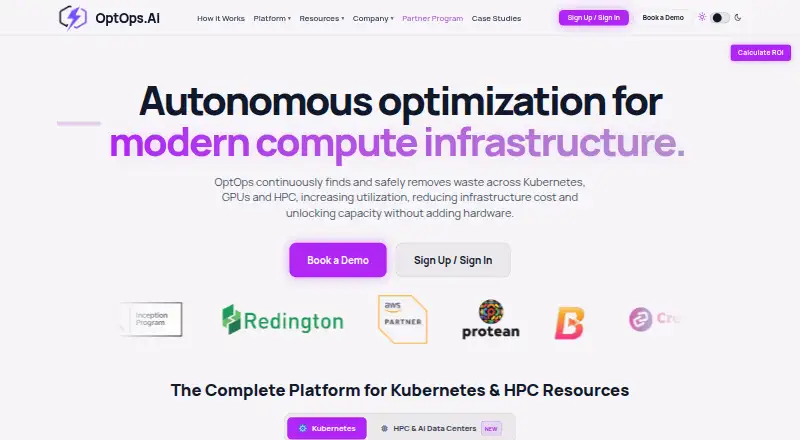
OptOps is a Kubernetes infrastructure platform designed to reduce waste and improve utilization across Kubernetes, GPUs, and HPC infrastructure.
What OptOps is
OptOps is a Kubernetes infrastructure platform designed to reduce waste and improve utilization across Kubernetes, GPUs, and HPC infrastructure. Its Kubernetes offering is for DevOps, platform, and FinOps teams running EKS, GKE, AKS, or other CNCF-compliant clusters. Continuous rightsizing adjusts resource requests to usage, with OOM spike protection that scales workloads back up before they are killed. It can pack workloads onto fewer nodes, but proceeds with consolidation only after safety checks pass and savings result. Spot automation includes diversified pools, on-demand fallback, and a circuit breaker for capacity shortages. Live migration uses CRIU to preserve memory and process state; same pod IP and unbroken TCP sessions are available on AWS, while GKE and AKS support is early access. A multi-cluster dashboard tracks costs by cluster, namespace, workload, node type, and instance class without tags. The paid platform runs on the web or self-hosted, with pricing available by contacting the team. Its Helm installation includes components that default to off, and the agent initially runs read-only.
Good
- Rightsizing includes OOM spike protection.
- Consolidation requires safety checks and savings.
- Dashboard breaks down costs without requiring tags.
- Free CLI analyzer performs read-only local analysis.
Watch out
- Pricing is available by contacting the team.
- GKE and AKS live migration support is early access.
- ISO certification is in progress.
Who it suits
OptOps is aimed at DevOps, platform, and FinOps teams managing Kubernetes clusters and seeking workload rightsizing, consolidation, spot automation, or cost visibility. Teams considering live migration should note the platform-specific support status.
Verdict
OptOps combines workload optimization, spot automation, live migration, and multi-cluster cost views. Pricing is on request, and live migration support differs across cloud platforms.
Plans and prices
From OptOps's own pricing page, checked 7 Oct 2001.
| Plan | Price | What it gives you |
|---|---|---|
| OptOps platform | Priced on request | Pricing available by contacting the team |
The facts
Each one read from OptOps's own pages, with the date it was checked.
What it does
- Audience
- OptOps describes its Kubernetes platform as built for DevOps, platform, and FinOps teams running EKS, GKE, AKS, or any CNCF-compliant cluster.checked 7 Oct 2001
- Auditability
- OptOps says every platform action is logged with what changed, when, and why.checked 7 Oct 2001
- Consolidation
- The platform bin-packs workloads onto fewer nodes and executes a consolidation plan only if it passes safety checks and saves money.checked 7 Oct 2001
- FinOps visibility
- The dashboard tracks cost by cluster, namespace, workload, node type, and instance class without requiring tags, and supports multiple clusters.checked 7 Oct 2001
- Live migration
- OptOps uses CRIU to preserve memory and process state during pod migration; the site says same pod IP and unbroken TCP sessions are available on AWS, while GKE and AKS support is early access.checked 7 Oct 2001
- Purpose
- OptOps continuously identifies and removes waste across Kubernetes, GPUs, and HPC infrastructure to reduce costs and increase utilization.checked 7 Oct 2001
- Rightsizing
- Continuous rightsizing adjusts resource requests to real usage and includes OOM spike protection that scales workloads back up before they are killed.checked 7 Oct 2001
- Security
- OptOps says it collects metadata and utilization metrics but not secrets, environment variables, application data, logs, or request payloads; optimization decisions run inside the cluster.checked 7 Oct 2001
- Security assessment
- The company says its platform completed an independent third-party application security assessment and that ISO certification is in progress.checked 7 Oct 2001
- Setup
- OptOps provides a Helm installation for its agent, node engine, spot handler, and live migration, with components default-off and the agent initially read-only.checked 7 Oct 2001
- Spot automation
- OptOps offers diversified spot pools, automatic on-demand fallback, and a stockout circuit breaker for capacity shortages.checked 7 Oct 2001
- Support
- The contact page says the team provides help with platform walkthroughs, pricing, and implementation planning, and replies within 24 hours.checked 7 Oct 2001
Money
- Free CLI analyzer
- The optops CLI runs locally, reads the current Kubernetes context, and performs read-only analysis using five list calls with no writes.checked 7 Oct 2001
The company
- Headquarters
- Gurugram, Haryana, Indiachecked 28 Sep 2001
Alternatives to OptOps
- 1

KubeAdapt
Free planWebAPILinuxmacOS7.7From $0.60 a month - 2
Krossboard
Free planOpen sourceWebAPILinuxSelf-hosted7.2Free plan - 3

Atmosly Kubernetes Cost Optimization
Free planWebLinuxSelf-hosted6.8From $399 a month - 4

Flexera One IT Asset Management
WebSelf-hosted6.3 - 5
Varcio Kubernetes Cost Management
WebAPISelf-hosted6.3From $49 a month - 6
CloudBolt
Free planWebAPISelf-hosted6.2Free plan