OpenMDAO
OpenMDAO is a free, open-source Python framework for systems analysis and multidisciplinary optimization.
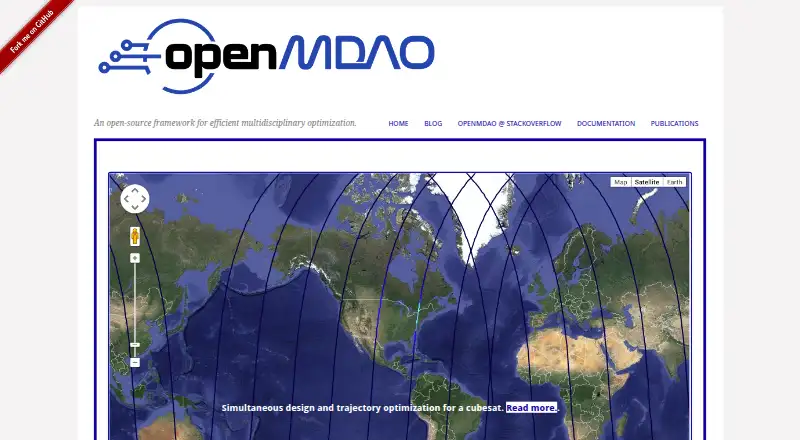
What OpenMDAO is
OpenMDAO is a free, open-source Python framework for systems analysis and multidisciplinary optimization. It focuses on gradient-based optimization using analytic derivatives, including design spaces with hundreds or thousands of variables. Models are assembled from components and groups, with drivers for optimization algorithms or design of experiments; nonlinear and linear solvers can sit at different levels of the model hierarchy. Derivative tools include analytic partial derivatives, finite-difference and complex-step approximations, derivative checking, and forward or reverse total derivative calculations. MPI features support parallel subsystems and variables distributed across processes. Parallel computing can also be used for gradient-free optimization, mixed-integer nonlinear programming, and design space exploration. Documented features include model visualizations, optimization progress plots, and recording and reading model or solver cases. The project identifies Dymos for transient modeling and optimal control and pyCycle for turbine engine cycle analysis as related libraries. OpenMDAO is licensed under Apache 2.0, which the project says allows proprietary software to integrate it without making that software open source. It runs on Linux or in self-hosted setups, with installation documented through PyPI or a cloned GitHub repository. The supported 3.x line requires Python 3.10 or later.
Good
- Free under the Apache 2.0 license.
- Supports analytic, finite-difference, and complex-step derivatives.
- MPI can run parallel subsystems and distributed variables.
- Includes model visualizations and optimization progress plots.
- Can be installed through PyPI or a cloned repository.
Watch out
- Supported OpenMDAO 3.x requires Python 3.10 or later.
- API may change periodically during active development.
- Parallel finite-difference and complex-step approximation requires MPI.
Who it suits
It suits engineers and researchers working on systems analysis, multidisciplinary optimization, and design spaces with many variables. Its documented applications include cubesat design and mission planning, wind turbine design, and unconventional aircraft concepts.
Verdict
OpenMDAO offers a detailed optimization and derivative toolset for Python-based engineering models, including parallel capabilities. Users should check the Python requirement and MPI dependency for parallel derivative approximation.
Plans and prices
From OpenMDAO's own pricing page, checked 4 Oct 2026.
| Plan | Price | What it gives you |
|---|---|---|
| OpenMDAO | Free | open-source framework · Apache 2.0 license |
The facts
Each one read from OpenMDAO's own pages, with the date it was checked.
What it does
- Derivative tools
- It supports analytic partial derivatives, finite-difference and complex-step approximations, derivative checking, and forward or reverse total derivative calculations.checked 4 Oct 2026
- Installation
- The project documents installation from PyPI or a cloned GitHub repository, with optional dependency sets for testing, documentation, and visualization.checked 4 Oct 2026
- Intended users
- The project describes applications including cubesat design and mission planning, wind turbine design, and unconventional aircraft concepts.checked 4 Oct 2026
- License
- OpenMDAO is released under the Apache 2.0 license, which the project says permits proprietary software to be integrated without making it open source.checked 4 Oct 2026
- Model structure
- Models are built from components and groups, with drivers that can run optimization algorithms or design of experiments.checked 4 Oct 2026
- Other optimization
- Its parallel computing features can also support gradient-free optimization, mixed-integer nonlinear programming, and design space exploration.checked 4 Oct 2026
- Parallel computing
- MPI features can run parallel subsystems and distributed variables across multiple processes.checked 4 Oct 2026
- Parallel dependency limit
- The documentation says parallel finite-difference and complex-step derivative approximation requires MPI and may not run on Colab or Binder.checked 4 Oct 2026
- Primary method
- The project focuses on gradient-based optimization with analytic derivatives for design spaces with hundreds or thousands of design variables.checked 4 Oct 2026
- Purpose
- OpenMDAO is an open-source Python framework for systems analysis and multidisciplinary optimization.checked 4 Oct 2026
- Related libraries
- The project identifies Dymos for transient modeling and optimal control and pyCycle for turbine engine cycle analysis as libraries built on OpenMDAO.checked 4 Oct 2026
- Solver features
- OpenMDAO provides nonlinear and linear solvers that can be placed at different levels of a model hierarchy.checked 4 Oct 2026
- Version requirements
- The repository says the current supported OpenMDAO 3.x line requires Python 3.10 or later and that its API may change periodically while in active development.checked 4 Oct 2026
- Visualization and recording
- Documented features include model visualizations, optimization progress plots, and recording and reading model or solver cases.checked 4 Oct 2026
The company
- Founded
- 2007checked 28 Sep 2026