Nanoc
Nanoc is a free static-site generator that converts content such as Markdown, AsciiDoc, or Textile into HTML.
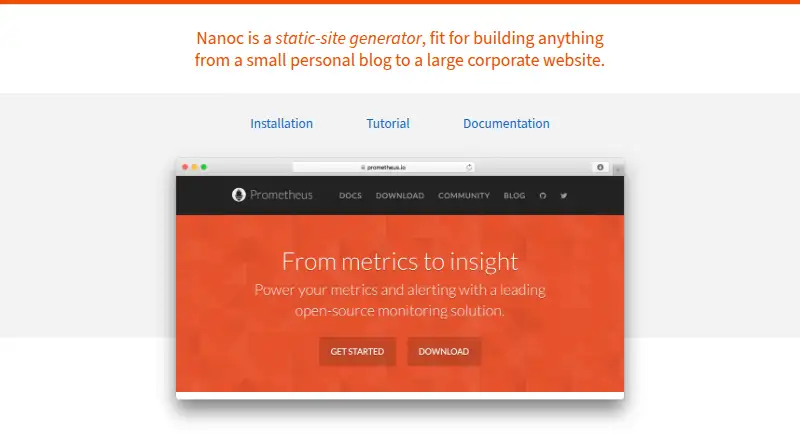
What Nanoc is
Nanoc is a free static-site generator that converts content such as Markdown, AsciiDoc, or Textile into HTML. It is a command-line application for local site development and generating finished sites for deployment, not a CMS; content is generally managed on the filesystem. Its metadata can assign pages different roles, such as articles, chapters, reviews, or recipes. Templates can use eRuby, Haml, or Mustache, and users can add custom filters and helpers or bring in data from databases and web APIs. Nanoc supports incremental builds, multilingual sites, and a local preview server. It can connect to deployment methods including Git, rsync, GitHub Pages, Bitbucket, GitLab Pages, and Netlify, and run checks before deployment. The project says static sites avoid most common attacks because they lack dynamic content. Nanoc requires Ruby 3.1 or newer, with CRuby needed for guaranteed support. macOS and Linux are officially supported; Windows has limitations and is not officially supported. It is MIT-licensed.
Good
- Free plan is available.
- Supports incremental builds and multilingual sites.
- Includes a local preview server.
- Can use database and web API data.
- Offers multiple deployment integrations and pre-deployment checks.
Watch out
- Requires Ruby 3.1 or higher.
- CRuby is required for guaranteed support.
- Windows is not officially supported and has limitations.
Who it suits
Nanoc suits developers building anything from a personal blog to a corporate website who prefer a command-line, filesystem-based workflow. It may fit teams that need metadata-driven content, multilingual output, or custom processing.
Verdict
Nanoc offers a flexible approach to generating static sites, with support for varied content formats, templates, and deployment workflows. Its Ruby requirement and limited Windows support are important considerations before choosing it.
Plans and prices
From Nanoc's own pricing page, checked 1 Oct 2001.
| Plan | Price | What it gives you |
|---|---|---|
| Nanoc | Free | passion project · provided free of charge |
The facts
Each one read from Nanoc's own pages, with the date it was checked.
What it does
- CMS integration
- Nochecked 20 Sep 2001
- Content model
- Nanoc is not a CMS; it processes content that is usually managed on the filesystem.checked 1 Oct 2001
- Content sources
- databasechecked 20 Sep 2001
- Current release
- The latest release is Nanoc 4.14.8, released on August 30th, 2026.checked 1 Oct 2001
- Deployment
- Nanoc integrates with various deployment mechanisms and provides a nanoc deploy command, with examples for Git, rsync, GitHub Pages, Bitbucket, GitLab Pages and Netlify.checked 1 Oct 2001
- Deployment checks
- Nanoc can run pre-deployment checks.checked 1 Oct 2001
- Extensibility
- Nanoc lets users write custom filters and helpers.checked 1 Oct 2001
- External data
- Nanoc can pull data from databases and web APIs.checked 1 Oct 2001
- Incremental builds
- Yeschecked 20 Sep 2001
- Installation
- Nanoc is installed using RubyGems with the command gem install nanoc.checked 1 Oct 2001
- License
- Nanoc is licensed under the MIT license.checked 1 Oct 2001
- Local preview server
- Yeschecked 20 Sep 2001
- Markup and templates
- Nanoc supports markup languages including Markdown, AsciiDoc and Textile, and templating languages including eRuby, Haml and Mustache.checked 1 Oct 2001
- Metadata
- Nanoc supports free-form metadata, allowing pages to be processed as articles, chapters, reviews, recipes, and other types.checked 1 Oct 2001
- Multilingual support
- Yeschecked 20 Sep 2001
- Runtime
- Nanoc requires Ruby 3.1 or higher and the CRuby implementation for guaranteed support.checked 1 Oct 2001
- Security
- The site says static sites do not contain dynamic content and are therefore immune to most common attacks.checked 1 Oct 2001
- Site scale
- Nanoc is fit for building anything from a small personal blog to a large corporate website.checked 1 Oct 2001
- Support channels
- The project links to a GitHub repository, issue tracker, GitHub discussions and a Google group.checked 1 Oct 2001
- Supported languages
- Rubychecked 20 Sep 2001
- Supported systems
- Nanoc officially supports macOS and Linux; Windows is not officially supported and has some limitations.checked 1 Oct 2001
- What it does
- Nanoc is a flexible static-site generator that transforms content such as Markdown or AsciiDoc into HTML.checked 1 Oct 2001
The company
- Founded
- 2007checked 28 Sep 2001
Money
- Free plan
- Yeschecked 20 Sep 2001
The full review of Nanoc
Nanoc is a Ruby-based static-site generator for developers who want to shape content and build workflows themselves. It is a strong fit for sites that benefit from flexible metadata and custom processing, but less suitable if you need a CMS or officially supported Windows development.
Overview
Nanoc turns source material such as Markdown and AsciiDoc into static HTML. You work from the command line, develop locally, and deploy the generated site when it is ready. Content is generally managed on the filesystem rather than in a CMS, though Nanoc can also draw on databases and web APIs.
Its free-form metadata lets a project treat pages as different kinds of content, from articles and chapters to recipes and reviews. That flexibility can support both a personal blog and a large corporate site, but it asks the site builder to define and maintain the structure. Nanoc has been developed since 2007 by Nanoc, headquartered in Berlin, and is licensed under MIT.
Key features
Content and templates
Nanoc accepts Markdown, AsciiDoc, and Textile, and supports eRuby, Haml, and Mustache templates. The range gives developers room to choose a markup and templating approach that suits a project; it is less compelling for teams looking for a managed, graphical content workflow.
Custom processing and data
Custom filters and helpers let developers extend content processing and template behavior. Nanoc can also pull data from databases and web APIs, which broadens its usefulness beyond filesystem content without turning it into a CMS.
Builds and deployment
Incremental builds avoid rebuilding everything after every change, while a local preview server supports development before publishing. Nanoc provides a deploy command and integrates with deployment mechanisms including Git, rsync, GitHub Pages, Bitbucket, GitLab Pages, and Netlify. Pre-deployment checks add a chance to catch issues before the generated site goes live. Multilingual support is useful for sites serving multiple language audiences.
Static output
Because the generated site does not contain dynamic content, Nanoc's site describes static sites as immune to most common attacks. That can appeal to publishers who want a static deployment model, though it does not replace sound operational security for the systems around a site.
Pricing
Nanoc is free: its sole Nanoc plan costs nothing and is provided free of charge as a passion project. There are no paid tiers described, so the cost advantage comes without a cheaper plan that trades away capabilities.
Platforms
Nanoc officially supports macOS and Linux; Windows is available with limitations but is not officially supported. It requires Ruby 3.1 or higher and the CRuby implementation for guaranteed support, so Ruby availability and familiarity are practical prerequisites. Installation uses RubyGems with gem install nanoc.
Who it's for
Nanoc suits developers who want to build a static site around their own content model, use varied markup and templates, and customize processing or deployment. Incremental builds and support for projects at different scales make it viable for more than small personal sites. Choose another approach if editors need a CMS, if your team depends on supported Windows tooling, or if maintaining a Ruby environment is undesirable.
Pros and cons
- Pros: Flexible metadata and custom filters and helpers accommodate site-specific content models and processing.
- Pros: Incremental builds, a local preview server, and deployment integrations support a complete local-to-published workflow.
- Pros: Free to use under the MIT license, with no paid tier required.
- Cons: Nanoc is not a CMS, so content is usually managed on the filesystem rather than through a content-management interface.
- Cons: Ruby 3.1 or newer and CRuby are required for guaranteed support, adding a runtime dependency.
- Cons: Windows support is limited and unofficial.
Alternatives
If Nanoc's Ruby requirement or Windows limitations are a concern, consider Eleventy, a free MIT-licensed static-site generator that supports Windows as well as Linux, macOS, and self-hosted use. Cecil is another free option with Linux, macOS, and Windows support; its EUPL-1.2 distribution is described without stated cost or usage limits.
Zola may appeal if a single executable is preferable; it is free and supports Linux, macOS, Windows, and self-hosted use. Hugo is also an open-source, free-to-use option for Windows, macOS, and Linux.
Gatsby is a free open-source framework with an always-free open-source plan; its separate Free plan is billed at $0 forever and has a 300 credit limit per month. Bridgetown and Metalsmith are other free options, with Metalsmith distributed under MIT/(L)GPL licenses. For a desktop option, Publii is free and supports Windows, macOS, and Linux.
Browse more choices in Static site generators.
Verdict
Choose Nanoc if you want a free, extensible static-site generator with a flexible content model, incremental builds, and deployment options suited to a developer-led workflow. Its Ruby dependency and unofficial Windows support are meaningful reasons to look elsewhere, especially for teams that need a CMS or dependable Windows support.
Alternatives to Nanoc
- 1

Gatsby
Free planWebAPISelf-hosted8.1From $9 a month - 2
Jekyll
Free planOpen sourceWebLinuxmacOSSelf-hosted8.1Free plan - 3

Cecil
Free planLinuxmacOSWindows7.4Free plan - 4

Eleventy
Free planLinuxmacOSSelf-hostedWindows7.4Free plan - 5

Nikola
Free planLinuxmacOSSelf-hostedWindows7.4Free plan - 6

Publii
Free planLinuxmacOSWindows7.3Free plan