LizardFS
LizardFS is an on-premises distributed file system that combines disk space from multiple servers into one namespace.
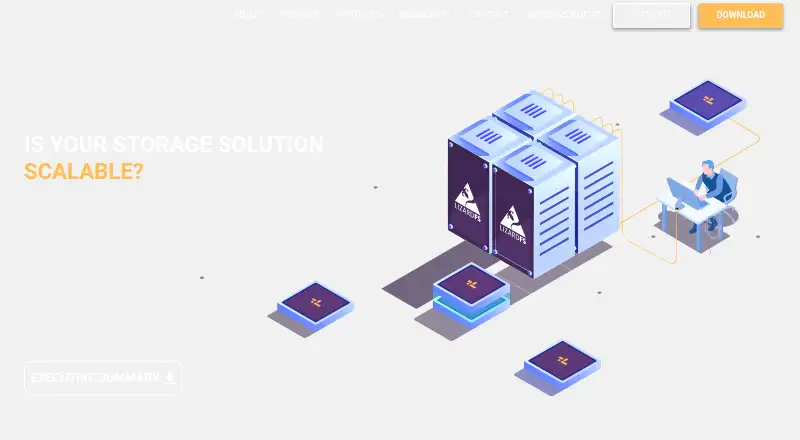
What LizardFS is
LizardFS is an on-premises distributed file system that combines disk space from multiple servers into one namespace. It keeps data in multiple replicas across available servers, and new servers can be added without downtime while chunks move to balance disk usage. Erasure coding can reduce storage capacity needs by up to 70%, depending on configuration. Snapshots copy file metadata while sharing data chunks until a file changes. Administrators can replicate data between data centers, choose where it is stored, set read and write bandwidth limits, and apply soft or hard quotas for users or groups. Deleted files go to an administrator-visible trash bin for recovery or permanent removal. Storage installs on Linux, with Windows and macOS clients for cluster access; supported protocols include NFS 3.x, NFS 4.0, and pNFS. The maker describes use with Elasticsearch and Logstash for aggregation and search. Support and maintenance are available by personalized quote; the top support tier includes 24/7 technical support. Pricing is on request.
Good
- Combines several servers under one file namespace.
- Adds servers without downtime and balances data chunks.
- Supports snapshots, georeplication, quotas, and bandwidth limits.
- Provides an administrator-visible trash bin for deleted files.
- Supports NFS 3.x, NFS 4.0, and pNFS.
Watch out
- Pricing is available by personalized quote.
- Windows Client licenses are proprietary.
- Storage installation is on Linux; Windows and macOS are clients.
Who it suits
LizardFS may suit organizations managing distributed storage for workloads such as big data, finance, science, post-production, or telecommunications. It is designed for on-premises deployment, with Linux storage and Windows or macOS clients.
Verdict
LizardFS provides distributed, replicated storage with controls for placement, usage, and recovery. Consider the on-request pricing and proprietary Windows Client licensing when assessing fit.
Plans and prices
From LizardFS's own pricing page, checked 4 Oct 2026.
| Plan | Price | What it gives you |
|---|---|---|
| Enterprise + Support | Priced on request | 24/7 technical support · Premium maintenance package |
| Enterprise Support | Priced on request | Monday–Friday 9–17 CET · Premium maintenance package |
| Standard Support | Priced on request | Monday–Friday 9–17 CET · Standard maintenance package |
The facts
Each one read from LizardFS's own pages, with the date it was checked.
What it does
- Bandwidth controls
- Administrators can set read and write bandwidth limits for a mount point or a group of processes across client machines and mount points.checked 4 Oct 2026
- Erasure coding
- Erasure coding divides data chunks into parts and parity stripes, and the page says it can save up to 70% of storage capacity depending on configuration.checked 4 Oct 2026
- Georeplication
- Georeplication can replicate data between data centers in different locations and let administrators choose where data is stored.checked 4 Oct 2026
- Integrations and protocols
- The maker describes using LizardFS with Elasticsearch and Logstash for data aggregation and search.checked 4 Oct 2026
- Product
- LizardFS is a distributed, scalable, fault-tolerant, highly available file system that combines disk space on several servers into one namespace.checked 4 Oct 2026
- Quotas
- The system supports soft and hard limits on file counts and total size for users or groups, and a user over a hard limit cannot write new data.checked 4 Oct 2026
- Replication
- It keeps data in multiple replicas distributed across available servers.checked 4 Oct 2026
- Scaling
- New servers can be added without downtime, and data chunks are automatically moved to balance disk usage across connected nodes.checked 4 Oct 2026
- Snapshots
- Snapshots copy file metadata while sharing the original data chunks until either file is modified.checked 4 Oct 2026
- Support and maintenance
- Support packages include technical assistance and maintenance, with the top listed tier providing 24/7 technical support; pricing is by personalized quote.checked 4 Oct 2026
- Supported systems
- The maker says storage can be installed on Linux, with Windows and macOS clients available to access cluster files.checked 4 Oct 2026
- Target workloads
- The maker lists big data, Elasticsearch, finance, post-production, science, and telecommunications as use cases.checked 4 Oct 2026
- Trash recovery
- Deleted files are moved to an administrator-visible trash bin where they can be restored or permanently deleted.checked 4 Oct 2026
The company
- Headquarters
- Warsaw, Polandchecked 28 Sep 2026
Money
- Trial and client licensing
- The maker says Windows Client licenses are proprietary and directs customers seeking client-only licensing to contact it for a free trial and pricing.checked 4 Oct 2026
Alternatives to LizardFS
- 1
JuiceFS
Free planOpen sourceAPILinuxmacOSSelf-hosted7.9From $0.02 a month - 2

MinIO AIStor
Free planWebAPILinuxmacOS7.3Free plan - 3
StarWind Virtual SAN
Free planWebAPILinuxSelf-hosted7.2Free plan - 4

MooseFS
Free planWebAPILinuxmacOS7.1€9 one-time - 5

SeaweedFS
Free planAPILinuxmacOSSelf-hosted7.0From $20 a year - 6

Ceph
Free planAPILinuxSelf-hostedWindows6.6Free plan