
Bluerock TMS
Bluerock TMS is a cloud-native transportation management system connecting logistics planning, execution, visibility, and settlement.
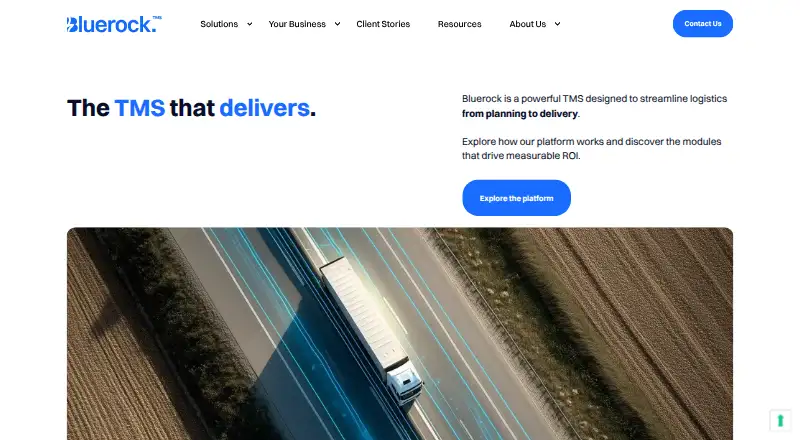
What Bluerock TMS is
Bluerock TMS is a cloud-native transportation management system connecting logistics planning, execution, visibility, and settlement. Planning uses AI-driven routing, flexible schedules, and real-time data to optimize routes and balance capacity. Execution automates order intake, carrier selection, labeling, booking, and dispatch across transport modes. Visibility combines carrier, telematics, and IoT data with predictive ETAs, alerts, and exception management. Settlement automates freight rating, auditing, billing, self-billing, and cost allocation. Yard Management handles gate, dock, and parking operations with automated check-ins, task assignments, and mobile execution. A Logistics Digital Twin can model a logistics network to simulate scenarios and predict outcomes. The API-first architecture connects with ERP, WMS, OMS, and carrier systems, supporting real-time event streaming and batch exchange. The company says implementation typically takes 8–12 weeks and includes data migration, carrier onboarding, integration, and user training. Bluerock describes support for multi-country, multi-carrier operations and lists industries including manufacturing, retail, life sciences, logistics, energy, public sector, and environmental services. Pricing is tailored and available by contacting an expert.
Good
- Automates planning, execution, visibility, and settlement.
- Yard tools cover gate, dock, and parking operations.
- Digital Twin supports network scenario simulations.
- API architecture connects ERP, WMS, OMS, and carriers.
- Supports multiple countries, carriers, languages, and currencies.
Watch out
- Pricing is available by contacting an expert.
- Implementation typically takes 8–12 weeks.
- The solution is tailored.
Who it suits
Bluerock TMS suits shippers, 3PLs, and logistics providers coordinating transport across countries and carriers. Its listed industry coverage includes manufacturing, retail, life sciences, energy, and public services.
Verdict
Bluerock TMS spans core transport operations, yard management, and network simulation, with integrations for common logistics systems. Its tailored pricing and stated implementation timeline are worth considering during selection.
Plans and prices
From Bluerock TMS's own pricing page, checked 9 Oct 2026.
| Plan | Price | What it gives you |
|---|---|---|
| Bluerock TMS | Priced on request | Tailored solution; contact an expert for pricing |
The facts
Each one read from Bluerock TMS's own pages, with the date it was checked.
What it does
- Cloud delivery
- A Bluerock customer quote describes the TMS as a fully serviced, cloud-based solution.checked 9 Oct 2026
- Digital twin
- The logistics digital twin lets teams model and simulate their logistics network, test scenarios, and predict disruptions.checked 9 Oct 2026
- Global operations
- The platform is designed for multi-country and multi-carrier operations and supports diverse languages, currencies, and compliance frameworks.checked 9 Oct 2026
- Industries
- The product serves manufacturing, consumer and retail, life sciences and pharma, logistics and 3PL, energy and utilities, public sector, and environmental and waste management.checked 9 Oct 2026
- Industry coverage
- Bluerock lists manufacturing, consumer and retail, life sciences and pharma, logistics and 3PL, energy and utilities, public sector, and environmental and waste management among its industries.checked 9 Oct 2026
- Integrations
- Its open API-first architecture integrates with ERP, WMS, OMS, and carrier systems and supports real-time event streaming and batch data exchange.checked 9 Oct 2026
- Intended users
- The company describes the product as serving shippers, 3PLs, and logistics providers, including multi-country and multi-carrier operations.checked 9 Oct 2026
- Mobile usage
- The homepage reports 750,000 drivers using the app.checked 9 Oct 2026
- Purpose
- Bluerock TMS is a modular transportation management system that streamlines logistics, lowers costs, and increases supply-chain visibility.checked 9 Oct 2026
- Scale figures
- The homepage states that 750,000 drivers use the app, more than 125 million shipments have been planned, and its network has 10,000 active carriers.checked 9 Oct 2026
- Security
- Bluerock says it is ISO 27001 certified and GDPR compliant.checked 9 Oct 2026
- Settlement
- Automated rating, auditing, and billing connect transport costs to shipments, and the company says this can accelerate invoice cycles by up to 40%.checked 9 Oct 2026
- Shipment execution
- The execution module automates parcel and freight workflows from order intake through carrier booking and label generation.checked 9 Oct 2026
- Support
- The site invites prospective customers to book a demo or contact an expert for a tailored walkthrough.checked 9 Oct 2026
- Support and implementation
- The company says implementation typically takes 8–12 weeks and includes data migration, carrier onboarding, integration, and user training.checked 9 Oct 2026
- Visibility
- The platform provides live shipment status, predictive ETAs, automated alerts, and a consolidated control-tower view.checked 9 Oct 2026
- What it does
- Bluerock TMS is a cloud-native transportation management system that connects logistics planning, execution, visibility, and settlement.checked 9 Oct 2026
- Yard management
- The yard module manages gates, docks, and yard moves in real time to reduce congestion and truck turnaround time.checked 9 Oct 2026
The company
- Founded
- 2013checked 28 Sep 2026
- Headquarters
- ‘s-Hertogenbosch, Netherlandschecked 28 Sep 2026
Money
- Planning
- Its planning module uses routing and dispatch tools to optimize tours, balance capacity, and reduce transport costs.checked 9 Oct 2026
The full review of Bluerock TMS
Bluerock TMS is a cloud-based transport management system for shippers, 3PLs, and logistics providers. It is best suited to organizations coordinating multiple carriers or countries that need connected planning, execution, visibility, and settlement. Its breadth is the draw; custom pricing and a typical 8–12-week implementation make it a substantial business decision rather than a quick self-serve purchase.
Overview
Bluerock brings transport workflows together, with yard management and network simulation extending beyond shipment movement. That range may help larger operations coordinate logistics processes within one platform, but buyers should decide which modules they need and confirm how they fit their existing systems before committing.
The platform is designed for multi-country and multi-carrier operations, supporting different languages, currencies, and compliance frameworks. Bluerock reports 750,000 drivers using its app, more than 125 million shipments planned, and 10,000 active carriers in its network. Those figures suggest broad stated usage, while the practical fit will depend on a buyer’s own carrier and systems landscape. The company says implementation typically takes 8–12 weeks and covers data migration, carrier onboarding, integration, and user training, a meaningful planning commitment for teams seeking a rapid rollout.
Key features
Planning and execution
AI-driven routing, flexible scheduling, and real-time data are intended to optimize routes and balance capacity. Automated order intake, carrier selection, labeling, booking, and dispatch across transport modes carry those plans into execution. Load tendering is supported. Together, these capabilities suit teams trying to manage planning and shipment workflows in one system; operations looking only for a narrow dispatch tool may not need this breadth.
Visibility and settlement
Carrier, telematics, and IoT data feed predictive ETAs, automated alerts, and exception management. Predictive analytics may help teams identify emerging delays, while automated freight rating, auditing, billing, self-billing, and cost allocation connect shipment activity to financial workflows. Freight audit is supported. These functions are most relevant to organizations handling enough shipment volume and complexity to benefit from coordinated monitoring and settlement.
Yard, network modeling, and integrations
Yard Management digitizes gate, dock, and parking operations with automated check-ins, task assignments, and mobile execution. The Logistics Digital Twin provides a virtual model for simulating scenarios, testing strategies, and predicting outcomes. These are useful extensions for organizations managing facilities or evaluating network changes, but less compelling if the priority is only core transport execution.
An API-first architecture connects ERP, WMS, OMS, and carrier systems, with real-time event streaming and batch exchange. EDI/API access is supported. Bluerock says it is ISO 27001 certified and GDPR compliant. That combination is relevant for organizations with integration and data-protection requirements; buyers should assess the specific connections and compliance needs of their own environment.
Pricing
Bluerock TMS uses custom pricing: contact an expert for a tailored quote. No free plan or free trial is stated. This model fits organizations prepared to scope a larger deployment with a sales team, but makes direct price comparison difficult before requirements are defined. The tailored solution offers the platform’s transport, yard, visibility, settlement, and network capabilities; the price and precise package depend on the quote. Implementation typically takes 8–12 weeks and includes migration, carrier onboarding, integration, and training, so budget and rollout planning should account for more than subscription cost alone.
Platforms
Bluerock TMS supports Android, iOS, web, and API access. The reported driver-app usage points to a mobile role alongside browser and integration access, although organizations should confirm the specific device and workflow requirements for their teams.
Who it's for
Bluerock names manufacturing, consumer and retail, life sciences and pharma, logistics and 3PL, energy and utilities, public sector, and environmental and waste management among its industries. Its strongest fit is a shipper, 3PL, or logistics provider coordinating multi-country, multi-carrier operations and seeking connected transport workflows. Smaller teams seeking a simple, self-serve purchase or buyers who need only one narrow logistics function may find the tailored deployment harder to justify.
Pros and cons
Pros
- Broad transport coverage: planning, execution, visibility, and settlement sit alongside yard management and network simulation.
- Designed for complex operations: support for multiple countries, carriers, languages, currencies, and compliance frameworks addresses cross-border requirements.
- Integration options: API-first connectivity, EDI/API access, and real-time or batch exchange support links to common logistics and enterprise systems.
- Defined onboarding scope: the typical 8–12-week implementation includes migration, carrier onboarding, integration, and user training.
Cons
- Custom pricing: buyers cannot assess the cost from a published plan price and need a tailored quote.
- Significant rollout: an 8–12-week implementation is a meaningful commitment for organizations seeking a fast start.
- Scope may exceed simple needs: the broad module range is less suitable for buyers who need only a focused transport tool.
Alternatives
Convoy Platform is worth considering when a carrier needs free access to loads: its Carrier app has no sign-up or monthly fees, but requires a carrier account and DOT information.
DriverNest may suit teams seeking a free entry point for transfers, with unlimited vehicles and drivers and payment only when they earn, rather than Bluerock’s tailored enterprise deployment.
Aptean Industrial Manufacturing ERP Traverse Edition is another option for manufacturing organizations evaluating ERP software; it has custom pricing and a free trial.
CargoWise offers another paid logistics platform, with value-pack pricing for some services; consider it when those package options align with your requirements.
Drivin uses monthly rental pricing based on vehicle count, with no user or vehicle limit, and may fit buyers who prefer that pricing structure.
Shipwell TMS is another paid TMS with customized quote pricing for buyers comparing sales-led options.
AscendTMS provides a free plan and a $69 per user per month Basic plan, with no user limit or separate driver, truck, or load charges; it is worth comparing for buyers who want published pricing.
McLeod Software Transportation Management offers a range of transportation management solutions for buyers comparing other paid platforms.
Browse the Transportation Management Software and Logistics Management Software directories to compare more options.
Verdict
Bluerock TMS is a strong candidate for shippers, 3PLs, and logistics providers that need connected transport operations across countries and carriers. Its main advantage is the breadth from planning through settlement, extended by yard management, network simulation, and integration capabilities. Look elsewhere if transparent upfront pricing, a free trial, or a short self-serve rollout is essential.
Getting started
- Open the Bluerock TMS website
- Contact an expert or book a demo
- Discuss a tailored solution and request pricing
- Plan data migration, carrier onboarding, integrations, and user training
- Use the Android, iOS, web, or API access
Limits worth knowing
The Bluerock TMS plan is tailored and has no listed price; pricing is provided on request. Implementation is typically 8–12 weeks and includes migration, carrier onboarding, integration, and training.
Questions
What platforms does Bluerock TMS support?
It supports Android, iOS, web, and API access.
Who is Bluerock TMS designed for?
The company describes it for shippers, 3PLs, and logistics providers, including multi-country and multi-carrier operations.
Does it provide load tendering and freight audit?
Yes. Load tendering and freight audit are listed capabilities.
Can it integrate with business systems?
Its open API-first architecture integrates with ERP, WMS, OMS, and carrier systems, with real-time event streaming and batch exchange.
How is Bluerock TMS priced?
The solution is paid, with pricing available from an expert on request.
How long does implementation take?
The company says implementation typically takes 8–12 weeks and includes migration, carrier onboarding, integration, and user training.
Alternatives to Bluerock TMS
- 1
TruckingOffice
AndroidiOSWebAPI7.8From $240 a year - 2

McLeod Software Transportation Management
Free planAndroidiOSWebAPI7.7Free plan - 3

AscendTMS
AndroidiOSWebAPI7.6From $69 a month - 4
Convoy Platform
Free planAndroidiOSWebAPI7.3Free plan - 5

CargoWise
AndroidiOSWebAPI6.9$0.20 one-time - 6
Rose Rocket TMS
AndroidiOSWebAPI6.8From $2,080 a month