
Jenkins
Jenkins is a free, open-source automation server for continuous integration and continuous delivery.
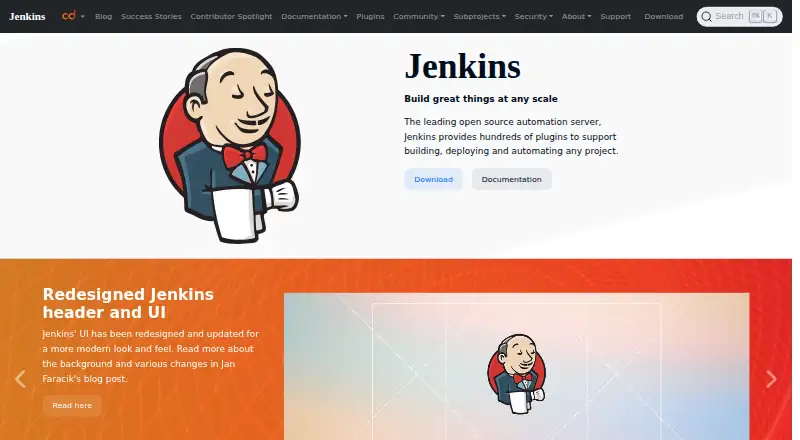
What Jenkins is
Jenkins is a free, open-source automation server for continuous integration and continuous delivery. Teams can use it for a simple CI service or shape it into a delivery hub, with workflows modeled as code in a Jenkinsfile. Pipelines can continue after controller restarts, pause for human input, and run tasks in parallel. Jenkins can also distribute builds, tests, and deployments across multiple machines and platforms.
The Plugin Index lists more than 2,000 community-contributed plugins for building, deploying, and automating projects, and the project says these connect with tools across the CI/CD toolchain. Configuration is available through a web interface with error checks and built-in help. Jenkins is distributed as WAR files, packages, installers, and Docker images. Users can choose a stable LTS release line or a weekly release line. The project publishes security advisories, but says it cannot ensure timely fixes for every plugin vulnerability.
Good
- Free, open-source automation server.
- Pipelines support parallel work and human input.
- More than 2,000 community-contributed plugins.
- Builds can run across multiple machines and platforms.
- Available for Linux, macOS, Windows, web, and self-hosting.
Watch out
- Plugin vulnerability fixes are not guaranteed to be timely.
- Security report processing is currently delayed.
- The project does not provide compliance documents or certifications.
Who it suits
Jenkins suits software delivery teams looking for anything from a basic CI server to a configurable delivery hub. It is aimed at teams working with continuous integration, continuous delivery, and modern software delivery practices.
Verdict
Jenkins offers teams a flexible path from basic CI to delivery workflows represented as code. Teams should account for the project's stated limits around plugin security fixes and compliance documentation.
The facts
Each one read from Jenkins's own pages, with the date it was checked.
What it does
- Audience
- Jenkins is aimed at software delivery teams working with continuous integration, continuous delivery, and modern software delivery practices.checked 29 Sep 2026
- CI/CD
- Jenkins can run as a simple continuous integration server or serve as a continuous delivery hub.checked 30 Sep 2026
- Compliance
- The Jenkins security page says the project will not provide compliance documents, certifications, or questionnaire responses.checked 30 Sep 2026
- Configuration
- Jenkins can be set up and configured through a web interface with on-the-fly error checks and built-in help.checked 29 Sep 2026
- Deployment
- Jenkins is distributed as WAR files, native packages, installers, and Docker images, with deployment guides for public cloud environments.checked 29 Sep 2026
- Distributed builds
- Jenkins can distribute build, test, and deployment work across multiple machines.checked 30 Sep 2026
- Installation
- Jenkins is distributed as WAR files, native packages, installers, and Docker images.checked 30 Sep 2026
- Integrations
- Jenkins uses plugins to integrate with tools across the CI/CD toolchain, including source control systems such as Git, Subversion, and Perforce.checked 30 Sep 2026
- Pipeline as code
- Jenkins Pipeline models delivery workflows as code, typically stored in a Jenkinsfile in source control.checked 30 Sep 2026
- Pipeline capabilities
- Pipelines can survive controller restarts, pause for human input, and run work in parallel.checked 30 Sep 2026
- Pipelines
- Jenkins can be used as a simple CI server or as a continuous delivery hub for a project.checked 29 Sep 2026
- Plugins
- The Jenkins Plugin Index lists more than 2,000 community-contributed plugins for building, deploying, and automating projects.checked 29 Sep 2026
- Project model
- The Jenkins project is a community of open-source developers and users and does not develop or distribute Jenkins for commercial purposes.checked 30 Sep 2026
- Purpose
- Jenkins is an open-source automation server for building, testing, delivering, and deploying software.checked 30 Sep 2026
- Release cadence
- Jenkins offers an LTS release line with stable releases every four weeks and a weekly release line for faster delivery of fixes and features.checked 29 Sep 2026
- Release channels
- The project offers a Stable LTS release line and a weekly release line.checked 30 Sep 2026
- Security
- Jenkins documents access controls and security settings; some protections are enabled by default when the interactive setup wizard is used.checked 30 Sep 2026
- Security advisories
- The project publishes security advisories for Jenkins and its plugins and informs administrators about issues affecting their installed versions.checked 30 Sep 2026
- Security limitation
- The project says it cannot guarantee timely fixes for all plugin vulnerabilities because plugins and maintainers are diverse and maintainers have autonomy.checked 29 Sep 2026
- Security reporting
- The Jenkins project says security report processing is currently delayed due to an increased number of reports since early 2026.checked 29 Sep 2026
- Support
- Jenkins is supported by a community, and the project directs users with questions about contributing to its Newcomer and Advocacy and Outreach channels.checked 29 Sep 2026
- Who it's for
- The project describes Jenkins as useful for teams seeking anything from a simple CI server to a customizable delivery hub.checked 30 Sep 2026
Alternatives to Jenkins
- 1

TestMu AI
Free planAndroidiOSWebAPI8.3From $17 a month - 2

Qualflare
Free planAndroidiOSWebAPI8.2From $16 a month - 3

BuildPulse
Free planWebAPILinuxmacOS7.9Free plan - 4

Buildkite
Free planWebAPIExtensionLinux7.3From $30 a month - 5

Flakiness.io
Free planWebSelf-hosted6.9From $49 a month - 6

Mergify
Free planWebAPISelf-hosted6.8From $21 a month