Fedora Repository
Fedora Repository is open-source software for storing, managing, and preserving digital content.
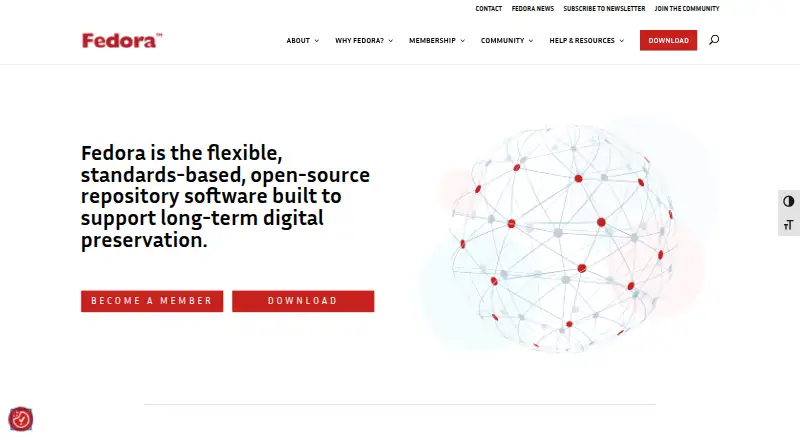
What Fedora Repository is
Fedora Repository is open-source software for storing, managing, and preserving digital content. It is built for institutional use by libraries, universities, research centres, museums, government agencies, and teams such as librarians, archivists, and data curators. Fedora primarily works behind another application: it stores digital objects and metadata and exposes them through RESTful APIs, rather than serving as a complete end-user product. Its preservation capabilities include OCFL-based persistence, automated fixity checks and checksums, and versioning, and its design follows the OAIS reference model (ISO 14721). Fedora stores metadata as RDF by default and accepts any ontology or vocabulary, file type, size, schema, or data model. Storage backends include a local filesystem and Amazon S3. Integrations include Samvera, PHAIDRA, Islandora, and ARGOS (OpenAIRE). Fedora 7.x runs on systems with a modern Java runtime, including Linux, macOS, and Windows, and supports Docker images. The software is available under the Apache 2.0 License; institutional contributions voluntarily help sustain the program.
Good
- Preservation includes OCFL persistence, fixity checks, checksums, and versioning.
- Stores any file type and size without metadata schema restrictions.
- RDF metadata supports any ontology or vocabulary.
- Supports local filesystem and Amazon S3 storage backends.
- Connects with Samvera, PHAIDRA, Islandora, and ARGOS (OpenAIRE).
Watch out
- Primarily a backend component, not a full end-user application.
- Its included web interface has limited functionality.
- Requires a modern Java runtime.
Who it suits
Fedora suits institutions that need a repository foundation for preserving and managing digital collections, research outputs, or other digital resources. It is especially relevant to librarians, archivists, data curators, and development teams building a larger system around repository APIs.
Verdict
Choose Fedora Repository when an institution needs a flexible backend for digital objects, metadata, and preservation workflows. Look elsewhere if the priority is a complete user-facing repository application, since Fedora is intended mainly as a component in a larger system.
Plans and prices
From Fedora Repository's own pricing page, checked 9 Oct 2026.
| Plan | Price | What it gives you |
|---|---|---|
| Fedora Repository | Free | No restrictions on file type or format · Scales to millions of digital objects · Freely available under the Apache 2.0 License |
The facts
Each one read from Fedora Repository's own pages, with the date it was checked.
What it does
- Architecture
- Fedora is primarily a backend repository layer that stores digital objects and metadata and exposes them through RESTful APIs.checked 9 Oct 2026
- Audience
- The platform is designed for librarians, archivists, and data curators, and is used by libraries, universities, research organizations, museums, and government agencies.checked 9 Oct 2026
- Backend architecture
- Fedora operates as a backend repository layer that exposes digital objects and metadata through RESTful APIs rather than as an end-user application.checked 8 Oct 2026
- Community support
- The site directs users to community Slack, technical discussion lists, documentation, and video tutorials.checked 8 Oct 2026
- Deployment
- Fedora 7.x runs on any operating system with a modern Java runtime, including Linux, macOS, and Windows, and supports Docker images.checked 9 Oct 2026
- File and metadata flexibility
- Fedora states it can store any file type and size and has no restrictions on metadata, schemas, or data models.checked 8 Oct 2026
- File flexibility
- Fedora can store any file type and size without restrictions on metadata, schema, or data models.checked 9 Oct 2026
- Frontend limit
- Fedora includes a simple web interface with limited functionality and is primarily intended as a backend component in a larger system.checked 9 Oct 2026
- Funding
- The Fedora program is sustained in part by voluntary institutional membership contributions; the software itself is freely available under Apache 2.0.checked 9 Oct 2026
- Integrations
- The site names Camel Toolbox, Solr, Islandora, Samvera, and linked-data sources such as WikiData, VIAF, and LinkedGeoData as integration examples.checked 9 Oct 2026
- Intended users
- The platform is designed for institutions including libraries, universities, research centres, and museums.checked 8 Oct 2026
- Interoperability
- Fedora uses standards including Linked Data Platform, Memento, WebAC, Solid, REST, and OCFL.checked 9 Oct 2026
- Linked data
- Fedora stores metadata as RDF by default and supports any ontology or vocabulary.checked 8 Oct 2026
- Operating systems
- The technical specifications say Fedora can run on any operating system with a modern Java runtime, including Linux, macOS, and Windows.checked 8 Oct 2026
- Preservation
- Fedora uses OCFL-based persistence and supports versioning, automated fixity, and checksums.checked 9 Oct 2026
- Preservation standard
- The site says Fedora’s design adheres to the OAIS reference model (ISO 14721).checked 8 Oct 2026
- Purpose
- Fedora is an open-source repository platform for long-term preservation and distribution of digital resources.checked 9 Oct 2026
- Release and compatibility
- The Fedora 7.x page says users on Fedora 6.x can upgrade by downloading and deploying the new version and restarting, with no migration required.checked 8 Oct 2026
- Security
- Technical specifications list WebAC and Apache Shiro for security and describe Fedora 7.x as modernizing dependencies to improve security.checked 9 Oct 2026
- Stewardship
- Lyrasis operates as Fedora’s organizational home, providing operational and support resources.checked 9 Oct 2026
- Storage
- Fedora supports local filesystem and Amazon S3 storage backends.checked 9 Oct 2026
- Storage options
- The technical specifications list local filesystem and Amazon S3 storage backends.checked 8 Oct 2026
The company
- Founded
- 2003checked 28 Sep 2026
Money
- License and cost
- Fedora is freely available under the Apache 2.0 License; voluntary institutional membership contributions support the program.checked 8 Oct 2026
The full review of Fedora Repository
Fedora Repository is repository infrastructure for institutions building digital collections and preservation services. It is strongest for technical teams that need control over objects and metadata; its backend-first design is a poor match for anyone seeking a finished application for staff or public use.
Overview
Developed since 2003, Fedora provides a place to store, manage and preserve digital content, with RESTful APIs for access to objects and metadata. Libraries, universities, research organizations, museums and government agencies can use it as a foundation within a larger system, rather than as a complete collections interface. That distinction is central: Fedora offers adaptable infrastructure, but organizations must provide the user-facing experience their workflows require.
Key features
Fedora’s preservation approach combines OCFL-based persistence with automated fixity checks, checksums and versioning. Its design follows the OAIS reference model (ISO 14721), giving institutions a preservation-oriented foundation for maintaining and checking digital objects. The benefit is a strong fit for archival and research collections; the trade-off is that these capabilities sit in a backend, not a finished preservation application.
The repository accepts any file type and size and imposes no restrictions on metadata, schemas or data models. Metadata is stored as RDF by default, with support for any ontology or vocabulary. This flexibility helps institutions accommodate varied collections and evolving data practices, though it places responsibility on implementers to shape a model that works for their needs.
Storage backends include a local filesystem and Amazon S3. Fedora uses standards including REST, Linked Data Platform, Memento, Solid, WebAC and OCFL, and its technical specifications list WebAC access control and Apache Shiro integration. These choices support integration and policy-aware access, but they do not replace the need to build a broader service around the repository.
Examples of integrations include Samvera, PHAIDRA, Islandora and ARGOS (OpenAIRE), which connects to Fedora to deposit Data Management Plan outputs. Fedora also supports Docker images and runs on operating systems with a modern Java runtime, including Linux, macOS and Windows. The simple web interface has limited functionality, so it should not be mistaken for a ready-to-use portal.
Pricing
Fedora Repository — free. The software is freely available under the Apache 2.0 License, with no restriction on file type or format and the ability to scale to millions of digital objects. There is no paid plan or free trial to weigh against the free edition. The cost advantage is substantial, but institutions still need to account for the technical work of deploying and integrating a backend. Voluntary institutional membership contributions help sustain the Fedora program; they are not a software fee.
Platforms
Fedora runs on Linux, macOS and Windows, as well as any other operating system with a modern Java runtime. It supports self-hosted deployment, Docker images, web access and APIs. This gives technical teams deployment flexibility, while still requiring an operating environment and implementation suited to their institution.
Who it's for
Fedora is best suited to librarians, archivists and data curators working with technical teams at libraries, universities, research centres, museums and government agencies. Its flexible data model, preservation features and API-based architecture serve organizations that want to incorporate repository capabilities into a larger platform. Institutions looking for a complete interface for day-to-day collection management or public discovery should choose a more fully packaged application.
Community support includes documentation, technical discussion lists, community Slack, a monthly newsletter and video tutorials. Lyrasis provides Fedora’s organizational home and operational and support resources. The community-led support model can suit institutions able to work with shared resources, but is different from relying on a dedicated commercial support arrangement.
Pros and cons
- Pro: Flexible content and metadata. Support for any file type and size, unrestricted schemas and RDF metadata accommodates varied institutional collections.
- Pro: Preservation foundations. OCFL persistence, automated fixity, checksums and versioning address core integrity and change-management needs.
- Pro: No software charge. Apache 2.0 licensing and a free plan remove license costs, while allowing self-hosted deployment.
- Con: Limited standalone interface. The simple web interface has limited functionality, so organizations needing a complete user experience must build or adopt one elsewhere.
- Con: Backend orientation. RESTful APIs make Fedora suited to integration, not to teams seeking a self-contained repository application.
Alternatives
Data Archiving Software is the broader category to explore when comparing repository and archival tools.
Choose RODA instead if its open-source Community Edition is a better fit; commercial plugins, integrations and professional support are paid offerings. ESSArch Digital Archive is another free, open-source option, with service and support regulated by a maintenance contract. Archivematica offers free-to-use open-source software, with a separate hosting plan at $11,440 a year.
Preservica may suit readers who want a hosted or freemium option: Starter is free with 1 user, 1GB and files and folders up to 50GB, while Starter Plus is $310 a month, billed annually and excluding sales tax. HuskHoard is a free, Linux-focused alternative with an AGPL v3 open-source core. PoINT Storage Manager is worth considering for readers looking at a paid product with a free trial; its plans use custom pricing.
Infobelt Enterprise Information Archiving is a paid alternative with custom pricing and on-premises deployment. Komprise Intelligent Data Management is another paid option, with subscription capacity documented in the customer quote.
Verdict
Choose Fedora Repository when an institution needs a flexible, standards-oriented backend for digital objects, metadata and preservation workflows, and has the technical capacity to build around it. Its broad file and metadata support, preservation foundation and free Apache 2.0 licensing make it a compelling infrastructure choice. Look elsewhere if the priority is a complete user-facing repository application: Fedora’s limited interface leaves that part of the system to you.
Getting started
- Visit the Fedora Repository website.
- Choose a deployment environment with a modern Java runtime, such as Linux, macOS, or Windows.
- Use a local filesystem or Amazon S3 storage backend.
- Deploy Fedora 7.x, including through its Docker images if appropriate.
- Connect it to a larger system through its RESTful APIs.
Questions
Does Fedora Repository cost anything?
It is freely available under the Apache 2.0 License. The listed plan is free.
What platforms can run Fedora?
Fedora 7.x can run on any operating system with a modern Java runtime, including Linux, macOS, and Windows. Docker images are also supported.
Is Fedora a complete end-user application?
No. Fedora is primarily a backend repository layer with a simple web interface of limited functionality.
What storage backends does Fedora support?
Its technical specifications list local filesystem and Amazon S3 storage.
Which systems can integrate with Fedora?
Examples include Samvera, PHAIDRA, Islandora, and ARGOS (OpenAIRE).
How can users get support?
Community resources include documentation, Slack, technical discussion lists, a monthly newsletter, and video tutorials.
Alternatives to Fedora Repository
- 1

Archivematica
Free planWebAPILinuxSelf-hosted6.8From $11,440 a year - 2

Preservica
Free planWebAPISelf-hosted6.8From $310 a month - 3
SOLIXCloud Enterprise Archiving
WebAPISelf-hosted6.8$3,000 usage-based - 4

ESSArch Digital Archive
Free planWebAPILinuxSelf-hosted6.7Free plan - 5
RODA
Free planWebAPILinuxmacOS6.7Free plan - 6
Salesforce Archive
WebAPI6.5$0.55 usage-based