
Omnea
Omnea is web-based software for managing purchasing requests and supplier relationships.
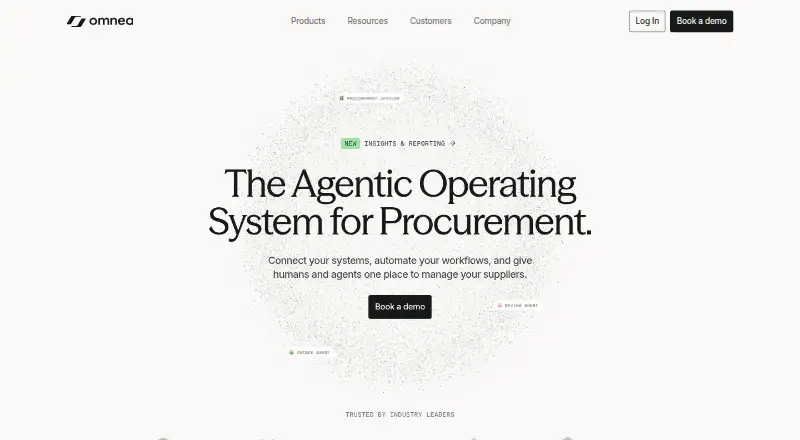
What Omnea is
Omnea is web-based software for managing purchasing requests and supplier relationships. Its guided request intake helps direct users through the request process, while approval workflows support review and authorization. Teams can manage suppliers, create purchase orders, and use a supplier portal. Omnea also supports punchout catalogs, connecting catalog purchasing with the request and purchasing process. The product was founded in 2022 and is headquartered in London, United Kingdom. Omnea is paid software, and pricing is available on request. Its listed platform is the web, making it suited to organizations looking for browser-based purchasing and supplier-management tools. The listed capabilities focus on request intake, approvals, orders, supplier records, and catalog access rather than a broader set of procurement functions.
Good
- Guided request intake helps structure purchasing requests.
- Approval workflows are supported.
- Purchase order management is included.
- Punchout catalog support is available.
- A supplier portal is included.
Watch out
- Pricing is available only on request.
- The listed platform is web.
Who it suits
Omnea suits organizations that want guided purchase requests, approval workflows, purchase orders, and supplier management in a web-based system.
Verdict
Omnea brings guided intake, approvals, purchase orders, and supplier management together in a web-based product. Organizations should request pricing to assess its fit and cost.
The facts
Each one read from Omnea's own pages, with the date it was checked.
What it does
- AI assistants
- The integrations library says procurement data and workflows can be accessed through MCP from ChatGPT, Claude, Cohere North, Cursor, and Microsoft Copilot.checked 8 Oct 2026
- AI controls
- Customers can set each agent and workflow’s autonomy by category, value, or data sensitivity, and actions are logged with their rationale and source data.checked 8 Oct 2026
- AI data use
- Omnea’s privacy policy says customer data is not used by Omnea or its AI providers to train models, except models used only by that customer’s business.checked 8 Oct 2026
- AI oversight
- Omnea says its agents support configurable human oversight and provide a traceable rationale tied to source data.checked 9 Oct 2026
- AI tasks
- Omnea says its agents can review intake requests, suggest or execute workflow improvements, benchmark prices using Tropic data, query Dow Jones about supplier exposure, escalate third-party risks, and prepare renewal negotiations.checked 8 Oct 2026
- API
- Omnea lists a public REST API for building custom ERP connections.checked 9 Oct 2026
- Availability
- The September 28, 2026 launch announcement says the Agentic Operating System is available to Omnea customers.checked 8 Oct 2026
- Business focus
- Omnea describes its platform as a business-to-business service intended for people aged 18 or over.checked 8 Oct 2026
- Compliance
- The site lists SOC 2 Type II, GDPR, single sign-on, role-based access, and a full audit trail.checked 9 Oct 2026
- Context Engine
- The Context Engine structures data from intake, approvals, rejections, policies, and other sources so agents can use organisational context and improve with each cycle.checked 8 Oct 2026
- Integrations
- The integrations library lists systems including Coupa, NetSuite, Oracle Fusion, SAP Ariba, Workday, Microsoft Teams, and Slack.checked 9 Oct 2026
- Procurement coverage
- Its platform covers intake and orchestration, source-to-contract, procure-to-pay, and supplier management.checked 9 Oct 2026
- Product
- Omnea describes itself as an agentic operating system for procurement that connects systems and automates workflows for managing suppliers and controlling spend.checked 9 Oct 2026
- Sales
- The site invites prospective customers to book a tailored demo and does not display public plan prices on the pages reviewed.checked 9 Oct 2026
- Scope
- Its Agentic Operating System covers intake, sourcing, contracting, third-party risk management, and supplier management.checked 8 Oct 2026
- Security
- Omnea states that its AI models are not trained on customer data and that it has zero data retention agreements with model providers.checked 9 Oct 2026
- Security certifications
- Omnea’s Trust Center lists SOC 2, SOC 1, UK Cyber Essentials, and GDPR under compliance.checked 8 Oct 2026
- Support
- For help with access, requests, or the supplier portal, Omnea directs users to [email protected].checked 9 Oct 2026
- Workflow builder
- The no-code workflow builder uses a visual drag-and-drop interface with conditional routing and configurable thresholds.checked 9 Oct 2026
The company
- Founded
- Omnea says it was founded in 2022.checked 9 Oct 2026
- Headquarters
- Omnea Limited lists its registered office at 123 Buckingham Palace Road, London SW1W 9SH.checked 9 Oct 2026
- Headquarters and founding
- Omnea says it was founded in London and was founded in 2022.checked 8 Oct 2026
The full review of Omnea
Omnea is a web-based procurement platform for organizations coordinating purchasing and supplier decisions across multiple systems. It is best suited to teams that need configurable processes across several stages of procurement, rather than a single-purpose purchasing tool. Its broad workflow coverage and configurable AI oversight stand out; custom pricing makes a tailored demo part of the buying decision.
Overview
Founded in London in 2022, Omnea brings intake, sourcing, contracting, third-party risk management, procure-to-pay, and supplier management into one platform. Guided requests, approval workflows, purchase orders, punchout catalogs, and a supplier portal give it a wide operational remit. That breadth may help teams coordinate handoffs across procurement, but organizations looking only to manage a narrow purchasing task could find the platform more extensive than they need.
Key features
Workflow design and context
A visual, no-code builder supports drag-and-drop workflow configuration, conditional routing, and thresholds. Teams can shape processes around their approval rules without building them from scratch in code. Omnea’s Context Engine structures information from requests, approvals, rejections, policies, and other sources for agents to use across cycles. This approach is intended to make automation more attuned to organizational context, though buyers should assess how the available workflows match their own processes.
AI with configurable oversight
Organizations can set agent and workflow autonomy by category, value, or data sensitivity. Omnea says actions are logged with their rationale and source data, and that human oversight can be configured. Those controls make the AI model more suitable for procurement teams that need traceability and a say in which actions are automated. Agents can review requests, suggest or execute workflow improvements, benchmark prices using Tropic data, query Dow Jones about supplier exposure, escalate third-party risks, and prepare renewal negotiations. The range is substantial, but teams should decide which tasks they are comfortable assigning to agents.
Connections and security
Integrations include Coupa, NetSuite, Oracle Fusion, SAP Ariba, Workday, DocuSign, Jira, Slack, and Microsoft Teams, alongside a public REST API for custom ERP connections. The integrations library also describes access to procurement data and workflows through MCP from ChatGPT, Claude, Cohere North, Cursor, and Microsoft Copilot. Omnea says customer data is not used to train its models and that it has zero-data-retention agreements with model providers; its privacy policy also excludes training by AI providers except models used only by that customer’s business. Its compliance and security offerings include SOC 2 Type II, SOC 1, UK Cyber Essentials, GDPR, single sign-on, role-based access, and an audit trail. This combination will matter to buyers weighing AI use in sensitive supplier and purchasing processes.
Pricing
Omnea is paid software with custom pricing. It does not publish plan prices and invites prospective customers to book a tailored demo, so teams should evaluate cost alongside the scope and controls they need. This sales-led approach may suit organizations assessing a broad procurement platform, but it gives smaller buyers no public price point for quick comparison.
Platforms
Omnea is available on the web and through an API. The public REST API supports custom ERP connections, while listed integrations and MCP access extend its reach into business systems and AI assistants. The Agentic Operating System is available to Omnea customers.
Who it's for
Omnea is aimed at businesses that need to govern procurement workflows, supplier relationships, and risk across multiple teams or systems. Its guided intake, configurable approvals, purchasing features, and supplier management make it a stronger fit for organizations seeking lifecycle coverage than for those needing only basic vendor records or document processing. The platform is a business-to-business service intended for adults aged 18 or over. Customer support may be provided by chat, phone, or email.
Pros and cons
- Broad procurement coverage: Intake, source-to-contract, procure-to-pay, and supplier management sit within one platform, which can reduce the need to coordinate separate tools for each stage.
- Configurable AI controls: Autonomy can be set by category, value, or data sensitivity, with logged rationales and configurable human oversight to support accountable use.
- Useful integration breadth: Named ERP, collaboration, and business-system connections plus a public REST API give teams several paths to connect existing tools.
- Custom pricing: Buyers must request a tailored demo to assess cost, making it harder to compare against products with public plans before engaging sales.
- Potentially more scope than needed: The platform’s lifecycle reach may be unnecessary for organizations seeking a focused purchasing or supplier-management tool.
Alternatives
Flowie is worth considering for teams focused on document processing: its free plan supports up to 24 documents per month (300 per year), all document types, and one entity, but has basic processing only and no workflows. Vendorfi may be a better fit for smaller teams prioritizing vendor lifecycle management; its free plan caps usage at three active vendors and two user seats, while its Core plan costs 299.99 USD. ControlHub offers a more explicitly priced approvals option: its APPROVALS PLAN costs $249 a month and includes unlimited purchasing requests and requester users, with five advanced users and an additional-user charge of $12 per advanced user.
ORO Labs is another paid web-based option. Proconomy is a paid option with web and API access, while Raindrop Systems is also paid and supports web and API. VendrNova is a paid web-based alternative. Zip is a paid web and API option whose AI procurement platform requires a demo request.
For a broader shortlist, compare Omnea with Procurement Orchestration Software and Procurement Software.
Verdict
Omnea is a strong candidate for organizations that want one configurable platform spanning procurement workflows, supplier management, and controlled AI assistance. Its main reason to choose is the combination of lifecycle coverage with traceable, adjustable automation; its main reason to look elsewhere is custom pricing, especially if the organization needs only a narrower tool or wants to compare public plans first.
Alternatives to Omnea
- 1

ControlHub
AndroidiOSWebAPI7.4From $249 a month - 2

Flowie
Free planWebAPISelf-hosted7.4From €12 a month - 3
Vendorfi
Free planWebAPI7.2From $299.99 a month - 4
Procol Strategic Sourcing
AndroidiOSWebAPI7.0 - 5
Genie Bazaar
AndroidiOSWebAPI6.9 - 6

Precoro
AndroidiOSWebAPI6.8From $499 a month