
LinOTP
LinOTP is an open-source platform for multi-factor authentication, built to protect digital identities and transactions.
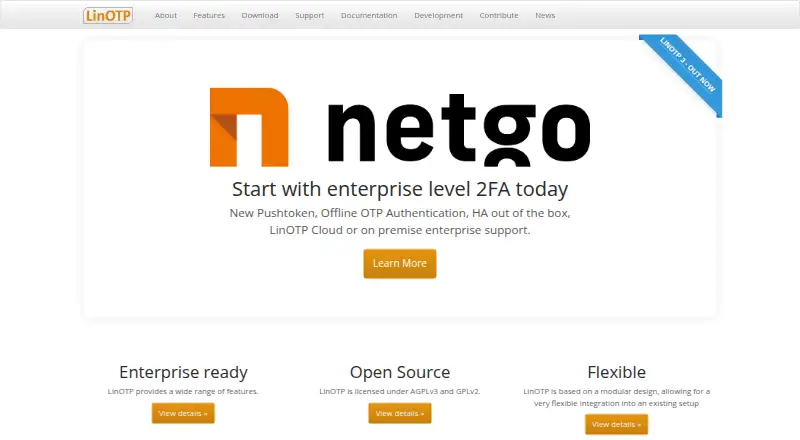
What LinOTP is
LinOTP is an open-source platform for multi-factor authentication, built to protect digital identities and transactions. It offers token choices such as OATH TOTP/HOTP, push, QR, SMS, email, FIDO U2F, and WebAuthn, alongside other listed factors including mOTP and OCRA. Integration options include SAML, OIDC, ADFS, RADIUS, HTTP/JSON API, PAM, OpenVPN, SSH, Apache, and WordPress. LinOTP connects to Active Directory, LDAP, and several SQL databases. Users can register, manage, and reset tokens in a self-service portal, and hardware tokens can be resynchronized automatically. The maker describes offline Windows authentication for users without a permanent internet connection. Deployment options include a virtual appliance and containers, and the maker says the platform can scale from small installations to enterprises with thousands of users and distributed setups. The open-source software is free under AGPLv3 and GPLv2; a free demo license is also available by arrangement. Paid support options include contracts, integration help, training, and remote or on-site assistance. LinOTP is developed and maintained by netgo software GmbH.
Good
- Supports a wide range of authentication factors.
- Connects to Active Directory, LDAP, and SQL databases.
- Self-service portal supports token management and resets.
- Offers virtual appliance and container deployment.
- Free open-source software and demo license.
Watch out
- LinOTP 3 Debian packages listed for Debian 10 Buster.
- RPM packages are currently listed only for LinOTP 2.
- Other Linux distributions may require source or pip installation.
Who it suits
LinOTP suits organizations seeking open-source multi-factor authentication across connected services, directories, and databases. Its offline Windows login and multiple deployment options may also fit distributed environments.
Verdict
LinOTP combines varied authentication factors with directory connections, self-service token management, and deployment choices. Organizations should check the listed Linux installation options against their environment before choosing it.
Plans and prices
From LinOTP's own pricing page, checked 4 Oct 2026.
| Plan | Price | What it gives you |
|---|---|---|
| LinOTP demo license | Free | Free demo license for the LinOTP MFA platform; request and arrange the test deployment with the LinOTP team |
| LinOTP open-source software | Free | AGPLv3 and GPLv2; no public software price stated |
The facts
Each one read from LinOTP's own pages, with the date it was checked.
What it does
- Audit
- The LinOTP site says its signed audit log records authentication and management actions and is tamper-proof.checked 4 Oct 2026
- Deployment
- The maker lists a virtual appliance compatible with common hypervisors and container deployment for Kubernetes and other orchestration platforms.checked 4 Oct 2026
- Directories
- LinOTP connects to Active Directory, LDAP, and SQL databases including PostgreSQL, MySQL, MariaDB, Oracle, and DB2.checked 4 Oct 2026
- Notable install limits
- The LinOTP 3 download page lists Debian 10 Buster packages, says RPM packages are currently available only for LinOTP 2, and notes other Linux distributions may use source or pip installation.checked 4 Oct 2026
- Offline login
- The maker describes offline authentication for Windows users without a permanent internet connection.checked 4 Oct 2026
- Protocols
- The product page lists SAML, OIDC, ADFS, and RADIUS among its integration protocols.checked 4 Oct 2026
- Purpose
- LinOTP is an open-source platform for strong multi-factor authentication and protecting digital identities and transactions.checked 4 Oct 2026
- Scale
- The maker says LinOTP scales from small installations to enterprises with thousands of users and supports distributed setups.checked 4 Oct 2026
- Security and compliance
- The product page says its open-source architecture is auditable and lists support for GDPR, ISO 27001, NIS2, BSI IT-Grundschutz, PSD2, and PCI-DSS requirements.checked 4 Oct 2026
- Self-service
- Users can register, manage, and reset tokens through a self-service portal, and hardware tokens can be automatically resynchronized.checked 4 Oct 2026
- Support
- Paid support offerings include support contracts with SLAs, software subscriptions, integration services, possible 24/7 emergency response, SaaS, training, and remote or on-site help.checked 4 Oct 2026
- Tokens
- Supported token options include OATH TOTP/HOTP, push, QR, SMS, email, and hardware tokens including FIDO U2F and WebAuthn.checked 4 Oct 2026
The company
- Founded
- The company page says the LinOTP team has developed solutions since 2012; it does not state an exact founding year.checked 4 Oct 2026
- Headquarters
- The netgo software GmbH legal notice gives its address as Sachsendamm 63-64, 10829 Berlin, Germany.checked 4 Oct 2026
- Maker
- LinOTP is developed and maintained by netgo software GmbH.checked 4 Oct 2026
The full review of LinOTP
LinOTP is open-source software for multi-factor authentication, aimed at organizations managing identity and access across a mix of users and applications. It is most compelling for teams prepared to run their own authentication infrastructure; those wanting installation flexibility across Linux distributions should verify their deployment path before committing.
Overview
Developed and maintained by netgo software GmbH, LinOTP is positioned for installations ranging from small environments to enterprises with thousands of users, including distributed setups. Its combination of authentication methods, directory connections, and integration protocols can make it a practical choice for organizations that need MFA to span different systems rather than one narrow access route.
The open-source architecture is auditable, and LinOTP describes its signed audit log as tamper-proof, recording authentication and management actions. The product also cites support for requirements associated with GDPR, ISO 27001, NIS2, BSI IT-Grundschutz, PSD2, and PCI-DSS. Those capabilities are relevant to organizations with formal security obligations, though they do not replace assessing a specific deployment against those obligations.
Key features
Authentication options and integrations
LinOTP supports HOTP, TOTP, mOTP, OCRA, SMS and email OTP, push, QR, YubiKey, FIDO U2F, WebAuthn, RADIUS, remote and forwarding options, static passwords, and daily passwords. This range can accommodate different users and systems, but it also leaves administrators with a broad set of factors and policies to manage.
Integration routes include HTTP/JSON API, PAM, RADIUS, SAML, OpenVPN, SSH, Apache, and WordPress. The product page also names SAML, OIDC, ADFS, and RADIUS among its protocols. Connections to Active Directory, LDAP, and SQL databases—including PostgreSQL, MySQL, MariaDB, Oracle, and DB2—make it relevant to organizations with established directories or database-backed identity data.
Self-service and offline access
Users can register, manage, and reset their tokens through a self-service portal, reducing the need for administrators to handle each routine token change. Hardware tokens can be automatically resynchronized. LinOTP also describes offline authentication for Windows users without a permanent internet connection, which suits environments where connectivity cannot be assumed.
Deployment and installation
Deployment choices include a virtual appliance compatible with common hypervisors and containers for Kubernetes and other orchestration platforms. The Linux installation path deserves attention: LinOTP 3 packages are listed for Debian 10 Buster, RPM packages are currently available only for LinOTP 2, and other distributions may require source or pip installation. Organizations standardizing on a different distribution should confirm that this path fits their operational practices.
Pricing
LinOTP's pricing model is free, and the open-source software plan costs nothing under AGPLv3 and GPLv2. The demo license is also free, but it is a test deployment arranged by request with the LinOTP team rather than an automatically provisioned trial.
Paid support offerings include SLA-backed support contracts, software subscriptions, integration services, possible 24/7 emergency response, SaaS, training, and remote or on-site help. These are options for organizations that need vendor assistance or a hosted service; the open-source plan is the fit for teams able to manage deployment and ongoing operations themselves.
Platforms
LinOTP supports Android, iOS, Linux, Windows, web, API, and self-hosted environments. Its virtual appliance and container options add deployment flexibility, while the package limitations for LinOTP 3 may make some Linux environments less straightforward than others.
Who it's for
LinOTP suits organizations that want control over MFA infrastructure, need several authentication factors, and already rely on directory, database, or application integrations. Its scale claims and distributed deployment support make it relevant beyond small installations, while self-service token management can reduce routine administrative work.
It is less suitable for teams seeking a turnkey Linux installation on any distribution or those that do not want responsibility for operating authentication services. Those organizations should weigh the installation path and the paid support options against their staffing and deployment requirements.
Pros and cons
- Pros: Broad factor support, including push, QR, SMS, email, hardware tokens, and WebAuthn, gives organizations options for varied user and system needs.
- Pros: Directory and database connections, plus application integration routes such as PAM, SSH, OpenVPN, and WordPress, support use across a mixed environment.
- Pros: Self-service token management and offline Windows authentication address routine enrollment needs and disconnected access scenarios.
- Pros: Free open-source licensing and virtual appliance or container deployment let capable teams choose how to operate the platform.
- Cons: LinOTP 3's Debian 10 package availability and the narrower RPM support for LinOTP 2 may complicate adoption on other Linux distributions.
- Cons: Organizations needing SLAs, integration help, or emergency response must consider paid support offerings.
Alternatives
- Protectimus MFA is worth comparing for teams looking for a paid MFA option with a free plan and a stated individual price of $2 a month.
- LoginTC offers a Cloud Starter free plan for up to 3 users, making it a candidate for very small teams evaluating hosted MFA.
- miniOrange Multi-Factor Authentication has a free plan starting at $0 per month for individuals just getting started, which may suit an individual-first evaluation.
- Spriv Adaptive MFA has a free Startup plan for up to 2 users and 2 servers, with SMS billed at carrier cost; it is a fit for a small initial deployment.
- Duo Mobile has a free plan for 10 users and may suit a small group comparing mobile-focused MFA.
- HYPR Authenticate is a paid alternative with a stated monthly plan for web access and phishing-resistant onboarding.
- Deepnet DualShield MFA Platform is an on-premises or private-cloud option for organizations that prefer to request a quote.
- Imprivata Enterprise Access Management uses modular licensing, with Core Access required for all deployments and add-on modules varying by workflow.
Browse more options in Multi-Factor Authentication Software.
Verdict
Choose LinOTP if your organization wants free, auditable MFA software with varied factors, directory connections, self-service token administration, and control over deployment. Look elsewhere if your Linux environment does not align with its package options or if you need a turnkey service and do not want to operate authentication infrastructure.
Alternatives to LinOTP
- 1

Duo Mobile
Free planAndroidiOS7.7From $3 a month - 2
HYPR Authenticate
AndroidiOSWebAPI7.5From $3 a month - 3

LoginTC
Free planAndroidiOSWebAPI7.5From $36 a year - 4

IBM Verify
AndroidiOSWebAPI7.3From $15,899.29 a year - 5
OpenOTP Authentication Server
Free planAndroidiOSLinuxmacOS7.3Free plan - 6

Protectimus MFA
Free planAndroidiOSWebAPI7.3From $2 a month