
LIAPP
LIAPP is a mobile app security service designed to protect apps from analysis, tampering, redistribution, rooting, debugging, hooking, and other attacks.
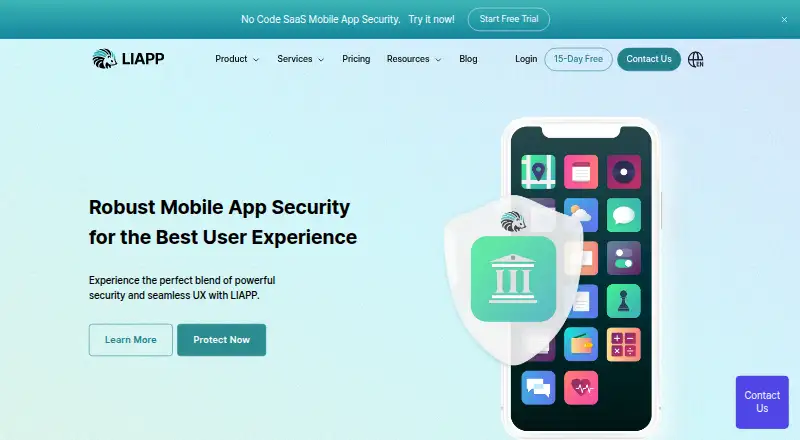
What LIAPP is
LIAPP is a mobile app security service designed to protect apps from analysis, tampering, redistribution, rooting, debugging, hooking, and other attacks. Its protections include source-code encryption and obfuscation, anti-tampering, anti-debugging, and memory protection. The product lists support for Flutter, React Native, JavaScript, JNI libraries, and game engines such as Unity, Native, Unreal Engine, and Cocos. A dashboard displays device, connection, and threat-detection statistics, with controls to enable, monitor, or disable security options in real time. LIAPP lists CI/CD integrations including Jenkins and TeamCity, as well as REST API support for extracting detection logs. For Game and Enterprise plans list on-premises support. Each ticket covers one registered app, with unlimited LIAPP applications to that app until the license expires. Listed customer services include email, call, and dedicated-channel support, plus app compatibility testing. Lockin Company says each mobile security service it provides has earned TTA GS Certification Grade 1.
Good
- Protects against tampering, debugging, and rooting.
- Supports Flutter, React Native, and listed game engines.
- Dashboard provides real-time security controls.
- Includes CI/CD integration and a REST API.
- Offers a 15-day trial.
Watch out
- No free plan is listed.
- A monthly license applies to one registered app.
- The $39.99 ticket is a one-time purchase.
- Other payment methods require contacting the company.
Who it suits
LIAPP suits teams protecting mobile apps, including those working with the listed frameworks and game engines. Its plans also target a range of sectors, from fintech and healthcare to games and e-commerce.
Verdict
LIAPP combines app protections, monitoring controls, and development integrations, with plans that include different capabilities. Check which license fits your app and whether its one-app licensing limit suits your deployment.
Plans and prices
From LIAPP's own pricing page, checked 29 Sep 2026.
| Plan | Price | What it gives you |
|---|---|---|
| Onsite | $39.99, paid once | Source Code Encryption · Anti-Tampering · Memory Protection · Game Engine Protection · Anti-Debugging · String Encryption · $39.99 /TICKET; each PROTECT application consumes 1 ticket |
| LIAPP Onsite Ticket | $39.99, paid once | Source-code encryption · anti-tampering · memory protection · game-engine protection · anti-debugging · string encryption · per ticket |
| LIAPP Onsite Monthly | $139.99 a month | Source-code encryption · anti-tampering · memory protection · game-engine protection · anti-debugging · string encryption · per app |
| Business | $249.99 a month | Includes LIAPP ONSITE features · Native Library Protection · Rooting Detection · Virtual Machine Detection · Hacking Tool Detection · $249.99 /MONTH |
| LIAPP Business | $249.99 a month | Onsite features · native-library protection · rooting detection · virtual-machine detection · hacking-tool detection · per app |
| LIAPP Onsite Annual | $1,399.90 a year | Onsite features · annual licence · per app |
| LIAPP Business Annual | $2,499.90 a year | Business features · annual licence · per app |
| LIAPP Enterprise | Priced on request | Business features · real-time monitoring · on-premises support · LIAPP Auth · advanced obfuscation · SSL pinning · SIEM · callback methods · JavaScript/assets encryption · React Native protection · customized by customer needs |
| LIAPP For Game | Priced on request | Business features · LIAPP Auth · real-time monitoring · on-premises support · overlay detection · anti-bot · variable encryption · USB-debugging detection · VPN detection · fake-GPS detection · customized by game-app type |
| For Game | Priced on request | Includes LIAPP BUSINESS features · LIAPP Auth · Real-Time Monitoring · On-Premises Support · Game-specific detection and encryption features · Customized pricing by game app type |
| Enterprise | Priced on request | Includes LIAPP BUSINESS features · Real-Time Monitoring · On-Premises Support · SIEM Support · Advanced Code Obfuscation · React Native Protection · Customized pricing by customer needs |
The facts
Each one read from LIAPP's own pages, with the date it was checked.
What it does
- Anti-tampering
- LIAPP stops an application from running when it detects modification or evidence of modification.checked 15 Oct 2026
- Build-update requirement
- Each new app build must be processed again through LIAPP before distribution.checked 15 Oct 2026
- Callbacks
- Callback support lets customers customize detection UI, alert text and the app-closing behavior.checked 15 Oct 2026
- CI/CD integrations
- The maker says LIAPP integrates with CI/CD tools including Jenkins and TeamCity.checked 15 Oct 2026
- Code protection
- Features include source-code encryption and obfuscation, anti-tampering, anti-debugging, and memory protection.checked 29 Sep 2026
- Deployment
- For Game and Enterprise plans the pricing page lists on-premises support in addition to the hosted service.checked 15 Oct 2026
- Documentation workflow
- Public documentation covers registration, upload, analysis, protection, signing, downloading and Android zipalign steps.checked 15 Oct 2026
- Funding news
- VentureSquare reported on November 4, 2015 that Lockin Company raised 1.5 billion Korean won from KDB Industrial Bank.checked 15 Oct 2026
- Game-engine support
- The product lists protection for Unity, Unreal Engine, Cocos, native applications and other mobile game frameworks.checked 15 Oct 2026
- Game threat detection
- The game offering names Key Generators, Lucky Patcher, Cheat Engine and GameGuardian among detected threats.checked 15 Oct 2026
- Integrations
- The site lists CI/CD integration, including Jenkins and TeamCity, and REST API support for extracting detection logs.checked 29 Sep 2026
- Legal name and funding
- Crunchbase identifies LOCKIN COMPANY co., Ltd. and lists KDB Business Bank and SparkLabs Accelerator among investors, with two funding rounds shown.checked 15 Oct 2026
- Limit: reporting
- A reviewer wants more detailed dashboard queries, including filtering by attack time or LIAPP ID.checked 15 Oct 2026
- Limit: responsiveness
- One reviewer reports application-time impact and says responsiveness could improve.checked 15 Oct 2026
- LISS launch
- A PR Newswire announcement dated October 11, 2023 introduced LISS, an SDK that blocks screenshots and recording and detects remote-control apps.checked 15 Oct 2026
- Monitoring dashboard
- A dashboard reports device information, connection counts and detected-threat counts for protected apps.checked 15 Oct 2026
- Operations
- LIAPP provides a dashboard with device, connection, and threat-detection statistics, plus real-time controls to turn security options on, monitor, or off.checked 29 Sep 2026
- Payment
- The pricing FAQ says purchases can be made by credit card and asks customers to contact the company about other payment methods.checked 29 Sep 2026
- Praise: automation
- A G2 reviewer highlights the convenience of command-line automation and variable-encryption support.checked 15 Oct 2026
The company
- Company
- Lockin Company says it was founded in 2013 and identifies its location in Seongnam-si, Gyeonggi-do, Republic of Korea.checked 29 Sep 2026
- Company facts
- LinkedIn lists Lockin Company as a privately held security-services firm founded in 2013 with 11–50 employees and headquarters in Seongnam, South Korea.checked 15 Oct 2026
- Founded
- 2013checked 28 Sep 2026
- Headquarters
- Seongnam-si, Gyeonggi-do, South Koreachecked 28 Sep 2026
Where it runs
- Limit: iOS setup
- Reviewers say iOS deployment requires additional source work and is more cumbersome than Android APK upload.checked 15 Oct 2026
The full review of LIAPP
LIAPP is a mobile app security service for teams protecting Android and iOS releases, with particular appeal to game developers and organizations that need operational monitoring. Its protection breadth and development integrations are substantial, but the one-app license and custom-priced upper tiers call for a careful fit check.
Overview
LIAPP addresses analysis, tampering, redistribution, rooting, debugging, hooking and other attacks through code and runtime protections. That combination is useful when a team needs more than a single hardening measure; it is less compelling for buyers focused solely on desktop software protection.
Its dashboard provides device, connection and threat-detection statistics, alongside controls to turn security options on, monitor them or switch them off in real time. Jenkins and TeamCity CI/CD integration and a REST API for extracting detection logs can connect protection work to release and operations workflows. The tradeoff is that teams should confirm which capabilities and support services fit their plan before committing.
Key features
- Code and runtime defenses: Source-code encryption and obfuscation, anti-tampering, anti-debugging and memory protection target different points of attack. Rooting, virtual machine and hacking-tool detection appear in the Business tier, so buyers needing those controls must budget beyond Onsite.
- Framework coverage: Protection is listed for Flutter, React Native, JavaScript, JNI libraries and game engines including Unity, Native, Unreal Engine and Cocos. This breadth suits teams shipping across varied app stacks, though React Native protection is an Enterprise feature.
- Game-oriented controls: For Game adds LIAPP Auth, real-time monitoring, on-premises support and game-specific detection and encryption features. These are relevant to mobile game operators, but the custom price makes it important to request a quote for the target game.
- Development and operations: CI/CD integrations include Jenkins and TeamCity, while the REST API extracts detection logs. These options can help fit LIAPP into existing build and monitoring processes.
- Deployment and support: For Game and Enterprise list on-premises support. The plan comparison includes email, call and dedicated-channel support, as well as app compatibility testing.
Pricing
LIAPP has no free plan, but offers a 15-day trial. Its paid plans differ considerably in both scope and billing:
- Onsite — $39.99, paid once: Billed $39.99 /TICKET. Each PROTECT application consumes one ticket. It includes source-code encryption, anti-tampering, memory protection, game engine protection, anti-debugging and string encryption. This is the lower-cost entry for teams that need these protections for an app, but it does not include the added detections or monitoring in higher tiers.
- Business — $249.99 a month: Includes Onsite features plus native library protection, rooting detection, virtual machine detection and hacking tool detection. It fits teams needing those additional runtime defenses, but remains tied to a single registered app per monthly license.
- For Game — custom pricing: Includes Business features, LIAPP Auth, real-time monitoring, on-premises support and game-specific detection and encryption features. It targets game apps needing operational controls and deployment flexibility; request pricing based on the game app type.
- Enterprise — custom pricing: Includes Business features, real-time monitoring, on-premises support, SIEM support, advanced code obfuscation and React Native protection. It is the relevant tier for organizations needing SIEM or on-premises deployment, with cost dependent on customer needs.
A monthly license applies to one registered app, but allows unlimited LIAPP applications to that app until the license expires. That distinction matters for teams managing multiple apps: the license is not a blanket entitlement across an app portfolio. Payment by credit card is supported; contact the company about other payment methods.
Platforms
LIAPP's listed platforms include Android, iOS, Harmony OS, API, web and self-hosted environments. The range supports mobile-focused deployments as well as integration and hosting needs; teams should distinguish platform coverage from framework-specific protection, which varies by capability and plan. Offline play is supported.
Who it's for
LIAPP is aimed at teams protecting mobile apps in fintech and banking, government and enterprise, mobile games, mobility, O2O services, public institutions, streaming and media, e-commerce, online casinos and healthcare. Its feature mix is strongest for organizations that need app hardening together with threat visibility, release integrations or on-premises deployment. A single-app license may be a poor fit for teams seeking one purchase to cover a broad app portfolio.
Pros and cons
- Pro: Broad protection scope. Code encryption, obfuscation, memory protection and several runtime detections address more than one class of app attack.
- Pro: Useful workflow hooks. Jenkins, TeamCity and REST API support can connect security controls and detection logs to existing processes.
- Pro: Specialized higher-tier options. Game-specific protections, SIEM support and on-premises deployment address needs that basic app hardening alone does not cover.
- Con: Licensing is app-specific. Each monthly license covers one registered app, which complicates budgeting for multi-app publishers.
- Con: Higher tiers require a quote. For Game and Enterprise have custom pricing, making cost comparisons less straightforward before discussing requirements.
- Con: Lower tiers omit some advanced controls. Business is needed for rooting, VM and hacking-tool detection; game-specific features and SIEM support sit higher still.
Alternatives
Browse Game DRM Software for a broader category comparison. For specific alternatives:
- Virbox Protector is another paid option with a free trial, spanning Android, iOS, Linux, macOS and Windows. Its personal and enterprise native x86 licenses are priced in CNY; consider it when that broader platform mix and license structure better match your needs.
- Code Virtualizer is a paid, trial-available option for Linux, macOS and Windows, with developer and company x86/x64 licenses. Choose it when desktop platforms and those license categories are the priority.
- DotFix NiceProtect is a paid Windows option with a free trial. Its listed renewal is for existing customers and covers one year of updates and technical support; consider it when Windows game DRM and that renewal arrangement suit the deployment.
- Kenshi/core is a paid option for Windows and Linux.
- VMProtect is a paid, trial-available option for Linux, macOS and Windows. Its listed personal updates renewal is for existing licenses, while its Lite personal license is a one-time purchase; consider it when desktop coverage and those licensing options fit better.
- ProtectMyGame offers a free Windows plan capped at five protected files, 200MB per file, with files available for 24 hours. It is the clearer starting point when a small, time-limited free allowance matters more than LIAPP's mobile focus.
- STOVE PC Security SDK is a paid option for API and Windows.
- Digital.ai Application Protection is a paid alternative across Android, iOS, Linux, macOS, Windows and self-hosted environments. Its Premium plan uses a per-application license and lists on-site deployment with customizable protections; consider it when those deployment terms and broader platform range are a closer match.
Verdict
Choose LIAPP if you protect mobile apps and want code and runtime defenses backed by monitoring, integrations or specialized game and enterprise controls. Its broad mobile-focused coverage is the central reason to shortlist it. Look elsewhere if you need portfolio-wide licensing, a free plan or predictable pricing for the custom-priced tiers.
Alternatives to LIAPP
- 1
Enigma Protector
WebAPILinuxSelf-hosted7.4 - 2

Digital.ai Application Protection
AndroidiOSWebAPI7.3From $23,100 a year - 3
ProtectMyGame
Free planWindows7.1From €9.99 a month - 4

Virbox Protector
AndroidiOSLinuxmacOS7.1CN¥2,499 one-time - 5
VMProtect
LinuxmacOSWindows6.6 - 6
Google Play Billing
Free planAndroidAPI6.5Free plan