
Ethyca Fides
Ethyca Fides is an open-source privacy engineering toolkit for defining data categories, purposes, and use cases across fragmented systems.
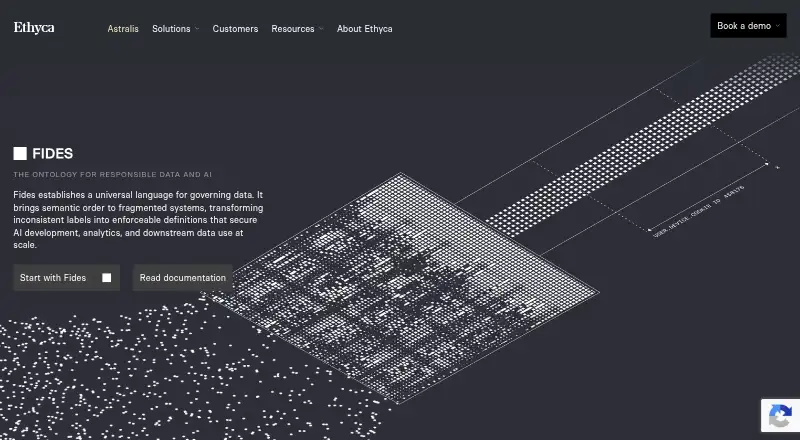
What Ethyca Fides is
Ethyca Fides is an open-source privacy engineering toolkit for defining data categories, purposes, and use cases across fragmented systems. It turns regulatory obligations into machine-readable definitions that can be enforced within infrastructure. APIs and tooling connect it to development workflows, where teams can classify and authorize data used in AI training and inference. The sample deployment includes a webserver and Admin UI for privacy requests, a Privacy Center, and an example e-commerce project. Its Cookie House sample uses MongoDB and Postgres; listed integrations include Salesforce, Shopify, Segment by Twilio, Google Analytics, Slack Enterprise, and Zendesk. Fides supports data inventory, automated discovery, DSAR and retention management, with hybrid deployment. Local setup requires Python 3.8–3.10 and Docker 20.10.11 or higher. The free toolkit is available for API, Linux, macOS, self-hosted, web, and Windows environments. The onboarding guide directs users seeking setup help to the Fides Slack community.
Good
- Free, open-source privacy engineering toolkit.
- Machine-readable policy definitions can be enforced in infrastructure.
- Supports data inventory, discovery, DSAR, and retention management.
- Integrates with databases and named business platforms.
Watch out
- Local setup specifies Python 3.8–3.10 and Docker 20.10.11 or higher.
- Hosted-service fees are specified in an Order Form.
- Hosted support and maintenance are generally the customer’s responsibility.
Who it suits
Fides is built for developers, including engineers and data scientists who need to operationalize privacy. It suits teams governing data across systems and AI workflows.
Verdict
Fides combines privacy policy definitions, operational controls, and AI workflow governance in a free toolkit. Teams considering the hosted service should note that fees are specified in an Order Form and support and maintenance are generally their responsibility.
Plans and prices
From Ethyca Fides's own pricing page, checked 3 Oct 2026.
| Plan | Price | What it gives you |
|---|---|---|
| Fides | Free | Open-source privacy engineering toolkit |
The facts
Each one read from Ethyca Fides's own pages, with the date it was checked.
What it does
- AI governance
- Fides integrates with development workflows through APIs and tooling to classify and authorize data entering AI training and inference pipelines.checked 3 Oct 2026
- Database integrations
- The sample Cookie House project uses MongoDB and Postgres databases managed through Fides.checked 3 Oct 2026
- Hosted service terms
- Ethyca’s hosted Fides agreement says service fees are specified in an Order Form and support and maintenance obligations are generally the customer’s responsibility, subject to the agreement.checked 3 Oct 2026
- Install requirements
- The onboarding guide specifies Python versions 3.8–3.10 and Docker version 20.10.11 or higher to run Fides locally.checked 3 Oct 2026
- Intended users
- Ethyca says Fides is built for developers and identifies engineers and data scientists as teams that need tools to operationalize privacy.checked 3 Oct 2026
- Open source
- Ethyca describes Fides as an open-source privacy engineering standard that teams can inspect and contribute to.checked 3 Oct 2026
- Other integrations
- Ethyca lists integrations including Salesforce, Shopify, Segment by Twilio, Google Analytics, Slack Enterprise, and Zendesk.checked 3 Oct 2026
- Policy enforcement
- Fides translates regulatory obligations into machine-readable definitions that can be enforced within infrastructure.checked 3 Oct 2026
- Privacy requests
- The Fides sample deployment includes a webserver and Admin UI for administering privacy requests, a Privacy Center, and a sample e-commerce project.checked 3 Oct 2026
- Purpose
- Fides defines a shared ontology for data categories, purposes, and use cases to govern data across fragmented systems.checked 3 Oct 2026
- Security
- Ethyca describes its security protections as enterprise-grade, but the security page’s detailed control descriptions contain placeholder text.checked 3 Oct 2026
- Support
- The onboarding guide directs users who need setup help to the Fides Slack community.checked 3 Oct 2026
The company
- Company history
- Ethyca says it was founded in 2018 to operationalize GDPR as code and released Fides 1.0 in 2021.checked 3 Oct 2026
- Founded
- 2018checked 28 Sep 2026
- Headquarters
- New York, New York, United Stateschecked 28 Sep 2026
The full review of Ethyca Fides
Overview
Ethyca Fides is an open-source privacy engineering toolkit for turning data-use policies into controls across software systems. It is best suited to developers, engineers, and data scientists who need to operationalize privacy in data and AI workflows. Its strongest case is as a flexible, inspectable foundation; teams seeking a supported hosted service should weigh the customer’s support and maintenance responsibilities.
Key features
Fides defines shared categories, purposes, and use cases for data, giving teams a common framework to govern information spread across fragmented systems. It can translate regulatory obligations into machine-readable definitions enforced in infrastructure. That makes it a better fit for teams able to connect policy work to engineering than for organizations seeking a standalone policy-writing tool.
For AI workflows, APIs and tooling classify and authorize data entering training and inference pipelines. This brings governance into development processes, where teams can apply controls as data moves into AI use. The open-source standard can be inspected and contributed to, which gives engineering teams room to understand and adapt the underlying approach.
The sample deployment includes a webserver and Admin UI for privacy requests, a Privacy Center, and an example e-commerce project. The project uses MongoDB and Postgres managed through Fides. Listed integrations also include Salesforce, Shopify, Segment by Twilio, Google Analytics, Slack Enterprise, and Zendesk. Data inventory, automated data discovery, DSAR management, and retention management are among its capabilities.
Local setup calls for Python 3.8–3.10 and Docker 20.10.11 or higher. Users who need setup help are directed to the Fides Slack community. That community route may suit technically capable teams, but it is not a substitute for a defined support commitment. Ethyca describes its security protections as enterprise-grade; the published control descriptions include placeholder text, so the available security detail is limited.
Pricing
| Plan | Price | What it means |
|---|---|---|
| Fides | free | Open-source privacy engineering toolkit |
The free toolkit is the clear starting point for teams that can deploy and operate software themselves. No seat, quota, or trial limits are given for this plan. Fides is also described as hybrid deployment software. For the hosted service, fees are specified in an Order Form, and support and maintenance obligations generally fall to the customer under the agreement. Organizations that need vendor-led ongoing support should account for that before choosing hosted Fides.
Platforms
Fides is listed for API, Linux, macOS, self-hosted, web, and Windows. The range supports teams planning to work across local development, infrastructure, and web interfaces, although the local onboarding requirements make clear that running it involves technical setup.
Who it's for
Fides is aimed at developers, engineers, and data scientists who need to operationalize privacy in systems and AI pipelines. It makes sense for organizations willing to define data policies and connect them to infrastructure. Teams looking mainly for a managed privacy program, or that lack capacity to handle setup and ongoing support responsibilities, may prefer a more service-led option.
Pros and cons
- Pros: The open-source toolkit is free, inspectable, and designed to turn policy obligations into enforceable infrastructure definitions.
- Pros: APIs and tooling bring data classification and authorization into AI training and inference workflows.
- Pros: Its sample deployment covers privacy requests, a Privacy Center, and example database management, while listed integrations span business and analytics tools.
- Cons: Local installation requires specific Python and Docker versions, and setup help is routed to a Slack community.
- Cons: Hosted fees require an Order Form, while support and maintenance are generally the customer’s responsibility.
- Cons: Placeholder text in the detailed security control descriptions leaves less concrete security detail for evaluators.
Alternatives
For a wider comparison, browse Data Privacy Management Software.
DPDP.ai is worth considering for teams focused on cookie consent: its free tier allows 10,000 cookie consents per month, with no credit card, no trial expiry, and no feature restrictions. PrivacyEngine may suit smaller teams seeking a web-based free plan with explicit caps, including five staff, five R.o.P.A.s, five risks, five retention periods, five documents, and five logs.
DataShyre offers a free cookie banner and consent management plan for up to 500 unique users, so it is a more direct fit for teams focused on consent at that scale; its Starter plan is $99 a month. BigID Privacy Suite is a paid alternative with a free trial and custom pricing based on data sources, apps and connectors, deployment type, and services and support.
Relyance AI is another paid alternative with a free trial. DataGrail is a paid web-based alternative. dcomply has a free plan and trial; its maker is Decipher Consultancy Services, established in Noida in 2014. Nonym offers a free Community plan for non-commercial self-hosting with community support only, making it an option for teams whose needs fit those terms.
Verdict
Choose Ethyca Fides if your engineering team wants a free, open-source way to connect privacy policies with data systems and AI workflows. Its combination of machine-readable controls and workflow tooling is the central reason to pick it. Look elsewhere if you need clearly defined vendor support or detailed published security controls alongside a hosted service.
Getting started
- Open the Fides website and onboarding guide.
- Install Python 3.8–3.10 and Docker 20.10.11 or higher for a local setup.
- Choose a supported API, Linux, macOS, self-hosted, web, or Windows environment.
- Use the sample deployment or connect supported databases and integrations.
- Ask the Fides Slack community for setup help.
Limits worth knowing
The free Fides plan is an open-source privacy engineering toolkit. For the hosted service, fees are specified in an Order Form, and support and maintenance obligations are generally the customer’s responsibility, subject to the agreement.
Questions
Is Fides free?
Yes. The Fides plan is listed as free as an open-source privacy engineering toolkit.
Is Fides open source?
Yes. Ethyca describes it as an open-source privacy engineering standard that teams can inspect and contribute to.
What platforms does Fides support?
Listed platforms are API, Linux, macOS, self-hosted, web, and Windows. Its deployment model is hybrid.
What does Fides do for privacy requests?
Its sample deployment includes a webserver and Admin UI for administering privacy requests, along with a Privacy Center.
What integrations are listed?
They include Salesforce, Shopify, Segment by Twilio, Google Analytics, Slack Enterprise, and Zendesk. The sample Cookie House project uses MongoDB and Postgres.
Who makes Fides?
Ethyca describes Fides as its open-source privacy engineering standard. The company says it was founded in 2018 and released Fides 1.0 in 2021.
Alternatives to Ethyca Fides
- 1
ConsentCenter
AndroidiOSWebAPI6.3 - 2
DSAR.ai
Web6.0£250 one-time - 34.7
- 44.7
- 5
RegRely
Web4.7 - 64.6