ChallengeRunner
ChallengeRunner is an online platform for creating, managing, and tracking employee health and wellness challenges.
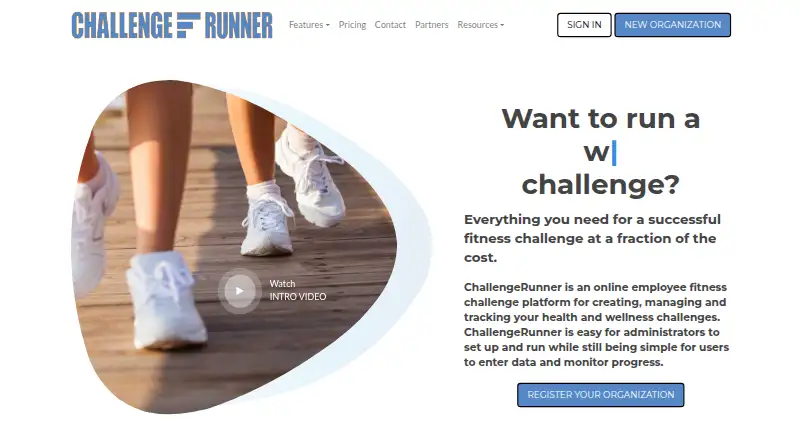
What ChallengeRunner is
ChallengeRunner is an online platform for creating, managing, and tracking employee health and wellness challenges. Challenge formats include weight-loss, walking, activity-based, nutrition, multi-activity, and image-based challenges. Participants can submit data through a browser, smartphone apps, fitness trackers, or text message. Listed tracker connections include Apple Health, Samsung Health, Fitbit, Garmin, COROS, Withings, Wahoo, Oura, Polar, Strava, Suunto, and MapMyFitness. Administrators can assign teams or let participants and optionally team leaders create them; team scores can be averaged or cumulative. Real-time leaderboards can appear as a bar chart, race map, or tournament bracket, depending on the challenge. Slack, Microsoft Teams, and Cisco Webex integrations allow participants to join challenges, see leaderboards, and submit or update data in those apps. Administrators can set upper and lower bounds for entered values and review submissions in a scatter chart. The free Sandbox plan covers up to 10 participants for up to 7 days and includes tracker syncing, website and smartphone apps, a real-time leaderboard, and self-service setup. Core is $15 a month, billed for the active challenge duration and priced by participant count. Core Annual is $259 a year, with unlimited challenges during the annual term. ChallengeRunner is headquartered in Las Vegas, Nevada.
Good
- Supports six types of health and wellness challenges.
- Participants can submit data by text message or tracker.
- Real-time leaderboards offer three display formats.
- Integrates with Slack, Microsoft Teams, and Cisco Webex.
- Sandbox includes tracker syncing and a real-time leaderboard.
Watch out
- Sandbox is limited to 10 participants and 7 days.
- Core pricing depends on participant count.
- Core Annual is billed at $259 a year.
- No wellbeing assessments, coaching, or mental health resources.
Who it suits
It suits organizations running employee fitness or wellness challenges that need multiple formats, team scoring, or tracker data entry. The free Sandbox tier is suited to a trial challenge of up to 10 participants and 7 days.
Verdict
ChallengeRunner combines varied challenge formats with tracker input, team scoring, and workplace-app integrations. Its free Sandbox is capped by participant count and duration, while paid plans offer broader challenge capacity.
Plans and prices
From ChallengeRunner's own pricing page, checked 7 Oct 2026.
| Plan | Price | What it gives you |
|---|---|---|
| Sandbox | Free | Up to 10 participants · Up to 7 days · Tracker syncing · Website and smartphone apps · Real-time leaderboard · Self-service setup |
| Core | $15 a month | Unlimited duration and participants based on pricing tier · Multiple admins · Multiple activities · Teams · Branding · Downloadable reports · Pay only for the actual challenge duration; pricing based on participant count |
| Core Annual | $259 a year | All Core features · Microsoft Teams, Slack, and Webex integration · Effectiveness report · White label available · Annual term; unlimited challenges during annual term |
The facts
Each one read from ChallengeRunner's own pages, with the date it was checked.
What it does
- Challenge types
- It supports weight-loss, walking, activity-based, nutrition, multi-activity, and image-based challenges.checked 7 Oct 2026
- Data entry
- Participants can enter challenge data through a browser, smartphone apps, fitness trackers, or text message.checked 7 Oct 2026
- Data validation
- Administrators can set upper and lower bounds for entered values and review participant data in a scatter chart to spot abnormal entries.checked 7 Oct 2026
- HIPAA
- Organizations identified as HIPAA Covered Entities are instructed to sign a Business Associate Agreement with ChallengeRunner LLC.checked 7 Oct 2026
- Integrations
- ChallengeRunner integrates with Slack, Microsoft Teams, and Cisco Webex so participants can join challenges, view leaderboards, and submit or update data within those apps.checked 7 Oct 2026
- Leaderboards
- Leaderboards update in real time and may appear as a bar chart, race map, or tournament bracket depending on the challenge.checked 7 Oct 2026
- Privacy
- The privacy policy says Google Health data is not used for advertising, creditworthiness decisions, diagnosis, or treatment, and is not sold or transferred to advertising platforms or data brokers.checked 7 Oct 2026
- Purpose
- ChallengeRunner is an online employee fitness challenge platform for creating, managing, and tracking health and wellness challenges.checked 7 Oct 2026
- Security
- The privacy policy says data transmission uses TLS 1.2 and data at rest uses field-level and database-level encryption.checked 7 Oct 2026
- Support
- ChallengeRunner provides a technical-support FAQ and directs users with more questions to its contact page.checked 7 Oct 2026
- Trackers
- The FAQ lists Apple Health, Samsung Health, Fitbit, Garmin, COROS, Withings, Wahoo, Oura, Polar, Strava, Suunto, and MapMyFitness as supported trackers.checked 7 Oct 2026
The company
- Headquarters
- Las Vegas, Nevada, United Stateschecked 28 Sep 2026
- Team competition
- Administrators can assign participants to teams or let participants and optionally team leaders create teams, with averaged or cumulative team leaderboard scores.checked 7 Oct 2026
Money
- Limits and billing
- The pricing page says there are no setup fees or add-ons, billing covers the active challenge duration, and registration before and report access after the challenge are free.checked 7 Oct 2026
The full review of ChallengeRunner
ChallengeRunner is an employee fitness challenge platform for organizations running workplace health campaigns. It is best for employers who want varied challenge formats, team competition and flexible activity reporting. Its focus is participation campaigns rather than a complete employee-wellbeing program.
Overview
ChallengeRunner lets organizations create and manage challenges covering weight loss, walking, activity, nutrition, multiple activities and image-based submissions. That range makes it more adaptable than a step-count-only contest, but it does not provide wellbeing assessments, coaching or mental health resources. Employers looking for those services will need a broader platform.
Key features
Participants can enter data in a browser, through smartphone apps, by text message or via fitness trackers. Supported trackers include Apple Health, Samsung Health, Fitbit, Garmin, COROS, Withings, Wahoo, Oura, Polar, Strava, Suunto and MapMyFitness. Multiple submission routes can accommodate a workforce with different devices and preferences; administrators should still account for both manual entry and synced data.
Organizers can assign participants to teams or let participants and, optionally, team leaders create them. Scores can be cumulative or averaged, letting a campaign emphasize total contribution or account for differences in team size. Real-time leaderboards can appear as bar charts, race maps or tournament brackets according to the challenge, adding visible competition without limiting every campaign to the same format.
Slack, Microsoft Teams and Cisco Webex integrations let participants join challenges, check standings and submit or update data within those apps. This is most useful for workplaces already using those tools; the annual plan is required for these integrations.
Administrators can set upper and lower bounds for submitted values and inspect participant data in a scatter chart to find abnormal entries. These controls help review data quality, though they do not replace broader wellness assessment. Data transmission uses TLS 1.2, with field-level and database-level encryption for stored data. The privacy policy says Google Health data is not used for advertising, creditworthiness decisions, diagnosis or treatment, and is not sold or transferred to advertising platforms or data brokers. HIPAA Covered Entities are instructed to sign a Business Associate Agreement with ChallengeRunner LLC. Technical support is provided through an FAQ, with further questions directed to the contact page.
Pricing
The free Sandbox costs nothing and supports up to 10 participants for up to 7 days. It includes tracker syncing, website and smartphone apps, a real-time leaderboard and self-service setup. It is a useful way to run a small, short trial, but its participant and duration caps make it unsuitable for a larger workforce or a sustained campaign.
Core costs $15 a month, billed only for the actual challenge duration, with pricing based on participant count. It offers unlimited duration and participants according to the selected pricing tier, plus multiple administrators, multiple activities, teams, branding and downloadable reports. This is the practical step up for employers that need longer or larger challenges without committing to an annual term.
Core Annual costs $259 a year on an annual term and allows unlimited challenges during that term. It includes all Core features, Slack, Microsoft Teams and Webex integration, an effectiveness report and white-label availability. Organizations running recurring campaigns or needing workplace-app integration may find the annual commitment more suitable; employers running a single short challenge may prefer Core's duration-based billing.
There are no setup fees or add-ons. Billing covers the active challenge duration, while registration before a challenge and report access afterward are free. The Sandbox is the free plan; the paid tiers broaden capacity and campaign options.
Platforms
ChallengeRunner is available on Android, iOS and the web. Smartphone apps are included in the Sandbox as well as Core plans, and single sign-on is supported.
Who it's for
ChallengeRunner is a good fit for employers that want to run structured fitness campaigns, encourage team participation and collect activity through trackers, apps or manual submissions. It is less suitable as a standalone choice for organizations seeking assessments, coaching or mental health support, none of which it offers.
Pros and cons
- Pros: Multiple challenge formats and data-entry routes make it easier to tailor campaigns to different activities and participants.
- Pros: Averaged or cumulative team scores and several leaderboard formats give organizers meaningful ways to structure competition.
- Pros: Core's billing only for active challenge duration avoids paying for inactive periods, while registration and post-challenge report access are free.
- Cons: Sandbox is limited to 10 participants and 7 days, so it cannot accommodate a larger or longer campaign.
- Cons: Slack, Microsoft Teams and Webex integration requires the annual plan, which may be excessive for an organization running only one challenge.
- Cons: It lacks wellbeing assessments, coaching and mental health resources, so it does not cover the full scope of employee wellness.
Alternatives
Stridekick is worth considering for a smaller challenge: its free plan supports public challenges of up to 7 days, 10 participants and five challenge modes, while Pro 10 costs $12.99 a month.
MindFi may suit teams looking for access to licensed psychologists and counsellors: its free Basic plan is for teams of fewer than 20, with therapy billed per session starting at $35/session.
Wellhub is an alternative for employers considering a wellness-app offering; its free Digital plan includes 10 wellness apps and no gyms or studios nearby, while Starter costs $11.99 a month.
GOQii Corporate Wellness is another paid corporate wellness option, with a fitness tracker, personalised health subscription, diagnostics booking, app, sessions and custom rewards.
Healthify Corporate offers a custom corporate wellness plan tailored to an organization's needs.
Peppy is an employer- or health-insurer-provided benefit whose scope and duration depend on the agreement.
Personify Health offers a personalized health platform with custom pricing.
Thrive Global is another paid alternative.
Browse Employee Wellbeing Software for more options.
Verdict
Choose ChallengeRunner if your organization wants flexible, competitive fitness challenges with tracker support, team scoring and workplace-app integrations. Its duration-based Core billing suits occasional campaigns, while Core Annual is the better fit for recurring challenges that need integrations. Look elsewhere if you need assessments, coaching or mental health support alongside activity challenges.
Getting started
- Open the ChallengeRunner website.
- Choose the free Sandbox, Core, or Core Annual plan.
- Use the website or smartphone apps on Android or iOS.
- Set up a challenge and select a supported challenge type.
- Invite participants to enter data through a browser, app, tracker, or text message.
Limits worth knowing
Sandbox is free for up to 10 participants and up to 7 days. Core starts at $15 a month and is billed only for the active challenge duration; participant limits depend on the pricing tier. Core Annual is $259 a year and allows unlimited challenges during the annual term.
Questions
Does ChallengeRunner have a free plan?
Yes. Sandbox costs nothing and allows up to 10 participants for up to 7 days.
How much do the paid plans cost?
Core is $15 a month, billed for the active challenge duration. Core Annual is $259 a year.
Which platforms can I use?
ChallengeRunner is available on Android, iOS, and the web.
Which fitness trackers are supported?
The listed trackers are Apple Health, Samsung Health, Fitbit, Garmin, COROS, Withings, Wahoo, Oura, Polar, Strava, Suunto, and MapMyFitness.
Does it connect with workplace chat apps?
Core Annual includes integrations with Microsoft Teams, Slack, and Webex. Participants can join challenges, view leaderboards, and submit or update data within those apps.
What security and privacy details are described?
The privacy policy says data transmission uses TLS 1.2 and stored data uses field-level and database-level encryption. It also says Google Health data is not used for advertising, creditworthiness decisions, diagnosis, or treatment, and is not sold or transferred to advertising platforms or data brokers.
Alternatives to ChallengeRunner
- 1
Stridekick
Free planAndroidiOSWeb7.3From $12.99 a month - 2
MindFi
Free planAndroidiOSWeb7.2$30 usage-based - 3
Burnalong
AndroidiOSWeb7.0From $29 a month - 4
Avidon Health
AndroidiOSWebAPI6.9From $35 a month - 5

Wellable
AndroidiOSWeb6.8From $1,004 a month - 6

Wellhub
Free planWebAPI6.8From $11.99 a month