Apicurio Registry
Apicurio Registry is a runtime server for storing API designs and schemas as artifacts, which users can add, update, or remove through a REST API.
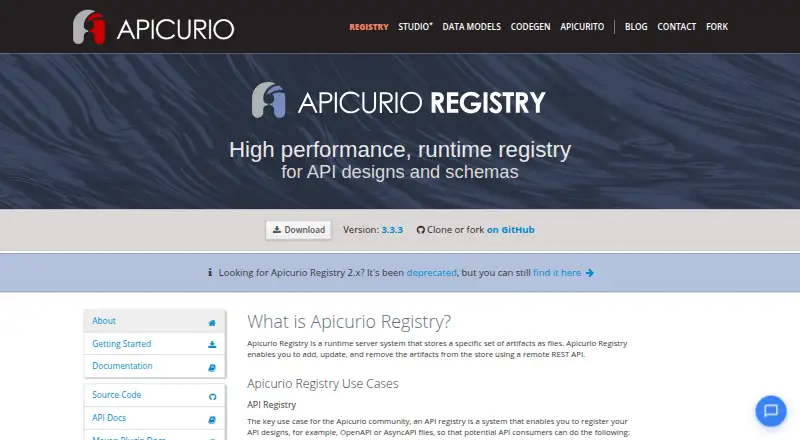
What Apicurio Registry is
Apicurio Registry is a runtime server for storing API designs and schemas as artifacts, which users can add, update, or remove through a REST API. For API discovery, teams can register designs such as OpenAPI, AsyncAPI, and GraphQL so consumers can search and browse them, view details, and read generated documentation. For messaging and event streaming, it provides a central place to track schemas and manage changes to data formats. Supported artifact types include OpenAPI, AsyncAPI, GraphQL, Apache Avro, Protocol Buffers, JSON Schema, Kafka Connect schema, WSDL, XML Schema, and ODCS v3.1. Configurable content rules can check validity, compatibility, and integrity as artifacts evolve. Listed storage backends include Apache Kafka, PostgreSQL, and Microsoft SQL Server. Management options include a web console, REST API, command line, Maven plug-in, and language SDKs. Kafka serializers and deserializers can enforce schemas in producer and consumer applications, and Kafka Connect integration is documented. The software is open source and supports self-hosted deployment. The product page lists version 3.3.3; the 2.x line is deprecated.
Good
- Supports API designs and event-streaming schemas
- Content rules check validity and compatibility
- Offers Kafka, PostgreSQL, and SQL Server storage
- Includes web, REST, CLI, and Maven interfaces
- Open source with self-hosted deployment
Watch out
- Authentication and authorization are disabled by default
- Quick-start in-memory mode is not for production
- The native CLI is marked dev-preview and unstable
- The 2.x line is deprecated
Who it suits
Apicurio Registry suits teams managing API contracts or schemas used in messaging and event streaming. It is relevant to organizations looking for a self-hosted registry with several artifact formats and management interfaces.
Verdict
Apicurio Registry covers both API discovery and schema management, with multiple storage and access options. Review the security defaults and deployment guidance, particularly if using the in-memory quick start or CLI.
The facts
Each one read from Apicurio Registry's own pages, with the date it was checked.
What it does
- API registry use
- It can register API designs such as OpenAPI and AsyncAPI so consumers can browse and search APIs, view details, and read generated documentation.checked 5 Oct 2026
- Artifact formats
- Supported artifact types include OpenAPI, AsyncAPI, GraphQL, Apache Avro, Protocol Buffers, JSON Schema, Kafka Connect schema, WSDL, and XSD.checked 5 Oct 2026
- Artifact types
- Supported artifact types listed on the product page include OpenAPI, AsyncAPI, GraphQL, Avro, Protobuf, JSON Schema, Kafka Connect schema, WSDL, and XSD.checked 5 Oct 2026
- Authentication
- Documented authentication options include OpenID Connect, HTTP basic, proxy header, and Kubernetes-native authentication; authentication and authorization options are disabled by default.checked 5 Oct 2026
- Authorization
- Authorization options include default admin, write, and read-only roles, plus content-based controls that can restrict artifact updates or deletion to its owner.checked 5 Oct 2026
- CLI authentication
- The CLI supports basic authentication and OAuth2 client credentials, and stores secrets in the operating system keychain or credential manager where available.checked 5 Oct 2026
- Client access
- The documentation describes management through the web console, REST API, Maven plug-in, and Java client.checked 5 Oct 2026
- Command line
- A native Apicurio Registry CLI is available for Linux x86_64, macOS Apple Silicon, and Windows x86_64, and is marked dev-preview and unstable.checked 5 Oct 2026
- Content rules
- Configurable content rules can check validity, compatibility, and integrity as artifacts evolve.checked 5 Oct 2026
- Deployment
- The getting-started guide runs the server and UI as separate Docker images and also names Podman as a prerequisite option.checked 5 Oct 2026
- Integrations
- The documentation describes Kafka client serializers and deserializers for Avro, Protobuf, and JSON Schema, and integration with Kafka Connect.checked 5 Oct 2026
- Kafka integration
- The documentation describes Kafka client serializers and deserializers for enforcing schemas in producer and consumer applications.checked 5 Oct 2026
- Management interfaces
- The documentation lists a web console, REST API, command line, Maven plug-in, and language SDKs for content management.checked 5 Oct 2026
- Non-persistent mode
- The quick-start in-memory server is non-persistent and the guide says not to use it for production.checked 5 Oct 2026
- Product
- Apicurio Registry is a runtime server that stores API designs and schemas and lets users add, update, and remove artifacts through a REST API.checked 5 Oct 2026
- Purpose
- Apicurio Registry is a runtime server that stores artifacts and lets users add, update, and remove them through a remote REST API.checked 5 Oct 2026
- Roles
- When role-based authorization is enabled, the CLI supports ADMIN, DEVELOPER, and READ_ONLY role mappings.checked 5 Oct 2026
- Schema registry use
- For messaging and event streaming, it provides a central place to track schemas and manage data format and schema evolution.checked 5 Oct 2026
- Storage
- The product page lists Apache Kafka, PostgreSQL, and Microsoft SQL Server as backend storage options.checked 5 Oct 2026
- Storage backends
- The product page lists Apache Kafka, PostgreSQL, and Microsoft SQL Server as configurable backend storage options.checked 5 Oct 2026
- Support
- The documentation directs users to the GitHub projects and issue tracker for help, suggestions, and problem reports.checked 5 Oct 2026
- Use cases
- It supports API discovery and documentation, as well as centralized storage and evolution control for schemas used in messaging and event streaming.checked 5 Oct 2026
- Version status
- The product page lists version 3.3.3 and says the 2.x line is deprecated.checked 5 Oct 2026
Alternatives to Apicurio Registry
- 1

Redpanda
Free planWebAPILinuxmacOS7.4Free plan - 2

AWS Glue DataBrew
WebAPI7.2 - 3

Confluent Cloud
Free planWebAPILinux7.1From $385 a month - 4
Lenses
Free planWebAPILinuxmacOS7.1From $4 a year - 5
AxonOps Schema Registry
Free planOpen sourceAPILinuxSelf-hosted7.0Free plan - 6

Google Cloud Pub/Sub
Free planWebAPI6.9$40 usage-based