Everything Xiaomi is reader-supported. When you buy through links on our site, we may earn an affiliate commission. As an Amazon Associate I earn from qualifying purchases. Learn more
Xiaomi, the Beijing-based electronics company founded by Lei Jun in 2010, came remarkably close to becoming another cautionary tale in the smartphone industry. In 2016, its smartphone shipments in China fell sharply, by roughly 36 to 40 percent depending on estimates, pushing the brand out of the global top five. For many companies, that kind of drop is usually the beginning of the end. We have seen it before with once-dominant names like BlackBerry or Nokia, brands that never truly recovered after losing momentum.
Key Takeaways
- Xiaomi experienced a 36% drop in shipments in 2016 due to supply chain issues and an over-reliance on online flash sales.
- Founder Lei Jun took direct control of the supply chain to fix production delays and quality concerns.
- The company shifted from an online-only model to a “New Retail” strategy, opening hundreds of physical Mi Home stores.
- Xiaomi diversified its revenue by investing in over 200 ecosystem startups producing everything from air purifiers to electric scooters.
- By 2017, the brand regained its position as the top smartphone seller in India and crossed 100 billion yuan in annual revenue.
Xiaomi did not disappear. Instead, and perhaps somewhat unexpectedly, it rebuilt itself almost from the inside out. By 2017, the company was back to record growth, proving that a steep decline does not always have to be fatal if leadership is willing to rethink nearly everything.
General shopping ads
The collapse in 2016 was not caused by a lack of demand. Xiaomi’s phones were still popular, maybe too popular. The company had grown faster than its supply chain could handle. Production delays, inconsistent quality, and an over-reliance on online flash sales left customers frustrated and waiting weeks for devices. Because Xiaomi operated on razor-thin margins, even small disruptions created outsized financial pressure. At that point, Lei Jun stepped in directly to oversee the smartphone division. It was a hands-on move, and probably a necessary one. He focused on tightening supplier relationships, improving manufacturing discipline, and slowing things down just enough to regain control.
Do these 3 things before closing this tab:
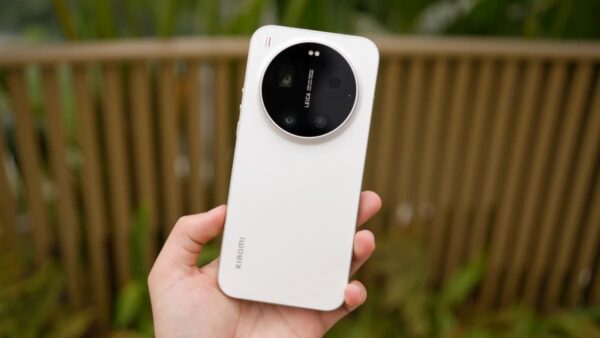
1Repair Windows errors before they cause bigger problems2Fix the driver behind crashes, sound loss and screen glitches3Clear out junk files and repair common Windows errorsThe release of the Mi MIX in symbolized this shift. With its near bezel-less design, the phone signaled that Xiaomi was aiming higher, not just cheaper. It suggested the company no longer wanted to be seen only as a budget brand, even if affordability remained part of its DNA.
Shopping ad
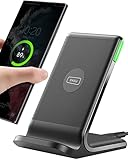
- 15W Fast Charge for the Morning Rush: Save up to 45 minutes with the INIU Wireless Charger. Powered by AirFuel tech, it’s ideal for commuters needing a rapid power boost before leaving, eliminating the frustration of slow charging.
- Sleep-Friendly for Nightstands: The self-adaptive LED dims in the dark and brightens by day. Perfect for light sleepers, it keeps you informed of your charging status without harsh glare disturbing your rest.
- Dual Coils for Desk & Entertainment: A wider charging area means no more finding the "sweet spot." A must-have office desk setup, letting you FaceTime in portrait or watch videos in landscape without losing power.
- NTC Temp°Guard for Battery Health: Smart, real-time temperature control prevents overheating. Heavy users can safely leave phones charging overnight, solving the pain of heat-induced battery damage.
- Perfect for Every Household: Auto-adapts up to 15W for compatible iOS and Android phones, making it the ideal shared wireless charger for families and guests.
As an Amazon Associate I earn from qualifying purchases.
Another major change came in how Xiaomi sold its products. For years, the company relied almost entirely on online sales, a strategy that worked well in big cities but left it nearly invisible in smaller ones. Many consumers still prefer to hold a phone, test it, and talk to a salesperson before buying. Xiaomi’s answer was its New Retail strategy, centered around Mi Home stores. These locations were not traditional phone shops. They were designed as open, minimalist spaces that showcased an entire lifestyle, from phones and wearables to household gadgets. By 2018, Xiaomi had opened more than 400 such stores across China, reaching the roughly 67 percent of shoppers who still favored physical retail.
At the same time, Xiaomi was quietly transforming itself into something much broader than a smartphone maker. The company invested in more than 200 ecosystem startups, each focused on a specific category of smart hardware. This included products like fitness bands, air purifiers, rice cookers, robotic vacuums, backpacks, and power banks. The strategy created a kind of halo effect. A customer might walk into a Mi Home store to buy a low-cost accessory and leave with several connected devices instead. Even if phone sales slowed, Xiaomi could rely on internet services and lifestyle products to balance its revenue.
Windows Errors? Fix Them Before They Spread
Repair common Windows errors and clear accumulated junk for a smoother, more stable PC - no reinstall needed.Free scan · no reinstallCrashes, No Sound, or Screen Glitches?
Random freezes, missing sound and display glitches usually trace back to one bad driver. Find and replace yours safely.Free scan · under a minuteShopping ad
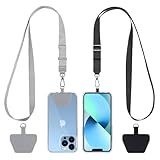
- Hands-Free Convenience: When you are shopping, walking your dog, attending the fair, walking or hiking, the CACOE mobile phone chain can free your hand to do other things
- Adjustable Wearing Options: The necklace is adjustable in length, so it offers various wearing options, like a bag over your shoulder or just let it hang like a chest bag
- Simple Installation Process: No tools are required. You just need to insert the pad through the charging hole of the fully covered phone case, then plug in your phone and connect to the lanyard. Please note that the half cover phone case is not supported
- Durable Construction: The cell phone lanyard is made of sturdy polyester. After several product tests, the sustainable fabric will not break even if you tear it strongly, ensuring your phone stays secure
- Unobstructed Charging Access: The universal cell phone chain does not block your charging hole, so you can easily charge your phone while using the product
International expansion played a critical role as well. While stabilizing its position in China, Xiaomi moved aggressively into India. Partnerships with e-commerce platforms such as Flipkart and Amazon helped the brand scale quickly, and local manufacturing reduced costs further. By late 2017, Xiaomi had become the top smartphone seller in India. That volume mattered. It gave the company stronger negotiating power with component suppliers and reinforced its global recovery.
By the end of that turnaround period, Xiaomi crossed 100 billion yuan in annual revenue and re-established itself as a serious global competitor. The company’s story is not just about surviving a sales slump. It is about recognizing structural weaknesses early enough and having the discipline to fix them, even when growth is no longer effortless. In an industry where decline often looks permanent, Xiaomi’s recovery still feels unusual, and maybe that is exactly why it continues to stand out.
Shopping ad

- EMBRACING CONVENIENCE: Tired of rummaging through your pockets for your phone? Our innovative phone lanyard charging cable transforms your device into a chic and functional accessory. This smart solution keeps your hands free, letting you multitask with ease. Whether commuting, adventuring outdoors, studying, or traveling, this reliable lanyard secures your phone, ensuring it's always within reach. From shopping to walking your dog, it safeguards against theft while you enjoy life’s moments.
- Blazing-Fast 240W PD3.1 Charging: Unlock your devices' full potential with our USB-C to USB-C cable, supporting up to 240W Power Delivery (PD3.1) and backward compatible with PD3.0 and 2.0. The integrated 240W E-Marker chipset ensures safe, efficient power delivery, making it perfect for devices up to 140W. Pair it with a 240W charger to power your MacBook Pro 16” to 40% in just 30 minutes, or charge your Galaxy S22 Ultra to 100% in 1 hour.
- High-Speed 480 Mbps Data Transfer: This usb c cable delivers fast and reliable data transfer at speeds up to 480 Mbps (USB 2.0) , making file sharing quick and effortless. Seamlessly sync photos, documents, and more between your USB-C devices and USB-C peripherals. Perfect for professionals, students, and anyone who needs efficient file management without slowdowns. Enjoy smooth, lag-free transfers with this compact yet powerful adapter!
- DURABLE AND LONG-LASTING: Designed to endure daily wear and tear, our cell phone lanyard boasts a tough nylon outer layer and a robust ballistic fiber core for enhanced longevity. Its flexible nylon-braided design allows for easy bending while maintaining integrity, capable of withstanding over 10,000 bends without damage. Choose a charging solution that exceeds your expectations, delivering unparalleled durability and reliable performance for everyday use. Invest in quality that lasts!
- UNIVERSAL COMPATIBILITY: Our phone wrist strap is designed to work seamlessly with a wide range of devices featuring USB-C ports, making it an essential addition to your tech collection. Compatible with Phone 15/16/17series, Galaxy S22, S21 Plus, and Note series, as well as Google Pixel and Pad Pro models, this charging cable covers all the bases. It's also ideal for popular devices like the Moto G Power Stylus and LG G series.
Frequently Asked Questions
Q. Why did Xiaomi almost fail in 2016?
A. The company faced a “perfect storm” of saturated online markets, fierce competition from brands like Oppo and Vivo, and severe supply chain bottlenecks that prevented it from shipping enough units to stay profitable.
Q. What is the Xiaomi Triathlon business model?
A. It is a three-pillar strategy consisting of hardware (smartphones and IoT), retail (e-commerce and Mi Home stores), and internet services (apps, cloud storage, and advertising).
Shopping ad

- Small & Powerful: With 25W charging power but smaller size, this Vilive Samsung charger fast charging cord is more convenient and portable. Equipped with a type c port, you can charge your device back to full power in no time by using the 25W USB C fast charger for Samsung Galaxy S26 S25 series. It takes about 1 hour to fully charge your Samsung Galaxy S26 ultra, S25 ultra, S24 ultra, S23 ultra, 3 times as fast as standard PC USB-C charger.
- Universal Compatibility: The Vilive samsung fast charger supports most of usb c devices, including Samsung Galaxy S26 Ultra/S26/S26+/S25 Ultra/S25+/S25/S24 Ultra/S24/S24+/S23 Ultra/S23/S23+/S21/ S21+/ S21 Ultra/ S22/S22+/S22 Ultra, S20/S20+/S20 Ultra/ S20, Note10/Note 20. It also charge for iPhone/Duo/ iPhone 18 Pro Max/iPhone 18 Pro/iPhone 17/iPhone 17 Pro Max/iPhone 17/16/15. Please be noted that "fast charging" is not suitable for S8/S9/S10, Galaxy Z Fold 5/Galaxy Z Flip 5/Z Flip/Z Flip3/Z Flip3 5G/Galaxy Z Fold2/Z Fold3.
- Vilive 10FT Type C Charger Fast Charging: The 25W android phone charger fast charging is equipped with extra longer 10FT(about 3 meters long) USB C fast charger cable, offering a user-friendly reversible design and longer charging distance, fast charging and up to 480 Mbps data transfer speed. The power output up to 3 Amp and 100-240 volt input of this 2pack Samsung fast chargers can charge two devices simultaneously, ideal for worldwide travel with your partner!
- Safety Assurance: The Vilive Samsung galaxy S26 S25 S24 S23 ultra super fast charger is built in intelligent chips, which can protect your devices against damage caused by short circuit, over-current, over-voltage, over-heating, and over-charging issues. Automatically stops charging when battery capacity is full to ensure your device safety and longevity.
- What's in Package: 2x 25W Vilive USB C fast charger blocks and 2x extra long 10FT(about 3 meters long) USB C fast charging cables.
Q. Who founded Xiaomi?
A. Lei Jun co-founded the company in April 2010 with six other associates, including former executives from Google and Motorola.
Q. How does Xiaomi keep its prices so low?
A. The company limits its hardware profit margin to 5% and instead generates profit through software services and its large ecosystem of lifestyle products.
More shopping ads
Shopping ad

- NOTE:1. PLEASE KINDLY KNOW this CABLE is USB-A TO USB-C CABLE instead of USB-C TO USB-C or Lighting connector. 2. It NOT COMPATIBLE with iPhone 14 Series and earlier versions or other deviices with lightning slot. 3.The thickness of the compatible mobile phone case charging port is 5.5mm.
- INNOVATIVE RIGHT ANGLE DESIGN: Tired of charging cables breaking at the joints? Compared to conventional electronic smartphone charger cord type c, this right angle type c chargers fast charging cable features an ergonomic 90° Right Angle end "L" design that may successfully prevent typical wear, straining cable and connection issues and increase the longevity life of the usb to usbc cable type c charger for Samsung. Its tangle-free ergonomic design makes it easier and more comfortable without blocking your hand to play games, use apps in portrait mode, watch videos, carplay, car charging and read e-books while charging.
- CERTIFIED 3.1A STABLE CHARGING & SYNC SPEED: AINOPE USB Type C Cable supports Stable charging up to 9V/3.1A (40% faster) compared with other cables which provide 5V/2.4A output. And data sync transfer speeds up to 480Mbps (1200 songs synced/minute). *Please note: 1.This cable can charge Google pixel 2/3/3XL normally, but it may not deliver fast charging speed. 2. Using an adapter of at least 5V/3A (QC 18W Max) if charging for full speed. The internal smart NTC smart control chip ensures stable current and prevents overheating for safe, full speed charging.
- ENHANCED DURABILITY & MILITARY GRADE: While others offer 10,000-bend durability, AINOPE sets a new standard with a 400,000+ bending lifespan. Reinforced 90 degree end military-grade durable nylon braided iPhone charging cable fast charger usbc with special SR joint, Lasts 30x longer than ordinary cable-proven in a laboratory environment to withstand 400,000 bends. It built-in laser welding technology with premium aluminum housing, which ensure the metal part won't break. One of the toughest type c charger fast charging type c cord ever created, with tensile strength capable of withstanding 16 kg. It's built to outlast your device, effectively ending the cycle of frequent cable replacements.
- UNIVERSAL COMPATIBILITY: This is the USBA to USBC cable not the USB-C to USB-C cable, Compatible with ALL USB-C iPhones, Android phones and tablets. Compatible with iPhone 17 Pro Max Air iPhone 16 15 Plus Samsung Galaxy S25 Ultra S24 23 S22 S21 S20 S20+ S20 Ultra S10 S10E S9 S8 Note 20 Ultra Note 10 9 8, Moto Z/Z2, LG V60/V40/V30+/V30 Sony XPERIA XZ2/XZ2 Premium/X3,XPERIA 5 II Google Pixel 3/4/5/6/7/8, Pixel 3XL/4XL/5XL, Pixel 6 Pro/7 Pro/8 Pro, Tablets iPad Pro 12.9-inch (5th/4th/3rd generation), iPad Pro 11-inch(4th/3rd/2nd/1st generation),iPad 10 iPad Air 4/5, iPad mini 6 and other android phones.
Product prices and availability are accurate as of the date/time indicated and are subject to change. Any price and availability information displayed on Amazon at the time of purchase will apply.