PhoneBlock
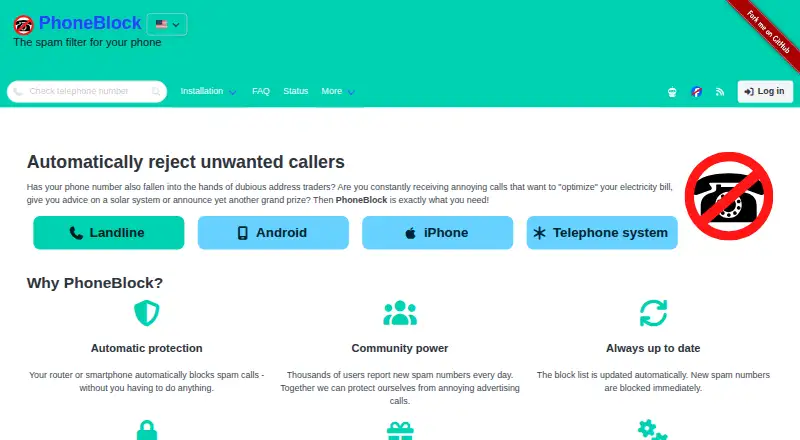
PhoneBlock helps users block advertising and spam calls using a shared database of reported numbers.
What PhoneBlock is
PhoneBlock helps users block advertising and spam calls using a shared database of reported numbers. People can add reports through the app, website, or a personal blacklist, contributing them to the community list. Its Android app blocks known spam calls, keeps call history, and supports reports and personal lists; it requires Android 10 or later. For incoming calls, the app sends only a SHA-1 hash of the number and does not access contacts. Landline options include a router dongle, a Fritz!Box cloud answering machine, and a CardDAV-synced phonebook. The documented iPhone setup also syncs numbers through CardDAV, while a native iPhone app is in development with beta registration available. Phone systems can download the list in different formats or query it through an API. PhoneBlock is GPL-3.0 licensed and free to use, with donations optional. Its operator offers email help, including for numbers mistakenly added to the list.
Good
- Free to use; donations are optional.
- Android app keeps a call history.
- Android app does not access contacts.
- Landline users have three listed setup options.
- Phone systems can query the list through an API.
Watch out
- Android app requires Android 10 or later.
- Native iPhone app is still in development.
- Terms advise against business use.
- iPhone setup syncs numbers into contacts through CardDAV.
Who it suits
PhoneBlock suits people seeking call screening on Android, landline setups, or phone systems that can use a blocklist or API. iPhone users should note that the documented setup relies on CardDAV rather than a native app.
Verdict
PhoneBlock combines community reports with several Android and landline blocking options, and it is free to use. Its iPhone path is currently CardDAV-based, and the terms advise against business use.
Plans and prices
From PhoneBlock's own pricing page, checked 7 Oct 2026.
| Plan | Price | What it gives you |
|---|---|---|
| PhoneBlock | Free | Free to use · donations optional |
The facts
Each one read from PhoneBlock's own pages, with the date it was checked.
Where it runs
- Android app
- The Android app blocks known spam calls, keeps a call history, supports spam reports and personal lists, and requires Android 10 or later.checked 7 Oct 2026
- Android privacy
- For incoming calls, the Android app sends only the phone number’s SHA-1 hash and does not access contacts.checked 7 Oct 2026
- Answering machine data
- When using the answering machine, PhoneBlock stores the Fritz!Box IP address for registration and compares incoming caller numbers with the spam database.checked 7 Oct 2026
What it does
- Commercial use
- The terms advise against business use and place responsibility for resulting damage on the user.checked 7 Oct 2026
- Community reports
- Users can report spam numbers through the app, website, or personal blacklist, and reports are added to the shared blacklist.checked 7 Oct 2026
- iPhone support
- The documented iPhone setup syncs spam numbers into contacts through CardDAV; the page says a native iPhone app is in development and offers beta registration.checked 7 Oct 2026
- Landline options
- Landline users can choose a router dongle, a cloud answering machine through Fritz!Box, or a blocklist phonebook synced by CardDAV.checked 7 Oct 2026
- Open source
- The software is licensed under GPL-3.0.checked 7 Oct 2026
- Operator
- The imprint identifies PhoneBlock as a private project operated by Bernhard Haumacher.checked 7 Oct 2026
- PBX/API
- PhoneBlock says phone systems can download the blocklist in various formats or query it through an API; its integration page links a community 3CX project.checked 7 Oct 2026
- Purpose
- PhoneBlock automatically blocks unwanted advertising and spam calls using a community maintained database.checked 7 Oct 2026
- Support
- The operator says users can contact him by email for help, including if their number was mistakenly added to the blocklist.checked 7 Oct 2026
- Website privacy
- The privacy policy says unregistered visitors’ IP addresses are logged temporarily for error analysis and deleted after 14 days; it says the site has no ads or third-party trackers.checked 7 Oct 2026
The full review of PhoneBlock
PhoneBlock is a free call-screening service built around a shared database of reported spam numbers. It is a strong fit for Android owners and people managing landlines who want open-source software and several deployment choices, while iPhone users face a less direct setup and business users should be cautious.
Overview
PhoneBlock’s protection grows from community reporting. Users can submit unwanted numbers in the app, on the website, or through a personal blacklist, and those reports become part of the shared blacklist. That approach can cover more nuisance callers than a private block list alone, but its usefulness depends on the quality and breadth of community contributions.
The project is licensed under GPL-3.0 and operated privately by Bernhard Haumacher. The website says it carries no advertising or third-party trackers. Its privacy policy says IP addresses from unregistered visitors are retained temporarily for error analysis and deleted after 14 days. Support is offered by email, including help when a legitimate number has been reported incorrectly.
Key features
Android protection
The Android app blocks known spam callers, records call history, accepts spam reports, and supports personal lists. Android 10 or later is required, excluding older phones. During incoming-call handling, it sends only the caller number’s SHA-1 hash and does not read contacts. That is a meaningful privacy advantage for users who do not want an anti-spam tool inspecting their address book.
Landlines and PBX systems
Landline households can connect PhoneBlock through a router dongle, a cloud answering machine working with Fritz!Box, or a CardDAV-synced blocklist phonebook. The answering-machine option stores the Fritz!Box IP address for registration and checks incoming numbers against the spam database, so it is not a purely local arrangement. Phone systems can download blocklists in several formats or query the service through an API; an integration page also links to a community 3CX project. These options make PhoneBlock more useful for mixed home setups and technically managed phone systems than an app confined to one handset.
iPhone route
The documented iPhone method synchronizes spam numbers into contacts through CardDAV. A native iPhone app is described as being in development, with beta registration offered. CardDAV can provide coverage, but it is less straightforward than a dedicated caller-protection app and may not suit readers who want an install-and-go experience.
Pricing
| Plan | Price | Includes |
|---|---|---|
| PhoneBlock | free | Free to use; donations optional; caller ID and call screening on supported platforms |
There is no free trial because the sole plan is free, and no paid tier or seat quota is stated. That removes subscription cost for personal use, but the terms advise against business use and put responsibility for resulting damage on the user. Organizations needing commercial assurances should therefore choose another service.
Platforms
PhoneBlock supports Android, iOS through CardDAV, web access, an API, and self-hosted use. Android requires version 10 or newer. Landline and PBX connections extend protection beyond mobile phones, while self-hosting and API access suit users who want control over integration.
Who it's for
Choose PhoneBlock if you want no-cost spam screening backed by community reports, use Android 10 or newer, or need a landline solution compatible with Fritz!Box, router hardware, CardDAV, or a PBX. It also suits technically confident users who value GPL-3.0 licensing, API access, or self-hosted options. It is a weaker choice for iPhone owners seeking a native app, people with older Android devices, and businesses that need terms designed for commercial deployment.
Pros and cons
Pros
- Community-maintained blacklist: reports from apps, the website, and personal lists feed a shared source of spam numbers.
- Broad connection options: Android, Fritz!Box answering machine, router dongle, CardDAV, PBX downloads, API, web, and self-hosting cover more than a single phone.
- Privacy-conscious Android handling: incoming calls use a SHA-1 number hash and do not require contact access.
- Free and open source: the 0.00 EUR plan has optional donations, and GPL-3.0 licensing permits inspection and reuse.
Cons
- iPhone compromise: CardDAV contact synchronization is the documented path until a native app arrives.
- Android cutoff: devices below Android 10 cannot use the app.
- Community dependence: coverage reflects the numbers users report, so unfamiliar spam may not appear immediately.
- Business caution: the terms discourage commercial use and assign responsibility for resulting damage to the user.
- Answering-machine data handling: Fritz!Box use requires storing the router IP for registration and checking caller numbers against the database.
Alternatives
For a wider comparison, see Spam Call Blocking Apps.
- Getcontact is a freemium Android, iOS, and web option; its Premium plan costs $2.99 a month and removes ads while adding tag-viewing information.
- YouMail fits users wanting cloud voicemail alongside blocking: its free tier includes 50 cloud messages, 100 voicemail-to-text transcriptions monthly, and unlimited known-spammer blocking.
- NumBuster offers a free mobile app plus paid feature and subscription tiers, making it an alternative when a tiered freemium model is acceptable.
- Hiya Spam Blocker provides free caller ID, basic blocking, and spam reporting, with Premium from $3.99 a month for readers who want a conventional mobile-app experience.
- RoboKiller includes global blacklist blocking, notifications, insights, reporting, and Spam Patrol in its free tier, with paid protection for those wanting more automation.
- Should I Answer? is another community-based choice with a free Android app and an iOS database-update option.
- Who Called is a free Android, iOS, and web app whose maker describes it as open source.
- Whoscall adds caller ID, call blocking, number/URL/screenshot checks, and scam reports in its free tier, with paid business-number features.
Verdict
PhoneBlock is the right pick for individuals who want free, community-powered spam blocking with unusually strong landline, PBX, API, and self-hosting flexibility. Its GPL-3.0 licence and restrained Android data handling strengthen the case. Look elsewhere if you need a native iPhone app today, support for pre-Android-10 devices, or business-friendly terms and guarantees.
Alternatives to PhoneBlock
- 1
Whoscall
Free planAndroidiOSWeb8.9From $27 a year - 2
Getcontact
Free planAndroidiOSWeb8.8From $18.99 a year - 3

RoboKiller
Free planAndroidiOSWebAPI8.8From $31.99 a year - 4
YouMail
Free planAndroidiOSWebAPI8.7From $5.99 a month - 5
NumBuster
Free planAndroidiOSWeb8.4Free plan - 6

Hiya Spam Blocker
Free planAndroidiOS7.8From $24 a year