Critical Manufacturing MES
Critical Manufacturing MES is a web-based manufacturing execution system for managing work orders and quality processes.
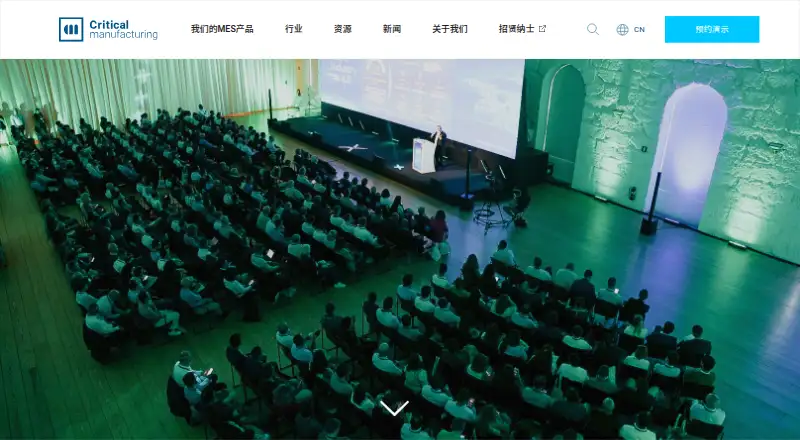
What Critical Manufacturing MES is
Critical Manufacturing MES is a web-based manufacturing execution system for managing work orders and quality processes. It supports lot and serial traceability, shop-floor data capture, real-time dashboards, and ERP integration, bringing production information and oversight into one system. The company was founded in 2009 and is headquartered in Maia, in the Porto area of Portugal. Critical Manufacturing MES is paid software, with pricing available on request. Its listed capabilities focus on coordinating work on the production floor and tracking product quality and history. The web platform may suit manufacturers looking to connect those operational tasks with ERP systems and monitor activity through dashboards.
Good
- Manages work orders and quality.
- Tracks lots and serials.
- Captures shop-floor data.
- Includes real-time dashboards and ERP integration.
Watch out
- Pricing is available on request.
- Platform is listed as web only.
Who it suits
It suits manufacturers that need work order and quality management, traceability, and shop-floor data capture. ERP integration and real-time dashboards are also listed capabilities.
Verdict
Critical Manufacturing MES combines production work management, quality oversight, traceability, shop-floor capture, and dashboards. Consider it if those functions and ERP integration match your manufacturing needs; pricing requires an inquiry.
The facts
Each one read from Critical Manufacturing MES's own pages, with the date it was checked.
What it does
- Analytics
- The Data & Analytics Framework can integrate data from sources including SQL Server, Oracle, Excel, CSV, XML, and SAP, and supports Power BI reporting.checked 8 Oct 2026
- Auditing
- The maker says detailed audit trails support regulatory and certification requirements and that security policies can be applied across sites.checked 8 Oct 2026
- Core capabilities
- The maker describes more than 30 interoperable capabilities for real-time visibility and control across global manufacturing operations.checked 8 Oct 2026
- Deployment
- Deployment options include public or private cloud, on-premises, and hybrid environments.checked 8 Oct 2026
- Enterprise integrations
- The MES provides integration packages for Enterprise Integration, SAP, and MES-to-MES communication.checked 8 Oct 2026
- Equipment integration
- Connect IoT is the product’s approach to equipment integration.checked 8 Oct 2026
- Infrastructure requirement
- The documented database requirements specify SQL Server running on Windows Server; SQL Server for Linux and managed SQL services such as Azure SQL Database or Amazon RDS are not supported for full MES workloads.checked 8 Oct 2026
- Integrations
- The maker documents Enterprise Integration, SAP, and MES integration packages, with an extensible interface for connecting external systems.checked 8 Oct 2026
- Product
- Critical Manufacturing MES is a modular manufacturing execution system for managing and improving shop-floor operations.checked 8 Oct 2026
- Quality
- Its pre-integrated Statistical Process Control module monitors process stability and can trigger actions such as placing a lot on hold or stopping equipment.checked 8 Oct 2026
- SaaS offer
- A packaged SaaS offer is described for semiconductor R&D labs and fabs, hosted on AWS with a fixed annual subscription; the page gives no subscription price.checked 8 Oct 2026
- SAP limit
- The SAP ERP integration is an optional module licensed separately.checked 8 Oct 2026
- Security
- The maker says MES data is encrypted in transit and at rest, with fine-grained access controls, authenticated APIs, and traceable user actions.checked 8 Oct 2026
- Security and quality
- Critical Manufacturing says it has been ISO 9001 certified since 2011 and upgraded to the latest version of the standard in 2026.checked 8 Oct 2026
- Support
- The maker lists a Customer Portal and Community Platform as support resources.checked 8 Oct 2026
- Target industries
- The maker highlights semiconductor, electronics, medical devices, and industrial equipment manufacturing, especially complex discrete production.checked 8 Oct 2026
- Traceability
- The MES tracks batch, lot, and serialized units and records their real-time genealogy and history.checked 8 Oct 2026
The company
- Company
- Critical Manufacturing says it was founded in 2009 and has headquarters and its main technical center in Porto (Maia), Portugal.checked 8 Oct 2026
- Founded
- 2009checked 23 Sep 2026
- Headquarters
- Porto (Maia), Portugalchecked 23 Sep 2026
Money
- Planning
- Advanced Planning & Scheduling can optimize resource sequences using criteria such as utilization, setup time, and delivery dates.checked 8 Oct 2026
The full review of Critical Manufacturing MES
Critical Manufacturing MES is a modular manufacturing execution system for complex production environments, especially semiconductor, electronics, medical-device, and industrial-equipment makers. It suits organizations that need tightly connected execution, quality, genealogy, and enterprise data across sites. The central trade-off is substantial operational coverage alongside a required SQL Server-on-Windows infrastructure and separately licensed SAP integration.
Overview
Critical Manufacturing brings more than 30 interoperable capabilities into one MES for real-time visibility and control. Work-order management, shop-floor capture, and live dashboards address daily execution, while batch, lot, and serial tracking builds a record of each unit’s genealogy and history. That combination is valuable when a manufacturer must trace a product through complex discrete operations or investigate the origin of a quality problem.
Deployment can be on premises or on a cloud platform, including a containerized environment. A packaged SaaS edition is hosted on AWS for semiconductor R&D labs and fabs and uses a fixed annual subscription, although the subscription price is custom. Customer Portal and Community Platform resources provide the documented support channels.
Founded in 2009, the company is headquartered in Porto (Maia), Portugal, where it also maintains its main technical center. It says its quality system has been ISO 9001 certified since 2011 and was upgraded to the latest version of the standard in 2026.
Key features
The MES covers production execution, quality management, traceability, and analytics rather than treating them as disconnected applications. Lot, batch, and serialized-unit tracking maintains real-time genealogy and history, giving compliance and operations teams a usable chain of custody. Work orders and shop-floor data capture support execution at the point of production, while real-time dashboards expose current conditions for supervisors and managers.
Its pre-integrated Statistical Process Control module monitors process stability and can initiate action, such as putting a lot on hold or stopping equipment. That is more consequential than simply storing inspection results: quality signals can interrupt production. The value is highest for regulated or high-complexity lines where containment speed matters.
Advanced Planning & Scheduling can sequence resources according to utilization, setup time, and delivery dates. It is a practical fit for plants balancing changeovers and competing orders, though buyers should confirm that those criteria reflect their own constraints. Connect IoT is the stated approach to equipment integration.
The Data & Analytics Framework accepts data from SQL Server, Oracle, Excel, CSV, XML, and SAP, and supports Power BI reporting. Enterprise Integration, SAP, and MES-to-MES packages, together with an extensible interface, support broader system landscapes. SAP ERP integration is an optional module licensed separately, so an SAP-centered rollout carries an additional licensing decision.
Security controls include encryption in transit and at rest, fine-grained access, authenticated APIs, and traceable user actions. Detailed audit trails and site-wide security policies support regulatory and certification work. These controls make the product a stronger candidate for controlled manufacturing than a basic production tracker.
Pricing
Critical Manufacturing MES uses paid, custom pricing; the standard MES price is available on request. That model is appropriate for multi-site or highly configured deployments, but it prevents a straightforward budget comparison before a sales discussion.
The AWS-hosted SaaS offer for semiconductor R&D labs and fabs has a fixed annual subscription, with no published amount. It may simplify hosting for that narrow audience, while other manufacturers should compare its scope with an on-premises or general cloud deployment. SAP ERP integration is an optional separately licensed module and should be costed independently.
Platforms
The product supports Android, iOS, web, API, and self-hosted use. Infrastructure planning is not entirely flexible: documented full-workload requirements call for SQL Server running on Windows Server. SQL Server for Linux and managed services such as Azure SQL Database or Amazon RDS are not supported for full MES workloads. That constraint can rule it out for teams standardized on those database options.
Who it's for
Choose it when a complex discrete manufacturer needs execution, quality response, genealogy, scheduling, equipment connectivity, and ERP integration in a coordinated system. Semiconductor, electronics, medical-device, and industrial-equipment operations are the clearest fits, particularly where auditability and cross-site controls matter.
It is less suitable for a small operation seeking transparent, low-cost pricing, or for an organization unwilling to run SQL Server on Windows Server. Buyers without SAP do not need the optional SAP module, but SAP-dependent programs must account for its separate license.
Pros and cons
- Pros: More than 30 interoperable capabilities connect execution, quality, traceability, and analytics.
- Pros: Genealogy for batches, lots, and serials supports detailed investigations and regulated production.
- Pros: SPC can trigger containment actions, including lot holds or equipment stops.
- Pros: Deployment spans on premises, cloud, and containerized environments, with broad data-source and integration options.
- Cons: Pricing is custom, so costs cannot be assessed from a public rate card.
- Cons: SAP ERP connectivity is a separately licensed module.
- Cons: Full workloads require SQL Server on Windows Server and exclude SQL Server for Linux and managed SQL services.
Alternatives
Manufacturing Execution Systems is the broader category to browse when you want to compare MES products rather than commit to one vendor. For batch-focused requirements, Batch Management Software is the more targeted list.
Dexciss ERP is a better starting point for organizations wanting an ERP with an unlimited-user free license and Android, iOS, self-hosted, and web access; services are charged separately. FlexiBake fits food manufacturers needing packaged nutritional and costing functions, with plans from $125 a month. Aptean Industrial Manufacturing ERP Traverse Edition is worth considering when an industrial ERP with a free trial and custom pricing is preferable.
TraceSense is the alternative for maintenance-centered teams: its Essential CMMS plan is £295 a month for up to 250 assets and five users. GE Vernova Proficy Plant Applications is an option for process, discrete, or mixed manufacturing with hosted or on-premises deployment. FlowSense Process is a web-based alternative with pricing handled by sales. Omeecron Food and Beverage Manufacturing ERP targets food and beverage operations with paid monthly Starter and Growth plans. BatchLine is another web-based option to evaluate for batch workflows.
Verdict
Critical Manufacturing MES is a strong choice for complex, regulated discrete manufacturers that need execution, genealogy, SPC-driven quality action, and integration across plants and enterprise systems. Its main reason to choose is the breadth and interoperability of those controls; its main reason to look elsewhere is the combination of custom pricing and a firm SQL Server-on-Windows foundation, with SAP connectivity licensed separately.
Alternatives to Critical Manufacturing MES
- 1

GE Vernova Proficy Plant Applications
AndroidiOSWebAPI7.7From $5,800 a month - 2

Siemens Opcenter
WebAPISelf-hostedWindows7.0 - 3
Sepasoft MES
WebAPILinuxSelf-hosted6.7From $16 a year - 4
Shoplogix
AndroidiOSWebAPI6.7From $25 a month - 5
SAP Integrated Business Planning
WebWindows6.4From £2,030 a month - 6

TrakSYS
WebAPI6.1From $1,999 a month